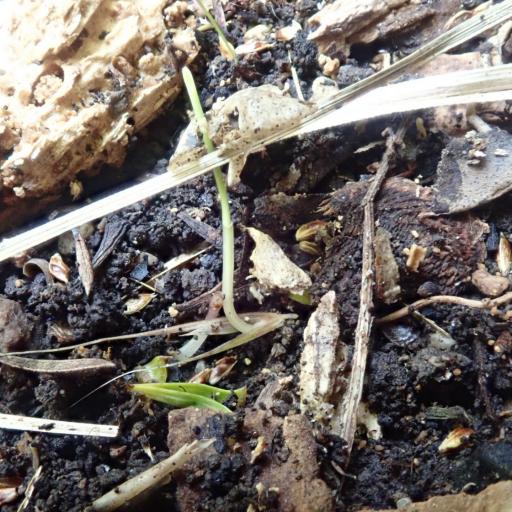
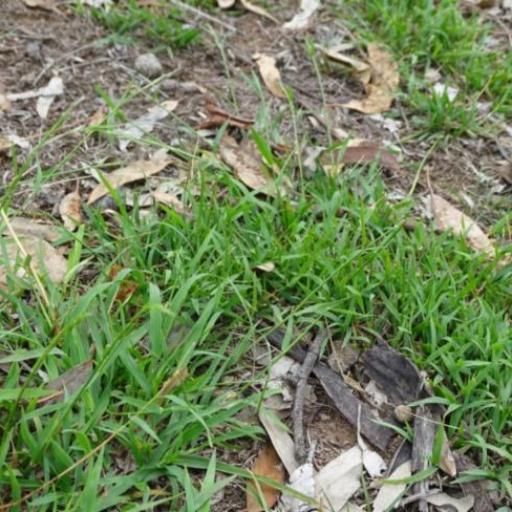
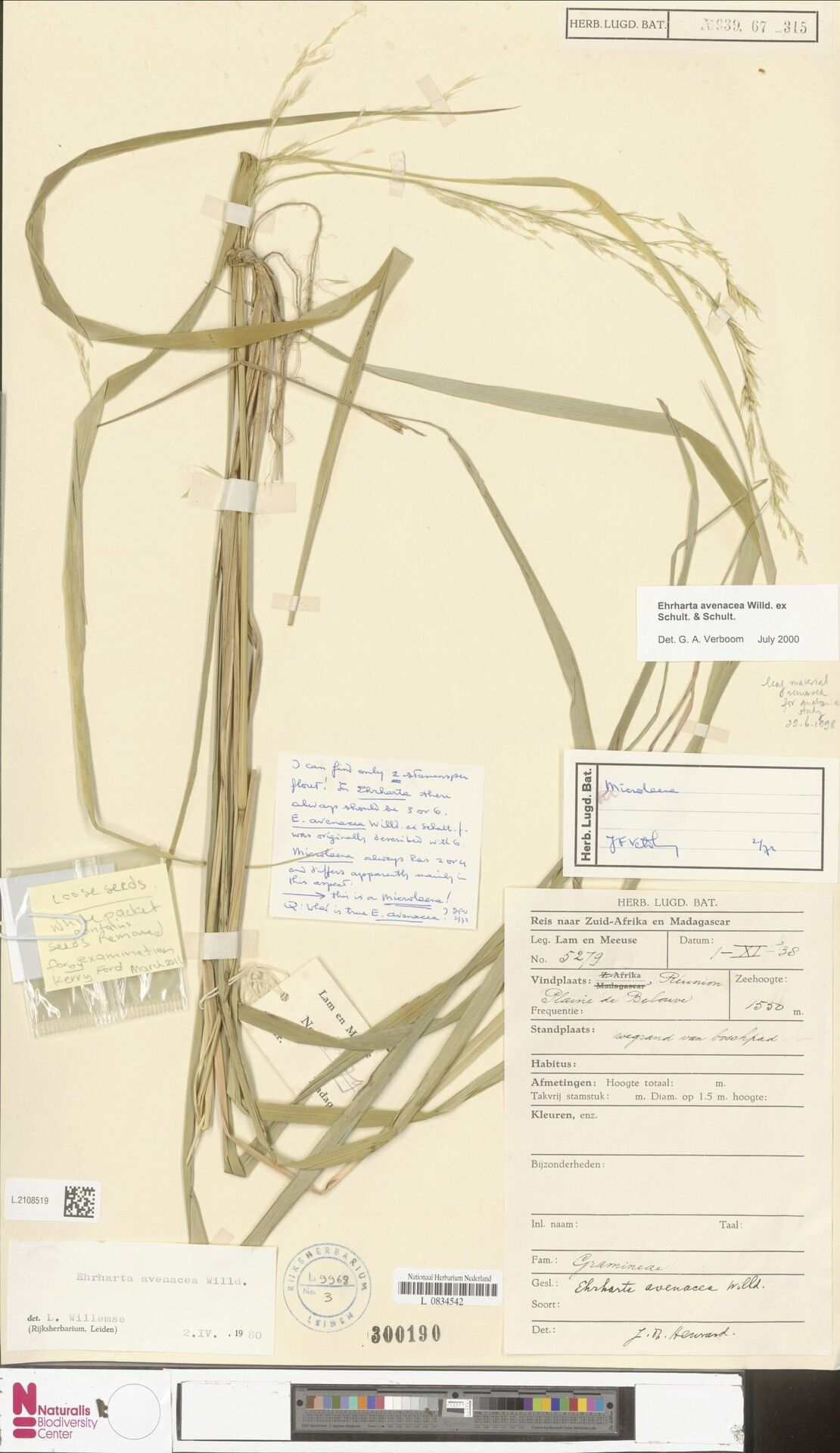
Microlaena is a genus of grass with a single species Microlaena stipoides or Ehrharta stipoides. It occurs naturally in all states of Australia as well as in New Zealand, Papua New Guinea, Indonesia and the Philippines. It has also been introduced into Hawaii and Reunion Island and has been reported as invasive in both. Common names used include weeping grass, weeping rice grass and weeping meadow grass. P. Martin, writing in 2004, commented: "Although the generic name Microlaena is strongly defended by Australasian agrostologists (e.g. Wheeler et al. 2002) many European authors treat it as a section of the genus Ehrharta, so that information on the species in question will be found in these sources under the name Ehrharta stipoides Labill. (e.g. Clayton and Renvoize, 1986)." He refers to the species as Microlaena stipoides. The Australian Plant Name Index and Australian Plant Census list this scientific name Microlaena stipoides (Labill.) R.Br. as currently accepted and under it is subsumed the synonym of Ehrharta stipoides Labill..
Weeping grass is resistant to disease and is generally unlikely to develop illnesses. Regarding care, this plant is fairly low maintenance. When grown outdoors it needs little watering, and larger specimens typically do not require pruning. Smaller plants, however, should be trimmed after they finish blooming. Weeping grass is appropriate for anyone with an outdoor area, such as a garden or deck, and does not demand extensive gardening experience.
How to keep Microlaena Stipoides.
Light
Weeping grass originates from habitats like forest understories or rocky areas, where it grows under natural shade. It prefers partial sun but can tolerate either full sun or full shade, demonstrating its versatility and hardiness.
Temperature
Weeping grass can tolerate a wide range of temperatures, but its distribution may still be restricted by different combinations of moisture and heat. It performs best in warm summer weather with sufficient rainfall or irrigation. Long stretches of cloudy, rainy conditions or prolonged high temperatures increase the chance that Weeping grass will die. In winter, adequate protection from the cold can raise the plant's survival rate.
Fertilizer
Weeping grass benefits from extra nutrients to encourage healthy new growth. In spring, placing compost around the plant's base can supply the required nourishment. Fertilizing helps support vigorous growth and improves the plant's ability to resist diseases and pests.
Botanical profile.
- Plant Type
- Grass
- Life Cycle
- Perennial
- Genus
- Microlaena
- Family
- Poaceae
- Hardiness Zone
- 8-11
- Mature Height
- 30 cm to 91 cm
- Mature Spread
- 20 cm to 49 cm
- Leaf Color
- Light Green, Pale Green
- Leaf Type
- Evergreen, Semi-evergreen
- Flower Size
- 0.25 cm to 0.51 cm
- Bloom Time
- Winter, Early spring, Mid spring
- Planting Time
- Spring, Summer, Autumn
- Harvest Time
- Late winter, Spring
Other names.