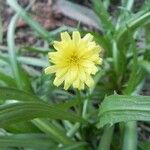
Microseris lanceolata
Native Yam · Yam · Yam daisy · Black fellow's yam · Murnong
Description
Source: leafsnapMicroseris lanceolata is an Australian alpine herb with yellow flowers and one of three plants known as murnong or yam daisy along with Microseris scapigera and Microseris walteri.The plant is found in southern parts of Australia, including Victoria, NSW and ACT. In Victoria, the plant is confined to alpine and subalpine herbfields of the eastern ranges, and often locally plentiful. Microseris walteri and Microseris scapigera are found in lower altitude areas. Commercial plant nurseries will often mislabel a Microseris scapigera plant with the name of Microseris lanceolata, because the binomial name was only clarified in recent years. Literature about Murnong often misidentifies Microseris lanceolata as having a sweet-tasting tuber, but this refers to the Microseris walteri plant.
Care Guide
💧 Water
☀️ Light Full sun
Yam daisy is native to habitats with abundant sunlight, such as open fields and sunny meadows. It prefers full sun, though it can also tolerate partial sun.
🌡️ Temperature 15–35°C
Yam daisy prefers moderate temperatures, similar to those most people find comfortable. It grows best in conditions that are neither overly hot nor too cold. The primary problem with high temperatures is the danger of sunburn, so providing some shade in summer is recommended to prevent excessive heat. When temperatures fall, yam daisy becomes dormant. If continuous growth is wanted, higher temperatures must be maintained through winter. Frost can damage the plant and should be avoided.
💨 Humidity
🪴 Soil 6-7
🌱 Fertilizer
Yam daisy plants benefit from one or two applications of organic fertilizers containing potassium and phosphorus. Apply the fertilizer before planting, work it into the soil and water thoroughly. Usually one application is enough, but a second can be applied once seedlings are established. Avoid overusing fertilizer to prevent damage to the plants.
🪴 Pot & Repot
✂️ Pruning
The yam daisy is a plant known for its bright yellow flowers and edible tubers. It requires minimal pruning to thrive. Trim the plant in early spring to remove any dead stems and encourage new growth. Be careful not to prune too heavily, as this helps preserve its foliage. Additionally, regularly remove spent flowers to extend the blooming period and maintain the plant's health, appearance, and productivity.
🌿 Propagating
🐛 Diseases & pets
☠️ Toxicity
Characteristics
- Plant Type
- Herb
- Life Cycle
- Perennial
- Genus
- Microseris
- Family
- Asteraceae
- Hardiness Zone
- 7-10
- Mature Height
- 20 cm to 40 cm
- Mature Spread
- 15 cm to 30 cm
- Leaf Color
- Green
- Leaf Type
- Deciduous
- Flower Color
- Yellow
- Flower Size
- 2.03 cm to 3.05 cm
- Bloom Time
- Mid spring, Late spring, Early summer
- Planting Time
- Spring, Summer, Autumn
- Harvest Time
- Summer