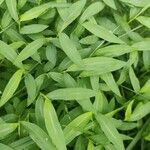
Microstegium vimineum
Chinese Packing Grass · Flexible Sea Grass · Japanese Stilt Grass · Japanese stiltgrass · Nepal Grass
Description
Source: leafsnapMicrostegium vimineum, commonly known as Japanese stiltgrass, is an invasive plant species native to Asia. Resembling grass, it can grow up to three feet tall and features a distinctive bamboo-like appearance. The leaves are lance-shaped with a silver stripe running down the center. In late summer, the plant produces small, inconspicuous flowers. Japanese stiltgrass is highly adaptable, capable of thriving in a variety of soil types and light conditions. It spreads rapidly through seed dispersal, often outcompeting native plants for resources. Due to its invasive nature, Japanese stiltgrass is considered an ecological threat in many areas of the United States where it has been introduced. Various efforts, including manual removal, herbicide application, and other methods, are being undertaken to control its spread. Despite its negative impact on local ecosystems, Japanese stiltgrass does possess some medicinal properties that have been used in traditional Asian medicine for centuries. Compounds in its roots are believed to help with inflammation, pain relief, and fever reduction, among other ailments. Overall, Microstegium vimineum, or Japanese stiltgrass, is an invasive species with significant ecological impacts. However, its medicinal properties warrant further research to validate their efficacy before being widely used as medicine or supplements for humans or animals.
🌳 Often dismissed as merely greenery, Japanese stiltgrass fulfils an important ecological function. Its sturdy root system forms a living mat that anchors soil and reduces erosion, particularly during torrential downpours. This quality makes Japanese stiltgrass useful for preventing landslides and maintaining soil integrity. Research from Randolph College highlights its dual role, blending practicality with aesthetic value, as a sustainable option for stabilizing sloped terrain.
Care Guide
💧 Water Every 7 days
Japanese stiltgrass, originally from tropical Asia, thrives in high humidity and consistently moist soil. It typically requires watering twice a week. Although it can tolerate short periods of dryness, this plant is commonly grown outdoors and has the potential to become invasive, often outcompeting native plants in wet areas.
What should I do if I give too much or too little water to my Japanese stiltgrass?
Proper watering is essential for this beautiful ornamental grass. When planted in the ground, any watering issues can be resolved. However, in a container, overwatering or underwatering can quickly kill Japanese stiltgrass. When the grass doesn't receive the right amount of water, it may stop growing. Overwatering can cause yellow leaves with brown tips, while underwatering can result in drooping leaves, weak seed head production, and browning. To determine the issue, first check if there is too much or too little water. If there is excessive watering, immediately stop watering and patiently wait for the heavy soils to dry out. Once new growth appears, test the soil moisture and decide whether more water is needed. On the other hand, if there is insufficient watering, simply give the grass a deep drink to see if it perks up. It's important to remember that a long and deep watering is better than frequent shallow waterings. This encourages deep root growth, making the grass more drought resistant and less susceptible to watering-related problems.
How frequently do I need to water my Japanese stiltgrass?
The watering needs of Japanese stiltgrass will vary depending on location. Generally, watering once a week is recommended. In hot climates, watering once or twice a week in the summer may be necessary. In moderate climates, watering once every seven days or more may suffice. Grass in containers generally requires more frequent watering compared to grass in the ground. However, the location also plays a role, as shaded grasses need less frequent watering than those grown in the ground. It is important to water Japanese stiltgrass only when the soil is dry. You can check the soil by pressing your finger a couple of inches into it or by weighing the potted grass with a portable scale. If the roots lack sufficient water, the blades may appear folded and thinner than usual. Despite its drought tolerance, regular, deep waterings will help maintain its beautiful color. Although Japanese stiltgrass is drought-resistant, it still requires care and attention. In its natural habitat of open scrubland, it is exposed to extreme heat, bright sun, and intermittent rain. While you might expect it to never need watering, it actually thrives best with consistent water. When newly planted, it needs more frequent watering until it develops deep roots. For potted Japanese stiltgrass, the soil may dry out quickly, especially if exposed to hot, direct sun. Test the soil every 3 to 4 days and water only when it feels dry. In-ground Japanese stiltgrass generally needs less watering, although this depends on the type of soil it is grown in. Clay soil holds water for longer periods, so it may appear dry at the surface while retaining moisture below. Sandy soils that drain quickly will require more frequent watering.
What do I need to watch out for when I water my Japanese stiltgrass at different times of the year, in different weather conditions, or during various stages of growth?
To determine if you are watering your grass enough, observe the rate of growth. Japanese stiltgrass tends to double in size during the hottest months. If it's hot and the grass isn't growing vigorously, adjust your watering schedule. In winter, you may be able to water once a month, but check the soil for moisture. During the warmest months, the grass requires more water. However, during winter and cooler months, the water needs decrease significantly. Remember that the soil should always be allowed to dry out completely before watering Japanese stiltgrass.
☀️ Light Partial sun
Japanese stiltgrass's preferred growing conditions include locations with moderate sunlight exposure. It can also prosper in areas that get full daylight or where sunlight is limited. Its native habitat conditioned it to tolerate a range of sunlight levels. However, too much sun can cause leaf burn, while insufficient light can lead to reduced vigor and sparse growth.
What are the sunlight requirements for Japanese stiltgrass?
Japanese stiltgrass requires varying levels of sunlight based on its environment. It thrives in partial sun, with about 3-6 hours of sunlight, but can also grow in full shade or full sun conditions with less than 3 hours of sunlight. It's essential to watch how sunlight moves through your garden to choose spots that offer the right balance of light and shade, ensuring the plants' wellbeing. In its native habitat, Japanese stiltgrass has adapted to versatile sunlight levels, although too much sun might cause leaf burn, and not enough light could lead to reduced vigor and sparse growth.
How does artificial lighting support indoor growth of Japanese stiltgrass?
Indoor plants, including Japanese stiltgrass, require adequate lighting for optimal growth, especially when natural sunlight is insufficient, such as in winter or in less sunny spaces. Artificial lights provide a vital solution, promoting faster, healthier growth. LED lights are a popular choice because they can be customized to provide specific wavelengths needed by the plants. Full sun plants need 30-50W/sq ft of artificial light, partial sun plants need 20-30W/sq ft, and full shade plants need 10-20W/sq ft. The light source should be placed 12-36 inches above the plant to mimic natural sunlight, and most plants need 8-12 hours of light per day.
What are the symptoms of inadequate light conditions in Japanese stiltgrass?
Inadequate light conditions can lead to several symptoms in Japanese stiltgrass, including smaller new leaves, leggy or sparse growth, faster leaf drop, slower or no new growth, lighter-colored new leaves, chlorosis (leaves turning yellow), sunscald, leaf curling, wilting, and leaf scorching. These conditions indicate that the plant is either getting too little or too much sunlight, affecting its ability to grow healthily. Adjusting the light exposure gradually can help mitigate these symptoms.
How can I improve my Japanese stiltgrass's growth with respect to sunlight?
To optimize your Japanese stiltgrass's growth in relation to sunlight, gradually increase its exposure to sunlight each week until it receives the recommended 3-6 hours of direct sunlight daily. If the plant is large or not easily movable, consider using artificial light, keeping a desk or ceiling lamp on for at least 8 hours daily, or investing in professional plant grow lights. For outdoor plants, move them gradually to better sunlight spots to avoid sunburn. If sunlight is blocked, consider pruning obstructions or transplanting smaller plants during their dormant period to a location with more sunlight and good drainage. Note that parts of the plant affected by insufficient sunlight may not recover, but new growth should be healthy after adjusting light exposure.
🌡️ Temperature 5–37.8°C
Japanese stiltgrass is native to temperate areas and grows best at temperatures between 68 and 100 °F (20 to 38 ℃). Temperatures should be adjusted across seasons to ensure the healthy growth of Japanese stiltgrass.
What temperatures are ideal for the growth of Japanese stiltgrass?
Japanese stiltgrass, known botanically as Microstegium vimineum, thrives in temperate regions, with its optimal growth occurring between temperatures of 68 to 100 °F (20 to 38 °C). Throughout the various seasons, temperature adjustments should be made to ensure the plant's healthy development. Notably, Japanese stiltgrass possesses a strong resistance to cold, typically not requiring special frost protection measures during the winter months. However, in scenarios where winter temperatures are anticipated to drop below -25°C, implementing cold protection by covering the plant with soil or straw is advisable. Additionally, watering the plant abundantly before the first freeze of autumn is recommended to keep the soil moist and prevent drought and water scarcity during winter and early spring.
How does Japanese stiltgrass respond to low and high temperatures?
Japanese stiltgrass is notably cold-tolerant, functioning best when the temperature remains above 20°C. In winter, it's essential to ensure temperatures stay above 0°C. Should temperatures plunge below -25°C, there might not be visible changes during the winter, but this could lead to a decrease in sprouting or potentially no sprouting in the spring. The advised solution in spring is to remove any parts of the plant that have failed to sprout. As for high temperatures, during the summer months, it is critical to keep the plant's surrounding temperature below 38°C. Exceeding 43°C could result in the plant's leaves becoming lighter, curling, being prone to sunburn, and, in severe cases, wilting and drying out entirely. The remedial actions include trimming away the sunburned and dried-up areas, relocating the plant to a shaded location or employing a shade cloth to protect it from the midday and afternoon sun, and ensuring the soil remains moist by watering in the morning and evening.
💨 Humidity
🪴 Soil 5-7
🌱 Fertilizer
🪴 Pot & Repot
When repotting Japanese stiltgrass, pick a pot about 1–2 inches (2.5–5.1 cm) larger in diameter that provides good drainage. Use a well-draining potting mix and consider mixing in perlite for extra drainage. Repot in spring or early summer, water thoroughly afterward, and initially place it in a shaded spot.
✂️ Pruning
🌿 Propagating
🐛 Diseases & pets
☠️ Toxicity
Characteristics
- Plant Type
- Grass
- Life Cycle
- Annual, Biennial
- Genus
- Microstegium
- Family
- Poaceae
- Hardiness Zone
- 5-11
- Mature Height
- 9 cm
- Mature Spread
- 0.61 m to 1.22 m
- Leaf Color
- Green, Purple, Brown, Bronze, Lavender
- Leaf Type
- Deciduous
- Flower Color
- Yellow, Green
- Flower Size
- 2.54 cm to 7.62 cm
- Bloom Time
- Mid summer
- Planting Time
- Autumn
- Harvest Time
- Mid summer, Late summer
- Native Area
- Russia, Nepal, India, Malaysia, Vietnam, Myanmar, Japan, Philippines, Koppen, Iran, Bhutan, South Korea, Thailand, China