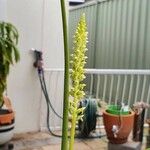
Microtis unifolia
Common Onion Orchid
Description
Source: leafsnapMicrotis unifolia, commonly known as the common onion orchid, is a species of orchid occurring from south China to Japan, Malesia, and Australasia to the Southwest Pacific. It has a single green leaf and up to one hundred small green or yellowish-green flowers. A common, widespread orchid which is easily grown in pots and is sometimes a weed in plant nurseries.
Care Guide
💧 Water
The onion orchid comes from moist regions and flourishes when it has a consistent water supply. It needs watering about once a week and favors soil that maintains stable moisture levels. Higher humidity, similar to its natural habitat, boosts its growth and vitality, making it an excellent choice for indoor cultivation.
☀️ Light Partial sun
Onion orchid originates from habitats such as forest understories or rocky areas, where it grows in natural shade. It prefers partial sun but can tolerate full sun or full shade, demonstrating its versatile, hardy nature.
What are the sunlight requirements for plants?
Plants have varying sunlight requirements. Partial sun plants need about 3-6 hours of sunlight, while those requiring full sun need more than 6 hours of sunlight daily. It's crucial to observe the movement of sunlight through your garden to find spots that offer the right balance of light and shade, ensuring your plants thrive.
What are the natural habitats and preferred sunlight conditions for an Onion orchid?
The Onion orchid is native to environments like forest understories or rocky areas, benefiting from natural shade. Its preferred sunlight condition is partial sun. However, it can also thrive in full shade. As a perennial herbaceous plant, it's adaptable to various sunlight exposures, making it versatile for different growing conditions.
How can I provide adequate lighting for indoor plants?
Indoor plants need sufficient lighting for optimal growth, especially when natural light is lacking. Artificial lighting, such as LED lights, can supplement sunlight by providing the necessary wavelengths. For full sun plants, 30-50W/sq ft of artificial light is recommended; partial sun plants need 20-30W/sq ft, and full shade plants require 10-20W/sq ft. The artificial light source should be placed 12-36 inches above the plant, simulating natural sunlight, and turned on for 8-12 hours per day.
What are some common symptoms of light deficiency in Onion orchid?
When an Onion orchid is grown indoors under insufficient light, it may show signs of light deficiency, including smaller new leaves, leggy or sparse growth, early leaf drop, slowed or halted growth, paler new leaves, chlorosis, sunscald, leaf curling, wilting, and leaf scorching. These symptoms indicate the plant is struggling with its light environment and requires adjustments to improve its health.
What solutions are there for Onion orchids suffering from insufficient light?
For Onion orchids not receiving enough light, gradually increasing their sunlight exposure is key. Moving them to sunnier spots each week helps them adapt without the risk of sunburn. Using artificial light for indoor plants or those hard to move is also beneficial. Ensuring 3-6 hours of direct sunlight daily or using grow lights for at least 8 hours can significantly improve their condition. However, parts of the plant already damaged by poor light may not recover, but new growth should be healthy once light conditions are optimized.
🌡️ Temperature 15–37.8°C
The onion orchid is native to temperate habitats where temperatures range from 59 to 100.4 °F (15 to 38℃). Its optimal temperature conditions fall within that range. In colder months, ensure temperatures do not drop below its preferred level.
What is the native environment of the Onion orchid?
The Onion orchid, or Microtis unifolia, is native to temperate environments where temperatures fluctuate between 59 to 100.4 °F (15 to 38°C). It thrives in conditions that fall within this temperature range. During the colder months, it's essential to ensure the temperature does not drop below the orchid's preferred threshold, keeping in mind that it has some tolerance to cold and generally does not require additional cold protection measures when the temperature remains above -5°C. However, if temperatures are expected to dip below -5°C, temporary measures like wrapping the plant with plastic film, fabric, or other protective materials should be taken to safeguard it from the cold. Once temperatures rise again, these protective measures should be promptly removed.
How does the Onion orchid react to low temperatures?
The Onion orchid exhibits moderate tolerance to low temperatures, flourishing best when the temperature remains above 15°C. During winter, it is advisable to keep the plant above -5°C to prevent damage. Should temperatures fall below -10°C, the orchid's leaves may begin to droop; while they can recover in mild cases, more severe conditions can lead to the leaves wilting and eventually falling off. To address frost damage, the affected parts should be trimmed. To prevent recurrence, the plant can be wrapped with non-woven fabric or cloth, and a wind barrier can be erected to shield it from cold winds.
What should be done if the Onion orchid is exposed to high temperatures?
During the summer months, it is crucial to ensure the Onion orchid does not endure temperatures above 38°C. Exposure to temperatures exceeding 43°C can cause the leaves to lighten in color, the tips to dry and wither, curling of the leaves, and increased susceptibility to sunburn. In such cases, sunburned and dried parts of the plant should be removed. To mitigate further damage, the plant can be relocated to a shaded area during the midday and afternoon sun or be protected with a shade cloth. Additionally, watering the plant in the morning and evening can help keep the soil moist, providing further relief from high-temperature stress.
💨 Humidity
🪴 Soil 5-6
🌱 Fertilizer
The best time to fertilize an Onion orchid is in early spring, as it comes out of dormancy and begins active growth. Fertilizing supplies essential nutrients for healthy development. Although the Onion orchid has relatively low fertilizer needs, feeding it once a year can improve its survival and encourage better, longer-lasting flowers.
🪴 Pot & Repot
✂️ Pruning
The onion orchid is characterized by its grass-like leaves and delicate flowers. For best results, prune the plant in early to mid-spring, paying particular attention to removing dead leaves and spent flower spikes. Be careful not to prune too heavily, as this can stress the plant. Light maintenance is key to promoting healthy growth and preventing disease. Always use sterilized tools to ensure the plant's optimal health.
🌿 Propagating
🐛 Diseases & pets
☠️ Toxicity
Characteristics
- Plant Type
- Herb
- Life Cycle
- Perennial
- Genus
- Microtis
- Family
- Orchidaceae
- Hardiness Zone
- 8-11
- Mature Height
- 49 cm
- Mature Spread
- 1 cm
- Leaf Color
- Green
- Leaf Type
- Evergreen
- Flower Color
- Yellow, Green
- Flower Size
- 0.05 cm
- Bloom Time
- Mid spring, Late spring, Early summer
- Planting Time
- Spring
- Harvest Time
- Summer
- Native Area
- Indonesia, Japan, Vanuatu, Philippines, New Zealand, China