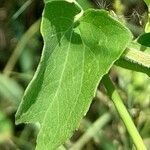
Mikania cordifolia
Florida Keys hempvine
Description
Source: leafsnapMikania cordifolia, commonly known as Climbing Hempweed, is a perennial vine belonging to the Asteraceae family. Native to South and Central America, it has been introduced to other regions worldwide as an ornamental plant. This vine features heart-shaped leaves arranged alternately along its stem, growing up to 10 cm in length. The small flowers are white or pinkish and are clustered at the ends of its branches. Climbing Hempweed is a fast-growing vine that uses tendrils to ascend trees and other structures. It thrives in moist soil conditions but can endure drought once established. Traditionally, this plant has been used in medicine to treat respiratory issues, fever, and skin diseases. However, Mikania cordifolia is considered an invasive species in some areas, as its rapid growth can overwhelm native vegetation. This poses a threat to biodiversity by disrupting ecosystems where it becomes established. In summary, Mikania cordifolia is a plant with notable medicinal properties, but it can also have detrimental effects on ecosystems where it is invasive.
Care Guide
💧 Water Every 7 days
The Florida Keys hempvine thrives in tropical environments that offer consistent moisture and high humidity. While it prefers to be watered weekly, it can endure short periods of dryness. As an evergreen, this plant effectively retains water, allowing it to maintain lush foliage throughout the year, even when rainfall patterns fluctuate.
☀️ Light Full sun
Florida keys hempvine is a sun-loving, perennial herbaceous plant native to open habitats and frequently found thriving in meadows and grasslands. It prefers full sun exposure but can also tolerate partial sun.
🌡️ Temperature 20–37.8°C
Florida Keys hempvine comes from tropical areas where the climate is generally warm and humid. Consequently, it is well adapted to high temperatures and humidity. It dislikes sudden temperature changes and prefers a stable thermal environment, so avoiding temperature fluctuations indoors is important. It typically cannot tolerate cold and requires higher temperatures to grow. If the surrounding temperature falls too low, the plant may stop growing or even die.
💨 Humidity
🪴 Soil 6-7
🌱 Fertilizer
Florida Keys hempvine needs the most fertilizer during its active growing period, which takes place mainly in spring, summer, and early fall. Fertilizing supplies essential nutrients the soil may lack, supporting healthy root and stem growth and fostering the attractive foliage that is a defining trait of this plant.
🪴 Pot & Repot
✂️ Pruning
The Florida Keys hempvine flourishes when pruned regularly, especially from early to late spring during its active growth phase. Pruning at this time helps remove dead stems, control its spread, and promote healthy development and good airflow. By consistently pruning the plant, you enhance its vitality and appearance, ensuring it grows in balance without overwhelming nearby plants.
🌿 Propagating
🐛 Diseases & pets
☠️ Toxicity
Characteristics
- Plant Type
- Herb, Vine
- Life Cycle
- Perennial
- Genus
- Mikania
- Family
- Asteraceae
- Hardiness Zone
- 9-11
- Mature Height
- 3.66 m to 21.95 m
- Mature Spread
- 2.13 m to 3.05 m
- Leaf Color
- Green, Dark Green
- Leaf Type
- Semi-evergreen
- Flower Color
- White
- Flower Size
- 0.51 cm to 0.76 cm
- Bloom Time
- Late summer, Early fall, Mid fall
- Planting Time
- Spring, Autumn
- Harvest Time
- Mid fall, Late fall, Early winter
- Native Area
- Belize, Honduras, Mexico, Guatemala, Peru, Panama, Jamaica, Colombia, Cuba, Bolivia, Venezuela, Guyana, El Salvador, Nicaragua, Ecuador, Costa Rica