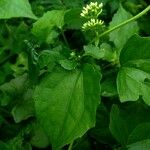
Mikania Micrantha
Climbing hempweed · Mikania-vine · Mile-a-minute · Bittervine · Chinese creeper
Description
Source: leafsnapMikania micrantha, commonly known as the mile-a-minute weed, is a fast-growing vine native to Central and South America. It has become an invasive species in many parts of the world, including Asia and Africa. The plant can grow up to 6 meters in length and features small white flowers that bloom from August to October. Its leaves are heart-shaped with serrated edges and can reach up to 10 cm in length. Mikania micrantha spreads rapidly by producing large quantities of seeds that are easily dispersed by wind or water. Additionally, it can reproduce vegetatively through stem fragments that root readily upon contact with soil or water bodies. Mikania micrantha poses a serious threat as it competes aggressively with native vegetation for resources such as light, nutrients, and water, leading to a loss of biodiversity in ecosystems it invades. The plant contains several bioactive compounds, such as flavonoids, that have demonstrated medicinal benefits, including the treatment of respiratory diseases like asthma and bronchitis. Various organizations worldwide have attempted to control the spread of Mikania micrantha through methods like manual removal (uprooting) and the use of herbicides. However, due to its high reproductive potential, these methods have not been very effective so far. Overall, Mikania micrantha remains a significant invasive species globally due to its negative impact on ecosystems, although it also holds potential medicinal benefits if properly harnessed under controlled conditions.
🌳 Although commonly seen as a widespread invader, mile-a-minute has shown promise as a biocontrol agent against the troublesome fall armyworm in China. By attracting and maintaining substantial numbers of the pest’s natural enemies, the plant could be important in controlling the agricultural damage caused by the worm.
Care Guide
💧 Water Every 7 days
Mile-a-minute is a plant native to tropical regions and thrives in humid environments. It prefers consistent moisture and benefits from weekly watering. Although it can tolerate short periods of dryness, mile-a-minute is best grown outdoors, where it exhibits vigorous climbing growth, especially during the rainy season, due to its high water needs.
How should I water my Mile-a-minute plant?
To effectively water the Mile-a-minute plant, it is recommended to use room temperature filtered water. Tap water may contain harmful particles, so filtered water is preferred. The Mile-a-minute plant thrives in warm environments, so using cold water may be a shock to its system. To prevent foliage complications, it is advised to avoid overhead watering. Instead, carefully pour the filtered room temperature water onto the soil until it is completely soaked. This method benefits the plant by moistening the roots and aiding in their spread and nutrient absorption.
What can I do if I give my Mile-a-minute plant too much or too little water?
Both overwatering and underwatering can harm the health of your Mile-a-minute plant, but overwatering is more common. When this happens, the plant's stems and leaves may wilt and turn yellow. Overwatering for a long time can also lead to root rot, mold, and mildew, which can be fatal. Underwatering is less likely, as Mile-a-minute plants can withstand drought to some extent. However, it can still happen, resulting in brittle and brown leaves. It is important to recognize signs of overwatering early, as some diseases like root rot may be irreversible if not addressed promptly. If you notice these signs, reduce your watering schedule and check the soil drainage. If the soil is poor in draining, replace it with a loose, well-draining potting mix. Conversely, if you see signs of underwatering, simply increase your watering frequency until the signs improve.
How frequently should I water my Mile-a-minute plant?
If your Mile-a-minute plant is in a pot, the most precise way to determine if it needs water is by checking the soil. Stick your finger into the soil and if the top two to three inches are dry, it's time to water the plant. If you have your Mile-a-minute plant growing outdoors in the ground, you can use a similar method to test the soil. Once again, if the first few inches of soil are dry, it's a sign to water the plant. Typically, during the spring and early fall, following this method will result in watering the plant once a week. However, when it gets very hot, you may need to increase watering to twice or more per week. Nevertheless, it's worth noting that mature and well-established Mile-a-minute plants are quite resilient and can tolerate periods of drought.
How much water does my Mile-a-minute plant need?
To properly water your Mile-a-minute plant, don't hold back on the amount of water you provide. When the first two to three inches of soil are dry, it's time for a thorough watering. Make sure the water soaks the soil completely, and add enough water that it drains through the bottom of the pot. If you don't see any excess water draining, you probably didn't give enough water. However, be careful not to let water accumulate in the soil, as this can harm the plant. On the other hand, if water doesn't drain well through the pot, it might indicate poorly draining soil, which is bad for the plant's health. When the plant is outside, about 1 inch of rain per week should be enough.
How do I water my Mile-a-minute plant when it's at different stages of growth?
The water needs of the Mile-a-minute plant vary based on its growth stages. In the first few years of its life or after transplanting to a new location, it requires more water. During these stages, the plant focuses on developing new roots to support future growth, so they require extra moisture. After a few seasons, the plant will need less water. Additionally, during the bloom period, the Mile-a-minute plant may need more water because flower development uses up a significant amount of moisture.
☀️ Light Full sun
Mile-a-minute does best in areas that receive plenty of sunlight but can also grow well in sites with moderate exposure. Originally adapted to sun-rich habitats, both an excess and a shortage of light can noticeably influence its growth — too much light may produce smaller foliage, while too little may cause the leaves to appear paler.
What are the sunlight requirements for Mile-a-minute?
Mile-a-minute requires full sun, which means it should receive above 6 hours of sunlight daily, or partial sun, about 3-6 hours of sunlight daily. It's important to observe how sunlight moves through your garden to find spots that provide the perfect balance for your plants, ensuring their well-being.
How does sunlight affect the growth of Mile-a-minute?
Sunlight significantly influences the growth of Mile-a-minute, as it thrives in zones with abundant sunlight but can also flourish in areas with moderate exposure. Too much or too little sunlight can affect its growth, potentially leading to smaller leaves or paler foliage, as it originated in environments rich in solar energy.
Can artificial lighting be used for Mile-a-minute, and how?
Yes, artificial lighting can be used for Mile-a-minute, especially when natural sunlight is insufficient. Indoor plants benefit from artificial lights, particularly during winter or in less sunny spaces. It's advisable to use LED lights, provide 30-50W/sq ft for full sun plants, 20-30W/sq ft for partial sun plants, and 10-20W/sq ft for full shade plants. The lights should be placed 12-36 inches above the plant and turned on for 8-12 hours per day to mimic natural daylight as closely as possible.
What are the common symptoms of light deficiency in Mile-a-minute?
Common symptoms of light deficiency in Mile-a-minute include smaller new leaves, leggy or sparse growth, faster leaf drop, slower or halted growth, lighter colored new leaves, chlorosis, sunscald, leaf curling, wilting, and leaf scorching. These symptoms indicate that the plant is not receiving adequate light, which is essential for its health and growth.
What solutions can be implemented to ensure Mile-a-minute receives adequate sunlight?
To ensure Mile-a-minute receives adequate sunlight, gradually move plants to a sunnier location each week to get at least 6 hours of direct sunlight daily, use a south-facing window for maximum exposure, and consider using artificial light for plants that are large or not easily movable. For outdoor plants, avoid sudden changes in light intensity to prevent sunburn. If trees obstruct sunlight, consider pruning them. For smaller plants, transplant them during their dormant period to a location with ample sunlight and good drainage. Remember, parts of the plant affected by insufficient sunlight may not recover, but new growth should be healthy.
🌡️ Temperature 20–41.1°C
Mile-a-minute is adapted to tropical conditions with temperatures ranging from 68 to 105.8 °F (20 to 41 ℃), and it grows best in these warmer climates. During colder seasons, it is recommended to maintain a controlled environment within this temperature preference for optimal growth.
What is the ideal temperature range for Mile-a-minute?
Mile-a-minute thrives in a tropical environment, preferring temperatures between 68 to 105.8 °F (20 to 41 °C). These conditions are ideal for its growth, so it's important to maintain these warmer climates especially during colder seasons. During winter, or when the temperature is expected to fall below the plant's preferences, it's recommended to keep the plant in a controlled environment, ensuring temperatures do not dip below 20°C. For outdoor-grown Mile-a-minute plants, transferring them indoors near a bright window while avoiding direct heat sources like heaters helps in maintaining the necessary warmth without overheating.
How does Mile-a-minute react to low temperatures?
Mile-a-minute is not tolerant of low temperatures and prefers the warmth, thriving best when the temperature stays above 20°C. When exposed to temperatures falling below 0°C, the plant can experience significant harm. If temperatures reach below -5°C, you may notice the leaves lightening in color, leading to brown or black discoloration, wilting, and drooping after frost damage. To mitigate these effects, affected parts should be trimmed off, and the plant should be moved indoors to a warmer environment immediately. Placing the plant near a south-facing window while avoiding direct heat sources like heaters or air vents can provide adequate light and temperature control without causing dryness.
What should be done if Mile-a-minute experiences high temperatures?
During summer, it's crucial to ensure that Mile-a-minute's environment does not exceed 41°C. Temperatures above 45°C can cause the leaves to lighten in color and increase the risk of sunburn. To address this, prune away any sunburned or dried parts of the plant and relocate it to a spot where it can be shielded from the intense midday and afternoon sun. Adequate watering, particularly in the morning and evening, will help keep the soil moist and assist in cooling the plant, preventing further damage from high temperatures.
💨 Humidity
🪴 Soil 5-6
🌱 Fertilizer
Mile-a-minute needs the most fertilizer during its active growing period, which is mainly in spring, summer, and early fall. Applying fertilizer supplies essential nutrients the soil may be lacking, encouraging healthy root and stem growth and attractive foliage, which is an important characteristic of this plant.
🪴 Pot & Repot
✂️ Pruning
🌿 Propagating
🐛 Diseases & pets
☠️ Toxicity
Characteristics
- Plant Type
- Herb
- Life Cycle
- Perennial
- Hardiness Zone
- 9-13
- Mature Height
- 6.1 m
- Mature Spread
- 2.13 m to 3.05 m
- Leaf Color
- Green, Dark Green
- Leaf Type
- Semi-evergreen
- Flower Color
- White
- Flower Size
- 0.51 cm to 0.51 cm
- Bloom Time
- All year round
- Planting Time
- Spring, Summer
- Harvest Time
- All year round
- Native Area
- Belize, Honduras, Mexico, Guatemala, Peru, Trinidad and Tobago, Panama, Jamaica, Colombia, Cuba, Bolivia, Venezuela, Guyana, El Salvador, Nicaragua, Ecuador, Costa Rica