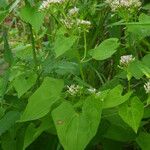
Mikania scandens
Climbing hempvine · Climbing hempweed · Louse-plaster · Mile-a-minute weed
Description
Source: leafsnapMikania scandens is a species of flowering plant in the family Asteraceae. Its common names include climbing hempvine, climbing hempweed, and louse-plaster. It is native to the eastern and central United States, with its distribution extending into Tamaulipas, Mexico. Reports of its presence in Ontario, Canada are erroneous. It is an introduced and invasive species on many Pacific Islands and in parts of southern Asia.
🌳 Although not showy, climbing hempvine fulfills a distinctive ecological role. Research indicates it may serve as an indicator of certain soil metals because it bioaccumulates them. Additionally, its dense growth provides suitable habitat for numerous insect species, making it an important part of wetland ecosystems.
Care Guide
💧 Water
Climbing hempvine, which comes from swampy habitats, thrives in high humidity and needs to be watered regularly each week for optimal growth. It can endure short periods of dryness and benefits from being outdoors, where natural rainfall helps meet its moisture needs. This care approach aligns well with its native environment.
How should I water my Climbing hempvine to keep it healthy?
To properly water the Climbing hempvine, it is best to use filtered water at room temperature. Tap water may contain harmful particles, so filtered water is preferred. The water should be at room temperature or slightly warmer because the Climbing hempvine is native to warm environments and cold water can be a shock to its system. Additionally, it is important to avoid overhead watering as it can cause problems with the foliage. Instead, water the plant by applying filtered room temperature water directly to the soil until it is thoroughly soaked. This helps to moisten the roots and promote spreading and nutrient absorption.
What do I need to do if I give my Climbing hempvine too much or too little water?
While both overwatering and underwatering can harm your Climbing hempvine, overwatering is a more common issue. If this plant is given too much water, its stems and leaves may wilt and turn yellow. Overwatering for a long period can also lead to diseases like root rot, mold, and mildew, which can be fatal. Underwatering is less likely for the Climbing hempvine due to its decent drought tolerance. However, it is still possible, and in such cases, the leaves will become brittle and brown. It is essential to notice signs of overwatering promptly. Some of the diseases caused by overwatering, such as root rot, may not be fixable if you wait too long. If you observe early signs of overwatering, reduce the watering frequency immediately. Also, check the soil quality where your Climbing hempvine grows. If it drains poorly, replace it with a loose, well-draining potting mix. Conversely, if you notice signs of dehydration, water the plant regularly until the signs disappear.
How frequently should I give water to my Climbing hempvine?
If you have a potted plant, the best way to tell if your Climbing hempvine needs water is to stick your finger in the soil. If the top two to three inches of soil are dry, it's time to water it. If you have your Climbing hempvine planted outdoors, you can use the same method to check the soil. Once the top few inches of soil have dried out, it's time to water it. In the spring and early fall, you'll probably need to water it about once a week using this method. When it gets really hot, you may need to water it twice a week or even more often. However, it's worth noting that mature, well-established Climbing hempvines can handle drought well.
How much water does my Climbing hempvine require?
When watering your Climbing hempvine, it's important to be generous with the amount of water you give. Make sure the top few inches of soil are dry before watering, and then give the plant a thorough soaking, ensuring that the entire soil is saturated. You should add enough water that it drains out of the pot through the drainage holes. If you don't see any excess water draining, you may have not watered enough, which can be harmful to the plant. However, you should also avoid letting water accumulate in the soil, as this can also be dangerous. If there's a lack of water drainage, it could mean that the soil is not draining well, which is not good for the plant's health and should be avoided. If the plant is outdoors, around 1 inch of rain per week will be enough.
How should I water my Climbing hempvine as it grows?
The water needs of the Climbing hempvine can vary depending on its growth stages. In the first few years of its life or when it's recently transplanted, the plant requires more water to help it establish and develop new roots. These roots are crucial for future growth and perform best with a bit more moisture. As the Climbing hempvine matures, it will require less water overall. However, during the bloom period, when the plant is producing flowers, it may need additional water because flower development requires a significant amount of moisture.
☀️ Light Full sun
Climbing hempvine requires plenty of sunlight to develop healthily. It can also perform well in locations with partial shade or subdued light, demonstrating some tolerance for reduced illumination. Too much sun can be damaging, while too little light may inhibit its peak growth. It comes from regions that receive abundant sunlight.
What are the sunlight requirements for Climbing hempvine?
Climbing hempvine requires a significant amount of sun exposure for wholesome growth, thriving in full sunlight. It is adaptable and can grow in areas with screened or soft sunlight, highlighting its tolerance for some shade. However, both overexposure to direct sunlight and inadequate light conditions can affect its growth negatively. The plant originally grows in habitats that provide abundant sunlight.
How does artificial lighting support the growth of Climbing hempvine indoors?
Indoor plants, including Climbing hempvine, require adequate lighting for optimal growth, especially when natural sunlight is insufficient. Artificial lighting, such as LED lights, can be an effective solution, offering customizable wavelengths needed by the plant. For full sun plants, 30-50 watts per square foot is recommended, for partial sun plants 20-30 watts per square foot, and for full shade plants 10-20 watts per square foot. The light source should be placed 12-36 inches above the plant to mimic natural sunlight conditions, and it's vital to mimic natural daylight hours, generally requiring 8-12 hours of artificial light per day.
What symptoms indicate climbing hempvine isn't getting enough light?
Symptoms of inadequate lighting in climbing hempvine include smaller new leaves, leggy or sparse growth, faster leaf drop, slower or halted new growth, paler new leaves, and conditions like chlorosis, where leaves turn yellow due to a breakdown of chlorophyll. Excessive sunlight can cause symptoms like sunscald, leaf curling, wilting, and leaf scorching, indicating damage from overexposure.
What solutions can alleviate lighting issues for indoor and outdoor Climbing hempvines?
To address lighting issues, gradually move indoor plants to sunnier locations to receive at least 6 hours of direct sunlight daily, and consider using artificial lights if moving the plant isn't feasible. Outdoor plants should also be gradually moved to sunnier spots to avoid shock. Reducing obstructions that block sunlight and transplanting smaller plants to areas with better light exposure and drainage can significantly improve light availability. Note that parts of the plant damaged by insufficient sunlight may not recover fully, but new growth after adjusting light levels will be healthy.
🌡️ Temperature 10–41.1°C
Climbing hempvine is quite adaptable to temperature, enduring higher heat and substantial temperature fluctuations. In hot weather, take care to water it and provide adequate shade to prevent sunburn. Conversely, it tolerates cold poorly; while it can survive mild chill, very low temperatures can cause frost damage.
What is the Climbing hempvine?
Climbing hempvine, botanically known as Mikania scandens, is a plant of interest but specific details such as its essentials, content, and symptoms related to it haven't been provided in the information shared.
💨 Humidity
🪴 Soil 5-7
🌱 Fertilizer
One fertilizer application in spring is generally enough for Climbing hempvine, though repeated feedings can maximize growth. Fertilize about every four to six weeks. Feeding improves the leaves’ appearance and function, maintaining even color and a healthy texture. It also promotes root development and nutrient uptake for long-term plant health.
🪴 Pot & Repot
✂️ Pruning
🌿 Propagating
🐛 Diseases & pets
☠️ Toxicity
Characteristics
- Plant Type
- Herb
- Life Cycle
- Perennial
- Genus
- Mikania
- Family
- Asteraceae
- Hardiness Zone
- 4
- Mature Height
- 2.44 m to 3.05 m
- Mature Spread
- 8 cm to 15 cm
- Leaf Color
- Green, Blue
- Leaf Type
- Deciduous
- Flower Color
- White
- Flower Size
- 0.76 cm
- Bloom Time
- Summer
- Planting Time
- Autumn
- Harvest Time
- Mid summer, Late summer, Early fall
- Native Area
- Bahamas, Mexico