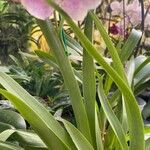
Miltoniopsis phalaenopsis
Pansy Orchid
Description
Source: leafsnapMiltoniopsis phalaenopsis, commonly known as the Pansy Orchid, is a stunning and delicate orchid species native to the cloud forests of Central and South America. This plant is highly prized for its beautiful flowers, which resemble pansies in shape and color. The flowers are typically large, with a diameter of up to 4 inches, and come in shades of pink, purple, white, or yellow. Miltoniopsis phalaenopsis plants are epiphytic orchids that grow on trees or rocks in their natural habitat. They feature thin stems with several leaves arranged alternately along their length. The leaves are oval-shaped with pointed tips and can grow up to 10 inches long. For successful indoor cultivation, this plant requires specific growing conditions. It prefers bright but indirect light and high humidity levels (60-70%). Additionally, using a well-draining soil mixture is essential for optimal growth. Overall, Miltoniopsis phalaenopsis plants make excellent houseplants due to their stunning appearance, but they do require some care and knowledge from their owner to thrive indoors.
Care Guide
💧 Water Every 7 days
☀️ Light Partial sun
Pansy Orchid is native to habitats like forest understories or rocky areas, where it grows in natural shade. It prefers partial sun but can tolerate full sun or full shade, demonstrating its versatile and hardy nature.
🌡️ Temperature 20–37.8°C
Pansy Orchid demonstrates good temperature adaptability, able to endure higher heat and wide temperature fluctuations. In hot weather, attention should be paid to watering and providing suitable shade to avoid sunburn. However, Pansy Orchid is relatively sensitive to low temperatures; although it can tolerate some cold, excessively low conditions may cause frost damage.
💨 Humidity
🪴 Soil 5-6
🌱 Fertilizer
The best time to fertilize a Pansy Orchid is in early spring, when it is coming out of dormancy and starting active growth. Fertilization supplies essential nutrients for healthy development. Although the Pansy Orchid has relatively low fertilization needs, feeding it once a year can improve its survival and encourage better, longer-lasting flowers.
🪴 Pot & Repot
When repotting a Pansy Orchid, pick a slightly larger pot with good drainage, preferably a clear orchid pot. Use a well-draining, orchid-specific mix that includes bark or moss. Gently clean the roots and cut away any that are dead or rotting. Repot after flowering, usually in spring or fall, water thoroughly, and place the plant in bright, indirect light. Avoid disturbing the roots once it has been repotted.
✂️ Pruning
🌿 Propagating
🐛 Diseases & pets
☠️ Toxicity
Characteristics
- Plant Type
- Herb
- Life Cycle
- Perennial
- Genus
- Miltoniopsis
- Family
- Orchidaceae
- Hardiness Zone
- 10-12
- Mature Height
- 30 cm to 40 cm
- Mature Spread
- 20 cm to 30 cm
- Leaf Color
- Light Green, Yellow Green
- Leaf Type
- Evergreen
- Flower Color
- White, Pink, Lavender
- Flower Size
- 5.08 cm to 7.62 cm
- Bloom Time
- All year round
- Planting Time
- Spring
- Harvest Time
- All year round
- Native Area
- Colombia