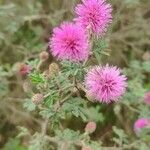
Mimosa Quadrivalvis
Fourvalve mimosa · Sensitive Briar
Description
Source: leafsnapMimosa quadrivalvis, commonly known as the four-valve sensitive plant, is a species of flowering plant in the pea family, Fabaceae. Native to North America, it thrives in various habitats such as prairies, savannas, and open woodlands. The plant can grow up to 1 meter tall and features bipinnate leaves that are sensitive to touch or movement. When touched or disturbed, the leaves quickly fold up along their midrib axis. The flowers of Mimosa quadrivalvis are small and pinkish-white, with a sweet fragrance. Blooming from May to September, they attract a variety of pollinators, including bees, butterflies, moths, and hummingbirds. Additionally, the four-valve sensitive plant has been used for medicinal purposes by Native American tribes to treat a variety of ailments, such as fevers and skin irritations. Some tribes also used the roots to make tea believed to have sedative properties. Overall, Mimosa quadrivalvis is a fascinating species with unique characteristics that distinguish it from other plants in its family. Its sensitivity to touch makes it an attractive addition to gardens, while its medicinal properties lend it enduring value in traditional medicine practices.
Care Guide
💧 Water Every 7 days
Fourvalve mimosa thrives in environments with high moisture and prefers to be watered consistently on a weekly basis. While it can withstand some drought, it benefits from stable humidity levels and grows best outdoors, where it can take advantage of natural rainfall. Since it is a deciduous plant, fourvalve mimosa needs less water during its dormancy period, which coincides with its leaf-shedding cycle.
How should I water my Fourvalve mimosa plant?
To properly water the Fourvalve mimosa, it is best to use filtered water at room temperature or slightly warmer. Tap water may contain harmful particles, so filtered water is preferred. The plant comes from a warm environment, so cold water can be a shock to its system. It is recommended to avoid overhead watering, as it can lead to issues with the foliage. Instead, simply apply filtered room temperature water directly to the soil until it is completely soaked. This helps to moisture the roots and support their growth and nutrient absorption.
What should I do if I give too much or too little water to my Fourvalve mimosa plant?
Overwatering is a common issue for Fourvalve mimosa plants and can cause wilting, yellowing, and potentially deadly diseases like root rot, mold, and mildew. However, underwatering is less common but still possible, resulting in brittle and brown leaves. It is important to notice signs of overwatering early to prevent irreversible damage. Reduce watering and consider using well-draining potting mix if the soil doesn't drain well. If signs of underwatering are present, simply increase watering until the plant recovers.
How much should I water my Fourvalve mimosa plant?
If your Fourvalve mimosa plant is in a pot, the best way to check if it needs water is by sticking your finger into the soil. If the top two to three inches of soil feel dry, then it's time to water it. If you have planted your Fourvalve mimosa in the ground, you can also use this method. If the top few inches of soil have dried out, it's time to water it. Usually, during the spring and early fall, watering once a week is sufficient. However, in extremely hot weather, you may need to water it twice or more per week. Keep in mind that mature, well-established Fourvalve mimosas can handle drought well.
How much water does my Fourvalve mimosa plant need?
To properly water your Fourvalve mimosa, it is important to not hold back on the amount of water you give. Make sure the top few inches of soil are dry before watering, and then give the plant a thorough soaking to completely saturate the soil. It is important to add enough water so that it drains out of the pot's drainage holes. If you don't see any excess water draining, it means you haven't watered enough. However, be cautious not to let water accumulate in the soil, as this can harm the plant. On the other hand, if water does not drain through the pot, it could indicate poor soil drainage, which is harmful to the plant's health. If your plant is outdoors, receiving 1 inch of rain per week should be adequate.
How should I water my Fourvalve mimosa as it grows?
The water needs of the Fourvalve mimosa can vary at different growth stages. In the first few years or after transplanting, it requires more water due to the energy focused on developing new roots. These roots need additional moisture for optimal growth. As the plant matures, it will need less water. Another stage that may require increased watering is during blooming, as flower development uses a significant amount of moisture.
☀️ Light Full sun
The fourvalve mimosa does best in locations where sunlight is available throughout the day. Its growth and general health are strongest with full sun exposure, similar to its native habitats. This species is generally not bothered by either too much or too little light.
What kind of sunlight does Fourvalve mimosa require?
The Fourvalve mimosa is a plant that requires full sun every day, specifically a minimum of six hours of sunlight. This is necessary for keeping its leaves, roots, and blooms healthy. While most perennials also need six hours of sunlight each day, certain plants like the Orange Daylily or Giant Coreopsis can survive on as little as three hours of sun. However, it's important to note that these flowering plants won't thrive as well in less sunny conditions.
Can the sun harm Fourvalve mimosa? How can I shield Fourvalve mimosa from the sun and heat?
In warm climates, some Perennial Flowering Plants may struggle with excessive heat and suffer from sun damage. They can wilt, dry out, or even experience growth problems if they are consistently exposed to the intense afternoon sun. However, not all plants require protection from the light afternoon sun. For those that are harmed by intense afternoon exposure, it is recommended to provide them with some shade in warmer climates. Gardeners can achieve this by planting these plants in areas that do not receive direct heat during the afternoon, such as under trees or behind bushes.
Should I shield Fourvalve mimosa from sunlight?
Certain perennial plants require ample sunlight to reach their maximum bloom. However, in warmer climates, some of these plants actually benefit from less sun. For instance, individuals residing in hotter regions might find it beneficial to shade their flowering perennials during the intense afternoon sun, especially during summer months. Although many perennial flowering plants prefer partial shade in the hottest climates, there are exceptions. Take the Giant Coreopsis, for example, as it is not bothered by excessive sun exposure. These plants can flourish even when placed in the full sun during scorching weather.
What happens if Fourvalve mimosa doesn't get enough sunlight?
If your Fourvalve mimosa is not receiving enough sunlight, you will observe certain signs indicating that its requirements are not being met. In such cases, the plants tend to produce fewer blooms compared to when they have sufficient exposure to the sun. While some of these plants may develop dry spots on their leaves, most of them will still manage to bloom even in less than optimal sunlight conditions. However, it is important to note that the resulting flowers may be smaller and less vibrant.
Does the Fourvalve mimosa plant require specific attention to sunlight as it grows?
Fourvalve mimosa is a great flower for gardens, but for it to bloom its best, it needs at least six hours of sunlight daily. However, it is also important to note that sometimes, these flowers can stay fresh longer if they are partially shaded during the hottest parts of the day. When the Fourvalve mimosa is young, it is crucial to give it enough sunlight without subjecting it to intense afternoon heat. On the other hand, if you have a fully mature plant, it is recommended to provide it with plenty of sun to support its proper growth.
🌡️ Temperature 15–37.8°C
Fourvalve mimosa can tolerate a wide range of temperatures, though its occurrence may still be constrained by various combinations of moisture and heat. It grows best in warm summer conditions with sufficient rainfall or irrigation. Extended periods of cloudy, rainy weather, as well as prolonged high temperatures, can raise the chances of Fourvalve mimosa dying. In winter, safeguarding the plant from cold can boost its survival rate.
💨 Humidity
🪴 Soil 6-7
🌱 Fertilizer
Applying fertilizer once in spring is generally enough for Fourvalve mimosa, though multiple feedings can optimize growth. Fertilize roughly every month to six weeks. Fertilization improves the leaves' appearance and function, helping maintain uniform color and a healthy texture. It also promotes root development and nutrient uptake for the plant's long-term health.
🪴 Pot & Repot
✂️ Pruning
The four-valve mimosa is characterized by its spiny stems and fern-like leaves. To promote growth and flowering, prune it from early to late spring. Focus on removing dead branches and shaping the plant. Always use sterile tools to prevent disease and improve air circulation, which helps minimize the risk of fungal infections.
🌿 Propagating
🐛 Diseases & pets
☠️ Toxicity
Characteristics
- Plant Type
- Herb, Vine
- Life Cycle
- Perennial
- Hardiness Zone
- 8-11
- Mature Height
- 0.91 m to 1.52 m
- Mature Spread
- 0.61 m to 1.22 m
- Leaf Color
- Green, Dark Green
- Leaf Type
- Deciduous
- Flower Color
- Pink
- Flower Size
- 2.03 cm to 2.54 cm
- Bloom Time
- Summer, Early fall, Mid fall
- Planting Time
- Spring, Summer, Autumn
- Harvest Time
- Late summer, Fall, Early winter
- Native Area
- Colombia, Mexico, Venezuela, Ecuador, Panama