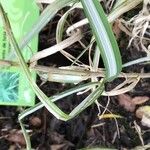
Miscanthus sacchariflorus
Amur Silver Grass · Amur Silvergrass · Silver Banner Grass · Silver Plume Grass · Japanese Plume Grass
Description
Source: leafsnapMiscanthus sacchariflorus, the Amur silvergrass, is a grass native to temperate Northeast Asia. Culms are erect, 90 centimetres (35 in) – 250 centimetres (98 in) in height and 5 millimetres (0.20 in) – 8 millimetres (0.31 in) in diameter.
Care Guide
💧 Water Twice per week
Amur silver grass flourishes in moist environments and requires regular watering to stay healthy. To keep the soil consistently damp, it should be watered twice a week. While it can withstand brief periods of dryness, rainwater during the growing season helps boost its vigorous growth and enhances its lush foliage.
☀️ Light Full sun
Amur silver grass does best with plentiful sunlight, which supports healthy growth. The plant's different growth stages do not significantly change this requirement. Originating from areas with abundant sun, it can also cope with lower amounts of light. Both too little and too much light can hinder its optimal growth, showing its preference for a balanced exposure to sunlight.
What are the sunlight requirements for Amur silver grass?
Amur silver grass needs abundant sunlight to thrive, typically doing best with more than 6 hours of sunlight daily for full sun exposure. It can also manage in partial sun, which means about 3-6 hours of sunlight. To ensure the plant's happiness, observe the movement of sunlight through your garden and pick spots that offer an ideal mix of light and shade. Despite originating from bright environments and being adaptable to lesser sunlight, both insufficient and excessive light can hinder its optimal growth, emphasizing its preference for a balanced solar exposure.
How essential is artificial lighting for indoor Amur silver grass?
Artificial lighting becomes vital when natural sunlight is inadequate, especially during winter or in areas that receive less sunlight. Indoor Amur silver grass requires sufficient lighting for optimal growth, with artificial lights serving as an effective solution to promote faster, healthier development. For successful indoor growth, choose the right type of artificial light such as LED, which can provide specific wavelengths needed by plants. Full sun plants require 30-50W/sq ft, partial sun plants 20-30W/sq ft, and full shade plants 10-20W/sq ft of artificial light. Place the light source 12-36 inches above the plant to mimic natural sunlight and adjust the duration to mimic natural daylight hours, usually between 8-12 hours per day.
What are the symptoms of inadequate lighting for Amur silver grass?
When Amur silver grass doesn't receive enough light, it may not show symptoms immediately, but signs can develop over time. Symptoms include smaller new leaves, leggy or sparse growth due to increased space between leaves or stems, faster leaf drop as the plant tries to conserve resources, slower or stalled growth as the plant enters survival mode, lighter-colored new leaves indicating a lack of chlorophyll, and issues like chlorosis, sunscald, leaf curling, wilting, and leaf scorching due to improper lighting conditions. Each symptom indicates the need to adjust the plant's exposure to light to ensure optimal growth and health.
How can you address light-related issues for indoor and outdoor Amur silver grass?
To address light-related issues in Amur silver grass, gradually increase exposure to sunlight. For indoor plants, move them to a sunnier location each week until achieving at least 6 hours of direct sunlight daily, utilizing south-facing windows and keeping curtains open. Supplement with artificial light if necessary, ensuring the plant receives at least 8 hours of light daily. For outdoor plants, also gradually relocate them to sunnier spots while avoiding sudden changes to prevent sunburn. Pruning trees or reducing other obstructions can improve sunlight access. If plant parts have been negatively affected by insufficient sunlight, they might not recover, but new growth following increased light exposure should be healthy. Additionally, smaller plants can be transplanted during their dormant period to a location with better sunlight and drainage.
🌡️ Temperature 5–35°C
Amur silver grass can tolerate a wide range of temperatures, but its range may still be restricted by different combinations of moisture and heat. It does best in warm summer climates with sufficient rainfall or watering. Extended periods of cloudy, rainy weather or sustained high temperatures can raise the chance of Amur silver grass dying. In winter, appropriate protection from cold can increase the plant's survival rate.
💨 Humidity
🪴 Soil 5-6
🌱 Fertilizer
Amur silver grass needs extra nutrients to encourage healthy new growth. In spring, spreading compost around the base of the plant will effectively supply the required nourishment. Fertilizing promotes vigorous growth and improves the plant’s ability to withstand diseases and pests.
🪴 Pot & Repot
✂️ Pruning
Amur silver grass is a tall ornamental grass known for its slender leaves and plume-like flowers. To encourage denser growth, prune it early in the spring by cutting back the foliage to 15 cm (6 inches). Make sure to sanitize your tools before pruning to prevent the spread of disease. Proper pruning not only enhances air circulation but also improves the plant's overall vigor and appearance.
🌿 Propagating
🐛 Diseases & pets
☠️ Toxicity
Characteristics
- Plant Type
- Grass
- Life Cycle
- Perennial
- Genus
- Miscanthus
- Family
- Poaceae
- Hardiness Zone
- 4-9
- Mature Height
- 1.52 m to 2.44 m
- Mature Spread
- 2.13 m
- Leaf Color
- Green
- Leaf Type
- Deciduous
- Flower Color
- Silver, Tan
- Flower Size
- 10.16 cm
- Bloom Time
- Late summer, Early fall
- Planting Time
- Spring, Winter
- Harvest Time
- Early fall, Mid fall