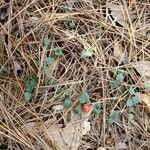
Mitchella repens
Partridgeberry · Squawvine · Partridge Vine · Running Box · Two-eyed Berry
Description
Source: leafsnapMitchella repens, commonly known as partridgeberry, is a low-growing evergreen plant that belongs to the Rubiaceae family. It is native to North America and can be found in the eastern and central regions of the United States. Typically, the plant grows up to 6 inches in height and spreads up to 2 feet in width. The leaves of Mitchella repens are small, glossy, and oval-shaped with a dark green color. From May through July, the plant produces small, fragrant white or pinkish flowers that attract bees for pollination. The fruit of Mitchella repens is a bright red berry that resembles a partridge's eye, which explains its common name, "partridgeberry." Although these berries are edible, they have little flavor. Mitchella repens has been used for medicinal purposes by Native Americans for centuries. It served as an herbal remedy for various ailments, including menstrual cramps, digestive issues, headaches, and fever reduction. For landscaping and gardening purposes, Mitchella repens can be grown in shaded areas with moist soil conditions. Its low-growing nature makes it an ideal ground cover, perfect for planting under trees or shrubs where other plants might struggle due to lack of sunlight.
Care Guide
💧 Water Every 7 days
Partridge berry grows best in moist woodland understories, preferring consistent moisture without becoming waterlogged. To maintain the ideal level of dampness, water it weekly. As a popular indoor groundcover, partridge berry also requires high humidity, which can be achieved through regular misting or by using a pebble tray.
How should I water my Partridge berry plant?
When watering the Partridge berry, it is recommended to use filtered water at room temperature. Tap water may contain harmful particles, so filtered water is preferable. The Partridge berry originates from a warm environment, so cold water can be a shock to its system. It is best to avoid overhead watering, as this can cause foliage problems. Instead, gently apply filtered room temperature water directly to the soil until it is completely soaked. This helps moisture reach the roots and allows them to spread and collect nutrients effectively.
What should I do if I give my Partridge berry too much or too little water?
Overwatering is a more common issue than underwatering for Partridge berry plants. When overwatered, the stems and leaves may wilt and turn yellow. Prolonged overwatering can lead to diseases like root rot, mold, and mildew, which can kill the plant. Partridge berry plants have decent drought tolerance, so underwatering is less common. However, it can still happen and cause brittle, brown leaves. It's important to recognize signs of overwatering early to prevent irreversible damage. Reduce watering immediately if you notice early signs. Check the soil drainage and replace it with a well-draining potting mix if necessary. If the plant is receiving too little water, simply increase the watering frequency until the signs improve.
How often do I need to water my Partridge berry plant?
If your Partridge berry plant is in a pot, you can determine if it needs water by checking the moisture level of the soil. Simply stick your finger into the soil and if you find that the top two to three inches are dry, it's time to water it. Similarly, if you have it planted outdoors in the ground, you can use the same method. When the top few inches of soil have dried out, it's time to give it some water. Typically, during the spring and early fall, watering once a week will be sufficient. However, when it gets really hot, you may need to increase the frequency to twice a week or more. Nevertheless, mature, well-established Partridge berry plants are quite resilient and can withstand dry periods.
How much water does my Partridge berry plant need?
When watering your Partridge berry, don't hold back on how much water you give. Make sure the top few inches of soil are dry, then give the plant a deep watering so that the soil is completely soaked. You want to water the plant enough that excess water flows through the drainage holes at the bottom of the pot. If you don't see any excess water draining, you may not have watered enough. However, be careful not to let water accumulate in the soil, as this can be harmful to the plant. On the other hand, if water doesn't drain properly from the pot, it could mean that the soil doesn't drain well, which can be bad for the plant's health. If the plant is outside, around 1 inch of rain per week should be enough.
How do I water my Partridge berry when it is growing at different stages?
The water requirements of the Partridge berry can vary depending on its growth stages. In the first few years of its life or when it has been recently transplanted, the Partridge berry will need more water than usual. During these stages, the plant focuses on developing new roots to support future growth, which requires additional moisture. As the plant matures over a few seasons, its water needs will decrease. Another growth stage when the Partridge berry may need more water is during the bloom period. The development of flowers requires a significant amount of moisture, so watering may need to be increased at this time.
☀️ Light Partial sun
Partridge berry does best with plenty of light, but not beyond what it can tolerate. It can also grow well in moderately shaded surroundings. Excessive light can scorch its leaves, while insufficient light can slow its growth. The light levels in its native habitat are similar to those of understories.
What are the sunlight requirements for Partridge Berry plants?
Partridge Berry, known botanically as Mitchella repens, thrives in various sunlight conditions, ranging from partial sun, which is about 3-6 hours of sunlight per day, to full shade, with less than 3 hours of sunlight. It's essential to observe how sunlight moves through your garden to find spots that offer the right balance for these plants. Overexposure to sunlight can harm the plant by scorching its leaves, while insufficient light might impede its growth. In its native habitat, Partridge Berry experiences light conditions similar to forest understories, which provide an ample but not excessive amount of light.
How can artificial lighting be used for Partridge Berry plants indoors?
Indoor Partridge Berry plants require adequate lighting, especially when natural sunlight is insufficient. Artificial lighting is a vital solution for ensuring optimal plant growth indoors. LED lights are popular for providing specific wavelengths needed by plants. The amount of artificial light needed varies: full sun plants require 30-50W/sq ft, partial sun plants need 20-30W/sq ft, and full shade plants require 10-20W/sq ft. The light source should be placed 12-36 inches above the plant to mimic natural sunlight, and most plants will benefit from 8-12 hours of light per day.
What are the signs of inadequate light for indoor Partridge Berry plants?
When Partridge Berry plants receive insufficient light, several symptoms can manifest, such as smaller new leaves, leggy or sparse growth, faster leaf drop, slower or no new growth, lighter-colored new leaves, chlorosis, sunscald, leaf curling, wilting, and leaf scorching. These symptoms are indicators that the plant is either receiving too little light, leading to a lack of chlorophyll and essential nutrients, or too much direct light, causing physical damage to the leaves and stems.
How can I improve light conditions for my Partridge Berry plant?
To enhance light conditions for Partridge Berry plants, gradually expose them to more sunlight by shifting them to sunnier spots each week until they receive the desired amount of direct sunlight, approximately 3-6 hours daily. For indoor plants that are large or immobile, consider using artificial lighting sources, like desk or ceiling lamps, or invest in professional plant grow lights, ensuring they're on for at least 8 hours daily. If your outdoor plants are suffering from insufficient sunlight, gradually move them to sunnier locations each week to avoid sunburn. For plants affected by obstructed sunlight, observe the environment and consider reducing obstructions, such as pruning trees, or transplant smaller plants to areas with ample sunlight and good drainage.
🌡️ Temperature 5–35°C
In its native habitat, partridge berry occurs in temperatures from 14 to 77 ℉ (-10 to 25 ℃), with average temperatures between 41 and 59 ℉ (5 to 15 ℃). The plant prefers a temperature range of 41 to 95 ℉ (5 to 35 ℃). In hotter seasons, planting it in shaded spots and maintaining consistent moisture is advised. During colder seasons, applying a layer of mulch can help keep the soil warm.
What are the ideal temperature conditions for partridge berry?
Partridge berry thrives in its native environment where temperatures range from 14 to 77°F (-10 to 25°C), with average temperatures being more comfortable between 41 to 59°F (5 to 15°C). The plant prefers a broader temperature range of 41 to 95°F (5 to 35°C) for optimal growth. In the hotter seasons, it's beneficial to plant it in shaded areas and ensure it has consistent moisture. For cooler seasons, adding a layer of mulch can help maintain soil warmth. The partridge berry is known for its strong cold resistance, and special frost protection measures are usually not necessary. However, if temperatures are expected to plummet below -30°C, some cold protection using soil or straw cover might be advisable.
How should you care for partridge berry in low temperatures?
Partridge berry is notably cold-tolerant, ideally maintained above 5°C. However, during winters with temperatures dropping below -25°C, it's crucial to keep the plant above these extremes. Exposure to temperatures below -30°C doesn't typically cause visible winter damage but may lead to decreased sprouting or absence of it in spring. To mitigate this, one should remove any parts that haven't sprouted come spring as a remedy to the cold's impact on the plant. Additionally, watering the plant abundantly before the first freeze helps keep the soil moist, which is vital for the plant's health during cold winters and early spring.
What care is needed for partridge berry in high temperatures?
During summer, ensuring partridge berry's temperature doesn't exceed 35°C is crucial for its health. When temperatures climb above 41°C, the plant may show signs of stress such as lighter-colored leaves, curling, susceptibility to sunburn, and in severe cases, wilting or completely drying out. To address this, affected parts should be trimmed away. Relocating the plant to an area with shade or using a shade cloth during the midday and afternoon sun can protect it from high temperature stress. Also, watering the plant in the cool of the morning and evening helps maintain necessary soil moisture levels.
💨 Humidity
🪴 Soil 5-6
🌱 Fertilizer
One spring application of fertilizer is generally enough for Partridge berry, though repeated applications can boost growth. Apply fertilizer about every month to every month and a half. Fertilizing improves the leaves' appearance and function, helping maintain even color and a healthy texture. It also promotes root development and enhances nutrient uptake for long-term plant health.
🪴 Pot & Repot Every 12 months
✂️ Pruning
To improve the health and appearance of your partridge berry plants, prune them in early spring. Start by removing any dead stems and shaping the plant as desired. Light pruning will encourage denser growth and help control the plant's spread. However, be cautious with heavy pruning, as it can stress the plant. Pruning after the flowering period can also boost berry production. Regular and proper pruning enhances air circulation, which helps reduce the risk of disease.
🌿 Propagating
🐛 Diseases & pets
☠️ Toxicity
Characteristics
- Plant Type
- Herb
- Life Cycle
- Perennial
- Genus
- Mitchella
- Family
- Rubiaceae
- Hardiness Zone
- 4-10
- Mature Height
- 3 cm to 8 cm
- Mature Spread
- 30 cm to 40 cm
- Leaf Color
- Green
- Leaf Type
- Evergreen
- Flower Color
- White
- Flower Size
- 2.54 cm
- Bloom Time
- Late spring, Early summer, Mid summer
- Planting Time
- Autumn
- Harvest Time
- Early spring, Mid spring, Mid summer, Late summer, Fall, Winter
- Native Area
- Mexico, Guatemala