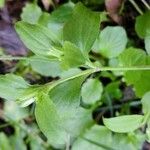
Moehringia trinervia
Apetalous sandwort · Three-nerved sandwort · Three-veined sandwort · Thee-nerved Sandwort
Description
Source: leafsnapMoehringia trinervia, commonly known as three-veined sandwort, is a small herbaceous plant in the Caryophyllaceae family. Native to Europe and Asia, it thrives in diverse habitats such as rocky slopes, meadows, and forests. This plant exhibits a prostrate growth habit, with stems reaching up to 20 cm in length. Its small, narrow leaves feature three prominent veins. The flowers, either white or pinkish, have five petals that are deeply notched at the tips. Moehringia trinervia serves as an essential food source for various insects, including bees and butterflies. Moreover, it possesses medicinal properties and has been traditionally used to treat ailments such as diarrhea. This plant is easy to grow from seed or cuttings, requiring well-drained soil in full sun or partial shade. It can be employed as ground cover or planted along the borders of rock gardens, valued for its attractive foliage and delicate flowers. Overall, Moehringia trinervia is a fascinating plant species that enhances natural landscapes while providing ecological benefits by supporting pollinator populations.
Care Guide
💧 Water Every 7 days
Three-nerved sandwort thrives in cool, moist woodland environments. It requires consistent moisture but cannot tolerate waterlogged conditions. Being sensitive to drought, this plant needs weekly watering to maintain its lush growth, particularly during the growing season, which is vital for its development and resilience.
How should I water my Three-nerved sandwort plant?
To water Three-nerved sandwort, you have a few options. You can use a garden hose with a spray nozzle, a watering can, or any other common watering tool. This plant is not too particular about how it's watered - it can thrive with rainwater, tap water, or filtered water. However, it's generally recommended to avoid watering it from overhead to prevent damage to the leaves, flowers, and potential diseases. A drip irrigation system is often the best choice for evenly and directly watering Three-nerved sandwort. If you have a container-grown plant, you can still use a cup, watering can, or tap to water it directly into the soil.
What should I do if I give too much or too little water to my Three-nerved sandwort?
If you notice that your Three-nerved sandwort lacks moisture, the remedy is simple: water it more regularly. Overwatering, on the other hand, can be a serious problem that can lead to diseases and death. To prevent this, choose a location for your plant that gets plenty of sunlight to dry the soil and has good drainage. If you have overwatered a potted Three-nerved sandwort, it may be necessary to transfer it to a new pot with better drainage. Use loose soil and a pot that drains efficiently when repotting.
How frequently do I need to water my Three-nerved sandwort?
Three-nerved sandwort requires regular watering throughout the growing season. In spring, watering once per week is recommended. As the season progresses and temperatures rise, you may need to increase watering to two to three times per week. However, excessive watering can harm the plant. It's important to keep the soil moist but not wet, regardless of watering frequency. If you have Three-nerved sandwort in a pot, you'll need to water more frequently. Potted soil can heat up and dry out faster than ground soil, so watering a container-grown Three-nerved sandwort a few times per week is usually necessary, compared to only once per week for in-ground plants.
How much water does my Three-nerved sandwort require?
When it comes to watering your Three-nerved sandwort, there are a few approaches you can take. Some gardeners prefer to gauge the moisture level of the soil by touching it. They suggest watering until the top six inches of soil feel moist. Another option is to use a specific measurement as a guideline. Generally, giving your plant around two gallons of water per week is recommended, although this can vary depending on climate and how quickly the soil dries out. However, it's important to be mindful that strictly sticking to this guideline might lead to overwatering if your plant requires less water. If you're growing Three-nerved sandwort in a container, a different method applies. You should aim to thoroughly moisten all layers of dry soil. To check, simply insert your finger into the soil and feel for moisture. Another way is to water until you observe a small amount of excess water draining from the pot's drainage holes.
Am I watering my Three-nerved sandwort enough?
Avoiding overwatering your Three-nerved sandwort can be a bit challenging. These plants have deep roots, so you need to water the soil weekly to keep them hydrated. However, they are prone to root rot and may turn brown if overwatered. Underwatering is less of a concern as these plants can survive without additional watering for some time. Yet, if you neglect watering for too long, the plant may start to wilt and its leaves may become dry.
☀️ Light Full sun
Three-nerved sandwort comes from bright, open habitats and thrives in full sun. It can tolerate partial sun but favors direct sunlight for best growth. This plant, which may be annual or biennial, is known for its sun-loving nature.
What are the sunlight requirements for Three-nerved sandwort?
Three-nerved sandwort thrives in bright, open environments and requires full sun, which is above 6 hours of sunlight daily, for optimal growth. It can tolerate partial sun, about 3-6 hours of sunlight, but prefers more. It's important to watch how sunlight moves through your garden, selecting spots that ensure the perfect balance of light and shade for your plants' happiness.
How can artificial lighting benefit indoor Three-nerved sandwort plants?
Indoor Three-nerved sandwort plants benefit significantly from artificial lighting, especially when natural sunlight is insufficient, like in winter or less sunny spaces. Adequate lighting promotes faster, healthier growth. LED lights are recommended because they can provide specific wavelengths needed by plants. Full sun plants require 30-50W/sq ft, partial sun plants need 20-30W/sq ft, and shade plants need 10-20W/sq ft of artificial light. The light source should be placed 12-36 inches above the plant, mimicking natural sunlight, and most plants need 8-12 hours of light per day.
What are the symptoms of light deficiency in indoor Three-nerved sandwort?
When grown indoors under inadequate light, Three-nerved sandwort may exhibit symptoms such as smaller new leaves compared to older ones, leggy or sparse growth, faster leaf drop, slower or no new growth, and lighter-colored or irregularly patterned new leaves. Insufficient sunlight causes a lack of chlorophyll and essential nutrients, leading to these symptoms.
What are the symptoms of overexposure to sunlight in Three-nerved sandwort?
Three-nerved sandwort may suffer from overexposure to sunlight, showing symptoms like chlorosis, where leaves lose their green color; sunscald, appearing as pale or necrotic areas on the plant tissue; leaf curling as a defense mechanism against water loss; wilting due to increased transpiration; and leaf scorching, indicated by brown, dry edges on leaves. These indicate excessive sunlight damage to the plant's health.
What solutions can be applied for Three-nerved sandwort experiencing light-related issues?
For indoor plants, gradually increase sunlight exposure to at least 6 hours daily by moving them closer to a south-facing window or using artificial lights for 8 hours daily. Outdoor plants should be moved gradually to avoid sunburn. If sunlight is obstructed, consider pruning trees or transplanting smaller plants to sunnier locations with good drainage. It's important to note that parts of the plant damaged by insufficient light may not recover, but new growth will be healthy after adjusting light exposure.
🌡️ Temperature 0–21.1°C
Three-nerved sandwort is indigenous to temperate regions and prefers to grow in conditions with temperatures between 68 and 95 °F (20 to 35 ℃). Seasonal adjustments may be necessary to keep temperatures within that range.
What is the native climate for three-nerved sandwort?
Three-nerved sandwort, botanically known as Moehringia trinervia, is native to temperate climates. It thrives in environments where the temperature is between 68 to 95 °F (20 to 35 °C). To ensure the plant grows optimally, seasonal adjustments might be necessary to maintain this specific temperature range.
How does three-nerved sandwort handle cold weather?
Three-nerved sandwort is highly tolerant of cold weather and does not require additional frost protection measures during the winter months. However, to prepare for the first freeze of autumn, it is recommended to water the plant generously. This ensures that the soil remains moist and enters a frozen state, which helps to prevent drought and water scarcity for the plant during winter and early spring.
What should I do if the temperature drops below -40°C?
Three-nerved sandwort is extremely cold-tolerant, capable of enduring winters where temperatures stay above -40°C. If temperatures fall below this extreme threshold, the plant may not show immediate damage but could experience decreased sprouting or fail to sprout at all during spring. To address this, remove any parts of the plant that have failed to sprout once spring arrives.
How does three-nerved sandwort react to high temperatures?
Three-nerved sandwort does not tolerate high temperatures well. When exposed to temperatures exceeding 35°C, its growth will halt, and the plant becomes more prone to rot and other stress-related damages. To mitigate high temperature stress, trim away any sunburned and dried-up parts of the plant. Move it to a shaded location or use a shade cloth to protect it from the midday and afternoon sun. Additionally, ensure the soil remains moist by watering the plant in the morning and evening.
💨 Humidity normal (40-60%)
This plant will thrive in moderate humidity, which is probably the level in your home. However, misting it a few times a week can be very beneficial. Make sure the room has good ventilation.
🪴 Soil 6-7
🌱 Fertilizer
Three-nerved sandwort responds well to regular, light applications of fertilizer to encourage healthy leaf development. You should fertilize Three-nerved sandwort about once a month during the summer. Nitrogen is important for the foliage, and supplying nitrogen-rich fertilizer helps Three-nerved sandwort thrive.
🪴 Pot & Repot
✂️ Pruning
The Three-nerved Sandwort is known for its small white flowers and delicate leaves with three distinct veins. To encourage healthy growth and flowering, it is best to prune the plant between early and late spring. When pruning, remove any dead stems and thin out crowded areas to improve air circulation. Be sure to use clean, sharp tools to maintain the plant's health and appearance.
🌿 Propagating
🐛 Diseases & pets
☠️ Toxicity
Characteristics
- Plant Type
- Herb
- Life Cycle
- Annual, Perennial
- Genus
- Moehringia
- Family
- Caryophyllaceae
- Hardiness Zone
- 2
- Mature Height
- 10 cm to 20 cm
- Mature Spread
- 30 cm
- Leaf Color
- Green
- Leaf Type
- Semi-evergreen
- Flower Color
- White
- Flower Size
- 0.51 cm to 1.02 cm
- Bloom Time
- Spring
- Planting Time
- Spring, Summer
- Harvest Time
- Late spring, Early summer, Mid summer
- Native Area
- Turkey, Sweden, Austria, Slovakia, Montenegro, Slovenia, Morocco, Croatia, Belarus, Russia, Germany, Estonia, Romania, Latvia, Belgium, Portugal, Netherlands, France, Czech Republic, Bulgaria, Armenia, Poland, Greece, Ukraine, Serbia, China, Lithuania, Norway, Kyrgyzstan, Kazakhstan, Italy, Spain, Switzerland, Denmark, Japan, Finland, Iran, Albania, Ireland, United Kingdom, Hungary, Algeria, Azerbaijan