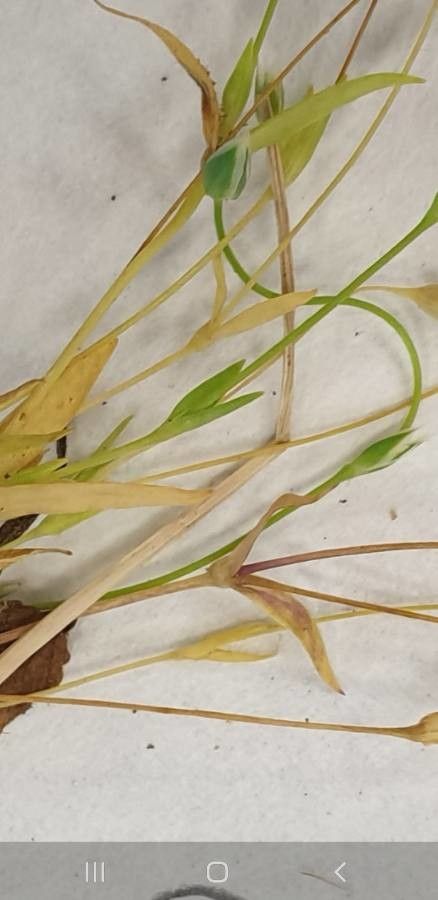
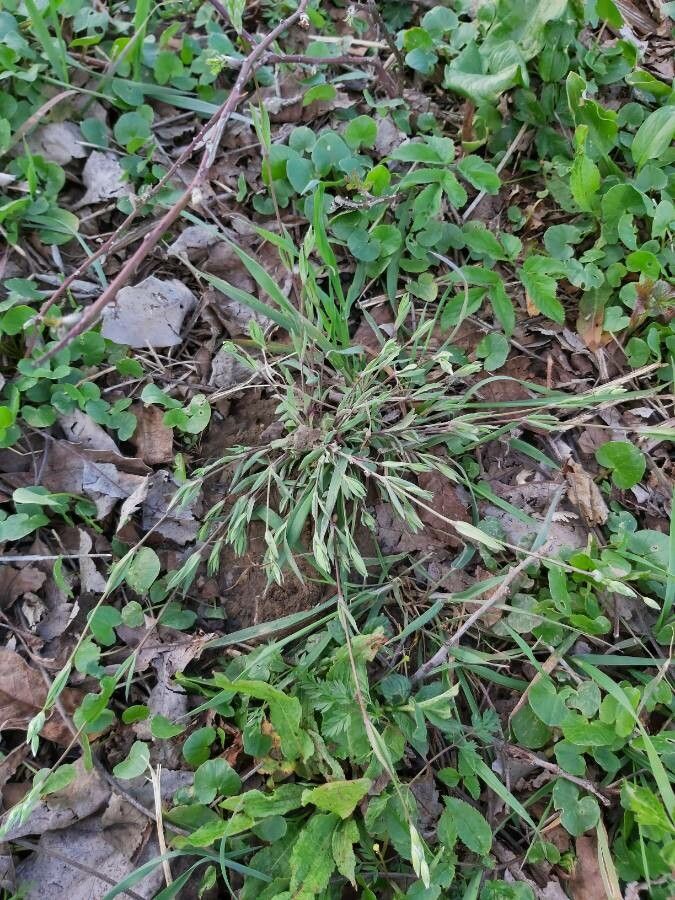
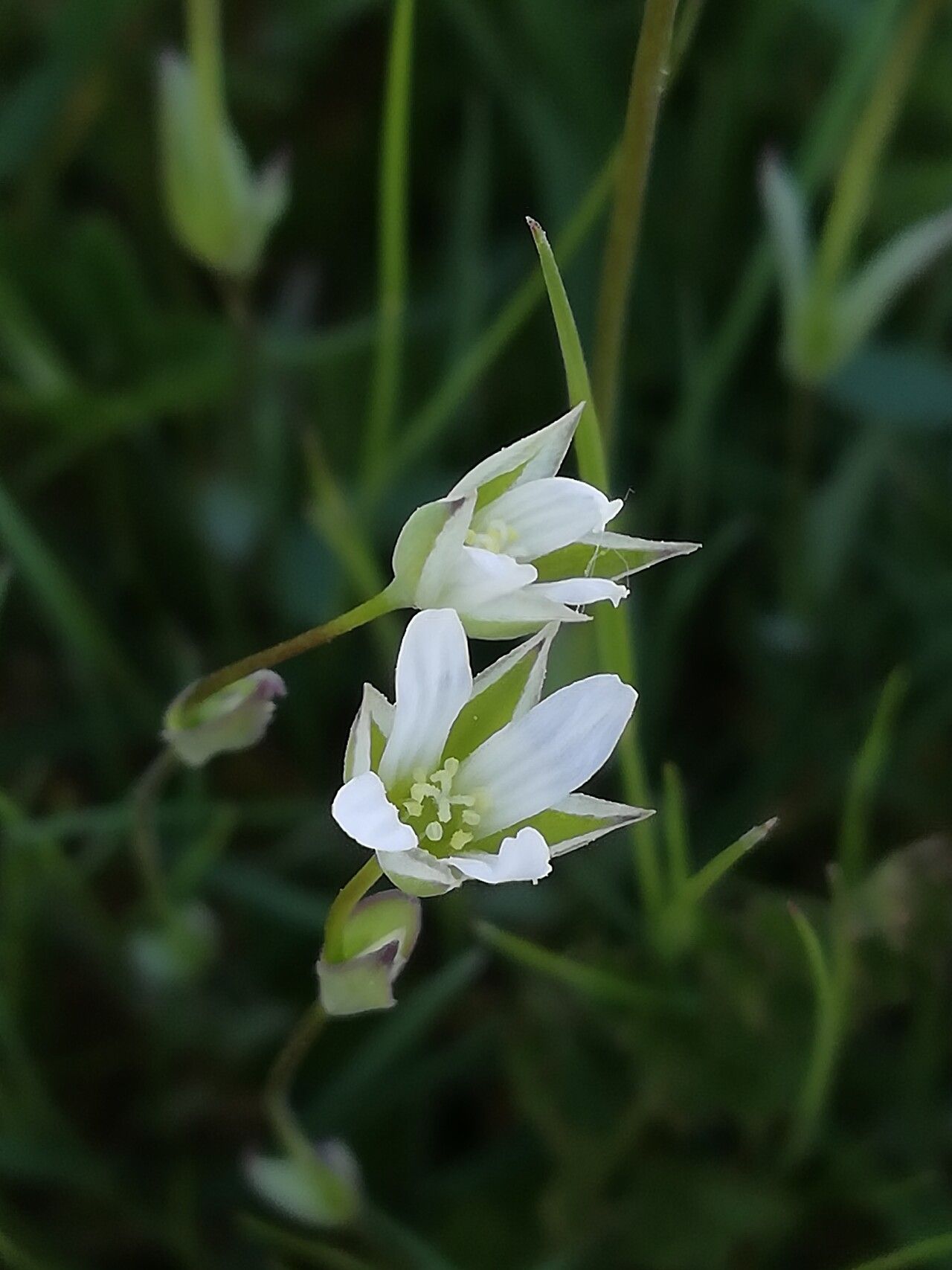
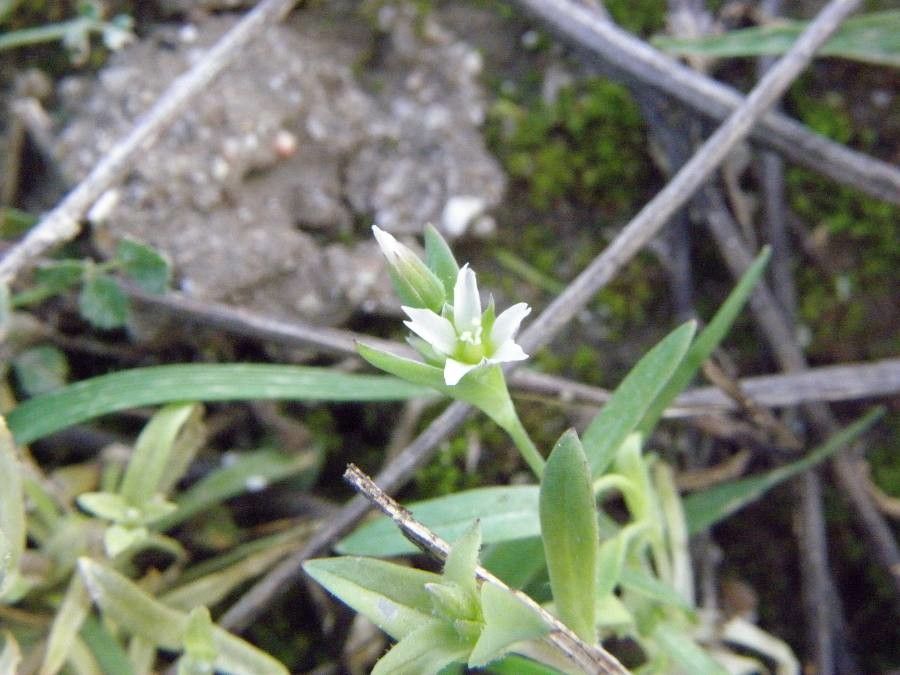
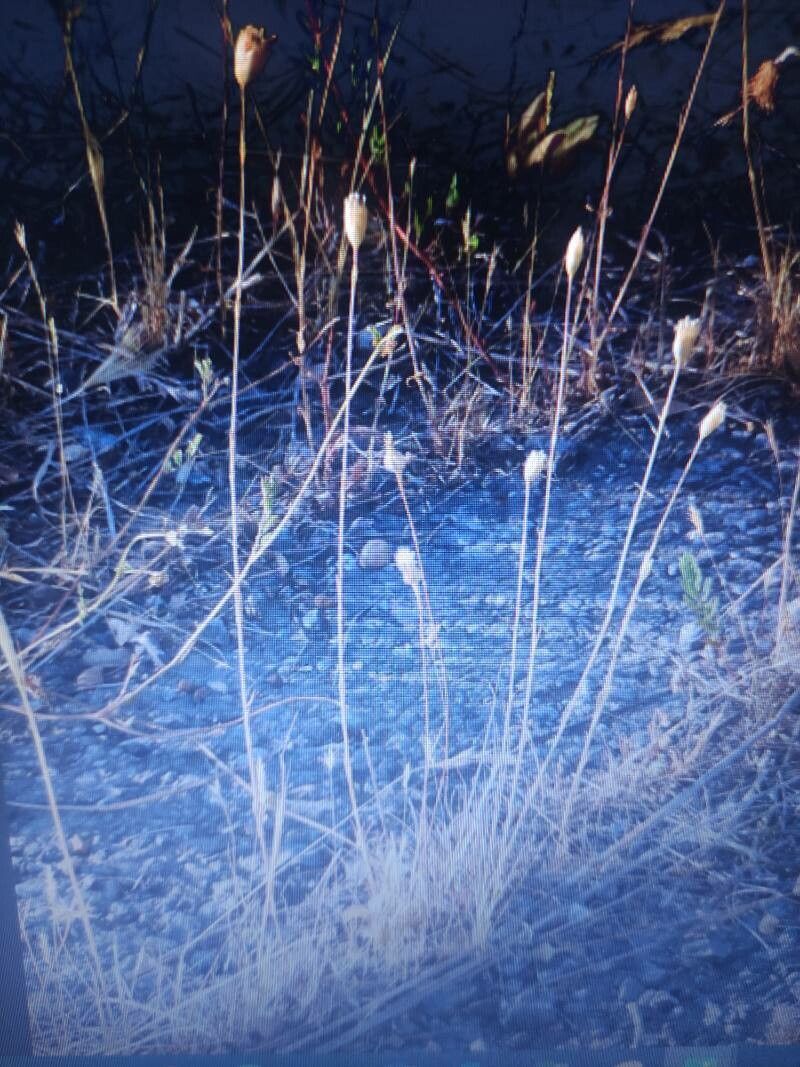
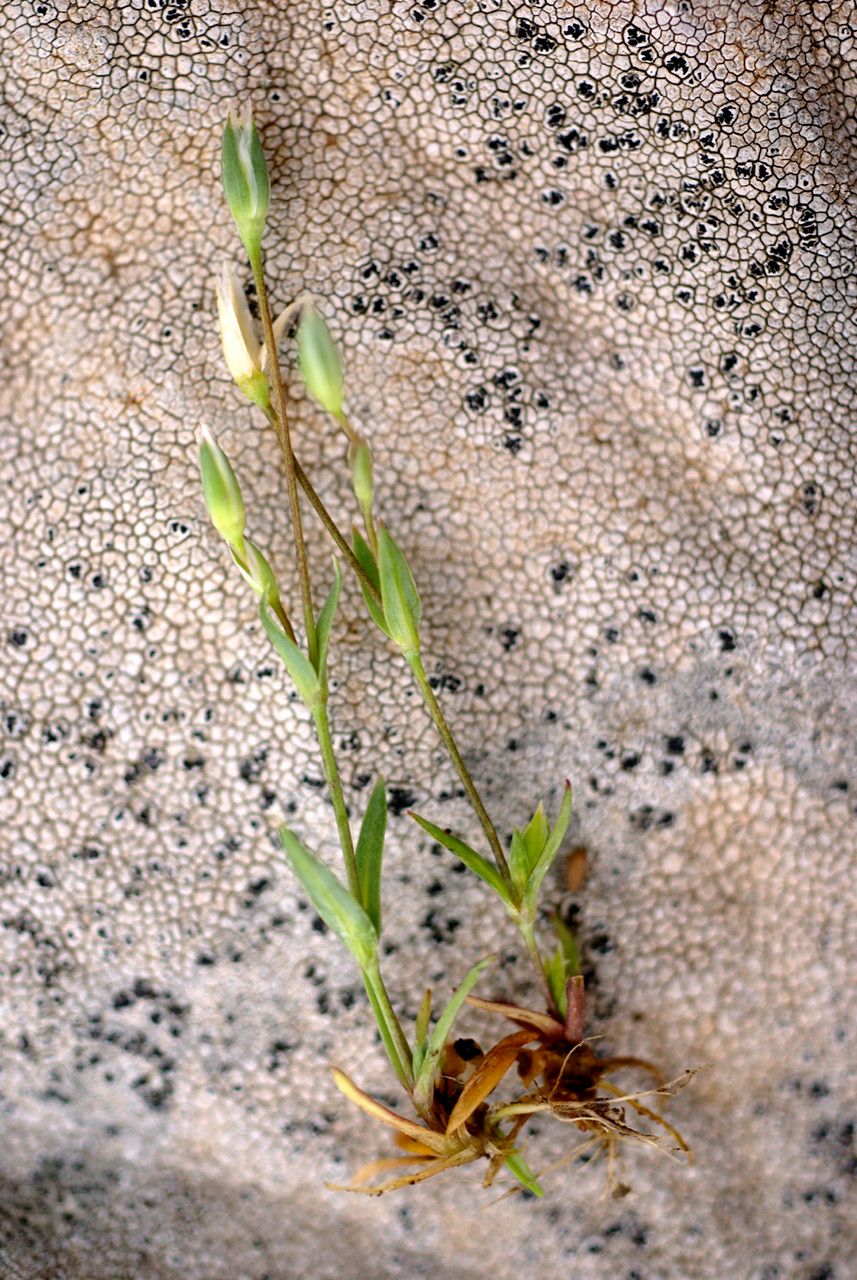
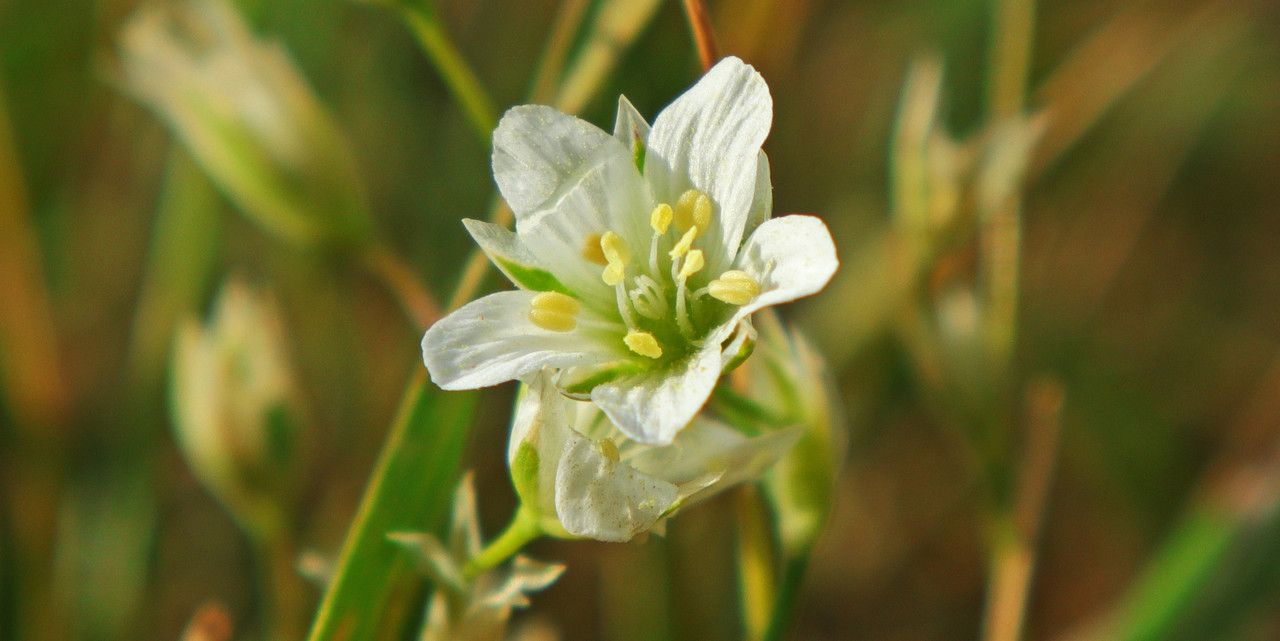
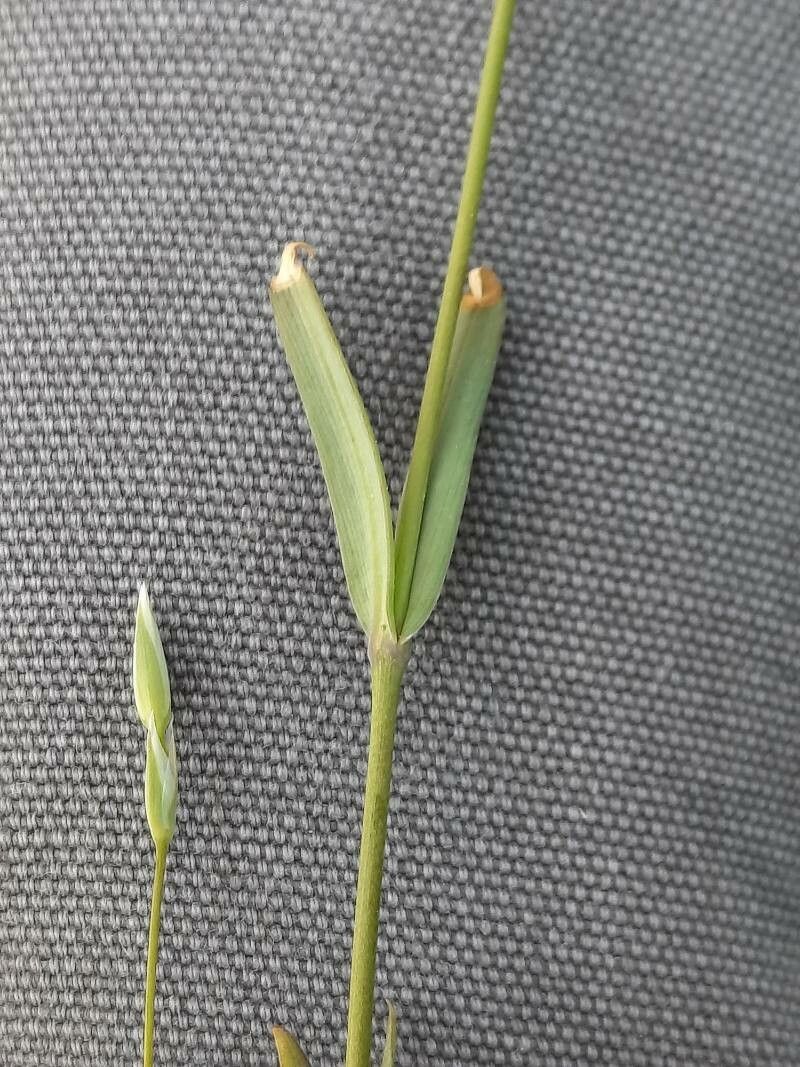
Moenchia erecta, the erect chickweed or upright chickweed (though the latter name may refer to any species of Moenchia), is a small annual plant in the family Caryophyllaceae. It can grow to over 10 cm in height, but it is usually smaller. It has blue-green glaucous leaves, and small, delicate white flowers. The sepals are longer than the petals, green and bordered in white. The plant is a common pasture weed native to Europe. It has been introduced elsewhere, including Australia and western North America, but it is not particularly invasive or competitive. In areas where it has been introduced, it springs up opportunistically in gardens, mowed fields, and other disturbed areas. It prefers moist places, such as grassy floodplains near marshes and coastal hills. The plant grows well in bare, sandy, gravelly soils, such as those at shorelines or on overgrazed fields.
Upright chickweed has strong resistance to disease and is generally not susceptible to illnesses. However, it can be affected by pests and diseases present in its environment. Such infections are typically not serious. In terms of care, this plant requires moderate maintenance. It should be pruned regularly to preserve a neat appearance and healthy growth. Fertilizing can also help encourage flowering. Upright chickweed is suitable for anyone with outdoor space, such as a garden or patio, and does not demand extensive experience. It may need more attention when grown indoors.
How to keep Moenchia Erecta.
Light
Upright chickweed is found in bright, open environments and does best in full sun. It will tolerate partial sun but favors direct sunlight for optimal growth. This plant, which can be annual or biennial, is noted for its sun-loving habit.
Water
Upright chickweed, a plant native to temperate regions, prefers consistent moisture and benefits from regular watering, ideally twice a week. Although it can withstand drought conditions, it thrives when its natural environment is closely mimicked. Typically cultivated outdoors, upright chickweed shows significant growth when it receives adequate hydration and seasonal rainfall.
Temperature
Upright chickweed can tolerate a broad range of temperatures, though its presence may still be restricted by specific combinations of moisture and heat. It grows best in warm summer conditions with sufficient rainfall or irrigation. Extended stretches of overcast, rainy weather or prolonged high temperatures raise the risk of Upright chickweed dying. During winter, shielding the plant from extreme cold can increase its chances of survival.
Fertilizer
Upright chickweed benefits from regular, dilute fertilizer applications to encourage healthy leaf growth. You should feed Upright chickweed about once a month throughout the summer. Nitrogen is essential for foliage, and supplying nitrogen-rich sources helps Upright chickweed thrive.
Pruning
Upright chickweed is known for its slender shape and white flowers. To help it thrive, pruning should be done ideally from early to late spring. Remove dead stems and thin out dense areas to encourage growth and improve air circulation, which can reduce the risk of disease. It's also a good idea to consult reliable sources for specific pruning techniques suited to your local climate.
Botanical profile.
- Plant Type
- Herb
- Life Cycle
- Annual
- Genus
- Moenchia
- Family
- Caryophyllaceae
- Hardiness Zone
- 7-10
- Mature Height
- 5 cm to 15 cm
- Mature Spread
- 2 cm to 5 cm
- Leaf Color
- Green
- Leaf Type
- Deciduous
- Flower Color
- White
- Flower Size
- 0.25 cm to 0.51 cm
- Bloom Time
- Early spring, Mid spring
- Planting Time
- Spring, Summer
- Harvest Time
- Late spring, Early summer
Other names.