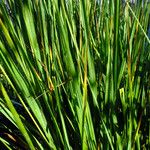
Molinia caerulea
Purple moor grass · Moor grass · Purple Moorgrass · Purple molinia · Flying bentgrass
Description
Source: leafsnapMolinia caerulea, commonly known as purple moor grass, is a perennial grass native to Europe and Asia. It typically thrives in moist meadows, bogs, and heathlands. The plant can grow up to 1.5 meters tall and features narrow, blue-green leaves. In late summer, Molinia caerulea produces flowers on tall stems that rise above its foliage. While the flowers are small and inconspicuous, they develop into attractive seed heads that last into the winter months. This grass is important for wildlife, providing food and shelter for various insects, birds, and small mammals. It also holds ornamental value, suitable for garden borders or mass plantings to create a naturalistic effect. Molinia caerulea prefers moist soils but can tolerate some drought once established. It thrives in full sun but will also endure partial shade. Overall, Molinia caerulea is an attractive ornamental grass with ecological benefits, making it an excellent addition to any garden or natural landscape.
Care Guide
💧 Water Every 7 days
Purple moorgrass flourishes in environments that are consistently moist and typically requires watering about twice a week. While it has a moderate tolerance to drought, this species is ideal for rain gardens. It thrives on dew and rainfall, making it well-suited for areas with similar water conditions.
What should I do if I give too much water or too little water to my Purple moorgrass?
Proper watering is essential for the health and performance of this beautiful ornamental grass. In the ground, watering issues can be addressed, but in a container, too much or too little water can quickly kill Purple moorgrass. When Purple moorgrass lacks the right amount of water, it may stop growing. Overwatering can cause yellow leaves with brown tips, while underwatering can lead to drooping leaves, weak seed head production, and browned leaves. If you suspect improper watering, first determine if it's too much or too little. Stop watering immediately if it's too much, as heavy soils may take weeks to dry out. Test the soil for moisture when you see new growth and decide whether more water is needed. The solution for insufficient water is to give the grasses a deep drink and see if it recovers. Remember, a long and deep watering is better than shallow and frequent watering because it encourages deep root growth, making the grasses more drought resistant and less prone to watering-related issues.
How often should I water my Purple moorgrass plant?
The watering needs of Purple moorgrass will vary depending on its location. Generally, it should be watered every week. In hot climates, watering once or twice a week in the summer may be necessary. In moderate climates, watering once every seven days or more may be enough. Grass in containers usually need more frequent watering than grass in the ground. The location of the grass also matters, with shaded grasses needing less frequent watering than in-ground grasses. Purple moorgrass should only be watered when the soil is dry. You can check the soil by pressing your finger a couple of inches into it or by weighing the pot to see if it is light. Lack of sufficient water can cause the grass blades to appear folded and thinner than usual. Despite its drought tolerance, regular, deep waterings will result in a vibrant color. In the wild, Purple moorgrass grows in open scrubland, exposed to extreme heat, bright sun, and intermittent rain. Although it is drought resistant, it still needs care and attention. When first planted, Purple moorgrass requires more frequent watering until it develops deep roots. For potted grass, the soil dries out quickly, especially if the pot is in hot, direct sun. Test the soil every 3 to 4 days and water only when it feels dry. Purple moorgrass in the ground generally needs less watering, but this depends on the type of soil. Clay soil can retain moisture below the surface even if it feels dry on top, whereas sandy soils drain quickly and may require more frequent watering.
What do I need to watch out for when I water my Purple moorgrass at different times of the year or in different weather conditions, or during its different growth stages?
Determining if you are watering enough can be done by observing the grass's growth rate. Purple moorgrass, for example, tends to double in size during the hottest months of the year. If the weather is hot but the grass isn't growing vigorously, your watering schedule may need adjustment. In winter, watering once a month might be sufficient, but it's still important to check the soil's moisture level. Generally, grass requires more water during its growth cycle in warm months, while less water is needed in winter and cooler months. One key reminder about Purple moorgrass is to always let the soil dry out completely before watering again.
☀️ Light Full sun
Purple moorgrass requires large amounts of sunlight, a characteristic it developed in its native environment where it received almost continuous light. It can, however, tolerate occasional periods of weaker sun. Excessive shading will inhibit its growth, while too much sunlight can stress the plant and cause negative effects.
What are the sunlight requirements for Purple Moorgrass?
Purple Moorgrass requires full sun exposure, which means it needs more than 6 hours of sunlight daily, but can also manage in partial sun, with about 3 to 6 hours of sunlight. This need for copious amounts of sunlight is rooted in its original habitat conditions that offered it near constant light. While it can withstand some periods under less intense solar rays, too much shade or overly excessive sun exposure may either impede its growth or stress the plant, respectively. It's essential to watch the sunlight's movement through your garden to find spots that provide a perfect balance for your plants.
How can artificial lighting be used for indoor Purple Moorgrass?
When natural sunlight is insufficient, especially in winter or less sunny spaces, artificial lighting serves as a crucial alternative for Purple Moorgrass's growth. Optimal growth requires choosing the right artificial light type, like LED lights that offer specific light wavelengths needed by plants. For full sun plants, 30-50W/sq ft of artificial light is needed, partial sun plants require 20-30W/sq ft, and full shade plants need 10-20W/sq ft. The light source should be placed 12-36 inches above the plant to mimic natural light, and the duration of light exposure should match natural daylight hours, usually 8-12 hours per day.
What are the symptoms of light deficiency or excessive light in Purple Moorgrass?
Purple Moorgrass shows several symptoms under insufficient or excessive light conditions. Inadequate light may result in smaller new leaves, leggy or sparse growth, faster leaf drop, slower or halted growth, and lighter-colored new leaves, indicating a lack of chlorophyll and nutrients. Conversely, too much sunlight can cause chlorosis, where leaves lose their green color, sunscald, leaf curling as a defensive mechanism against water loss, wilting due to excessive water loss, and leaf scorching characterized by brown, dry patches on leaves. These conditions highlight the plant's struggle with improper light exposure.
What are the solutions for addressing light-related issues in Purple Moorgrass?
To address light-related issues in Purple Moorgrass, gradual adaptation to sunlight conditions is recommended. For indoor plants, move them towards sunnier spots weekly until they receive at least 6 hours of direct sunlight daily, keeping them by a south-facing window. Use artificial lights if natural sunlight is not sufficient, ensuring they're on for at least 8 hours daily. For outdoor plants, gradually move them to sunnier spots to prevent sunburn. In cases of obstruction, prune any trees or shrubs blocking sunlight or transplant smaller plants to sunnier locations during their dormant period for better sunlight and growth.
🌡️ Temperature 5–35°C
Purple moorgrass is native to regions with controlled temperatures, preferring a range of 41 to 95 °F (5 to 35 ℃). Moderate adjustments may be necessary with seasonal changes to replicate its natural habitat.
What is the native temperature range for Purple moorgrass?
Purple moorgrass, botanically known as Molinia caerulea, is native to areas where the temperature is controlled and preferential, spanning from 41 to 95 °F (5 to 35 °C). This temperate range requires moderate adjustments depending on the seasonal changes to best mimic its natural habitat. The plant exhibits strong resistance to cold, usually negating the need for special frost protection measures in winter. However, if temperatures are expected to fall below -25°C, it becomes crucial to provide cold protection through covering the plant with soil or straw, alongside abundant watering before the first autumn freeze to maintain soil moisture into the frozen months.
How does low temperature affect Purple moorgrass and how can you manage it?
Purple moorgrass thrives best when temperatures stay above 5°C and should ideally remain above -20°C during winter months. If temperatures drop below -25°C, the plant may not show immediate damage but could exhibit reduced or nonexistent sprouting in the following spring. To manage the aftermath of such low temperatures, any parts of the plant that fail to sprout in spring should be removed. This tidying process can help the plant maintain its health and focus energy on new growth.
What are the effects of high temperature on Purple moorgrass and how can they be mitigated?
During the summer, it’s important to ensure Purple moorgrass does not endure temperatures above 35°C. Exceeding this threshold can cause the leaves to lighten, curl, and become prone to sunburn; severe heat stress may even lead to the wilting and drying out of the plant. Mitigation strategies include trimming away any sunburned or dry parts of the plant, relocating it to a shaded area during the intense midday and afternoon sun, or employing a shade cloth. Additionally, watering the plant in the morning and evening can help keep the soil moist and reduce the impact of high temperatures.
💨 Humidity
🪴 Soil 5-7
🌱 Fertilizer
Purple moorgrass needs extra nutrients to encourage healthy new growth. In spring, spreading compost around the plant's base can effectively supply the nutrients it requires. Fertilizing supports vigorous growth and helps the plant resist diseases and pests.
Why is it necessary to add fertilizer to my Purple moorgrass?
Fertilizing Purple moorgrass is important for a few reasons. Firstly, it provides your plant with the necessary nutrients for healthy new growth. Additionally, these extra nutrients also support the wellbeing of older growth and can aid in protecting your plant from diseases and pests.
When should I fertilize my Purple moorgrass?
To ensure the survival of Purple moorgrass in the garden, it is crucial to understand the right time to fertilize. Despite not being a heavy feeder, it does not need extra nutrients during its dying back period. While applying diluted fertilizer at the beginning of the growing season is an option, it is not advisable. Instead, a better approach is to place mulch or compost around the plant's base.
When is the best time to not fertilize my Purple moorgrass?
If you are not using packaged fertilizers, there is no need to be concerned about when to stop feeding Purple moorgrass. Simply apply a layer of compost or mulch in the spring, and this will be sufficient to keep the plant happy all year long. You do not need to worry about mulching or composting during the winter when the plant is dormant.
What kind of fertilizer does my Purple moorgrass require?
Instead of rushing to the garden center for fertilizer, you can easily support purple moorgrass by using compost in the spring. This will provide the necessary nutrients for the plant. Additionally, if you regularly mulch your garden, the bark will also serve as a source of nourishment for the plant, ensuring it remains healthy and thriving.
How should I add fertilizer to my Purple moorgrass?
The steps for using either mulch or compost on Purple moorgrass are the same. Start by laying down a layer of the material, making sure it covers the plant's base. If you decide to use both mulch and compost, reduce the amount of compost used. Applying a layer of mulch has two benefits: it helps the soil retain moisture and provides nutrients to the plant.
🪴 Pot & Repot Every 12 months
✂️ Pruning
Purple moorgrass is a resilient plant known for its tall, slender stems and graceful flower spikes. To encourage healthy growth, it's best to prune it in early spring. Trim away any dead foliage to improve sunlight access and to help control the size of the plant. Always use clean, sharp tools to avoid causing damage and to minimize the risk of disease.
🌿 Propagating
🐛 Diseases & pets
☠️ Toxicity
Characteristics
- Plant Type
- Grass
- Life Cycle
- Perennial
- Genus
- Molinia
- Family
- Poaceae
- Hardiness Zone
- 5-9
- Mature Height
- 0.61 m to 1.22 m
- Mature Spread
- 0.61 m to 1.22 m
- Leaf Color
- Green, Yellow, Gold, Orange
- Leaf Type
- Deciduous
- Flower Color
- Purple
- Flower Size
- 2.54 cm
- Bloom Time
- Mid summer, Late summer, Early fall
- Planting Time
- Autumn
- Harvest Time
- Fall
- Native Area
- Turkey, Sweden, Austria, Slovakia, Montenegro, Slovenia, Morocco, Croatia, Belarus, Russia, Germany, Estonia, Ethiopia, Romania, Latvia, Belgium, Portugal, Netherlands, France, Tunisia, Czech Republic, Bulgaria, Armenia, Poland, Greece, Ukraine, Lebanon, Serbia, Lithuania, Norway, Italy, Kazakhstan, Spain, Switzerland, Denmark, Finland, Albania, Ireland, United Kingdom, Hungary, Algeria, Azerbaijan