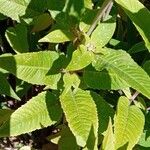
Monarda fistulosa
Wild bergamot · Beebalm · Horse-mint · Mintleaf Beebalm · Wild bergamot beebalm
Description
Source: leafsnapMonarda fistulosa, commonly known as wild bergamot or bee balm, is a perennial herbaceous plant native to North America. Belonging to the mint family, it can grow up to 3 feet tall. The plant features square stems and lance-shaped leaves that release a pleasant aroma when crushed. Its tubular flowers, ranging in color from pinkish-purple to lavender, bloom in mid-summer. Wild bergamot is a popular garden plant, admired for its beautiful flowers and its ability to attract pollinators such as bees, butterflies, and hummingbirds. Additionally, it has been used for centuries by Native Americans for its medicinal properties, helping to treat ailments such as colds, fevers, headaches, and digestive issues. The leaves of wild bergamot can be used fresh or dried for making tea or adding to salads, while the flowers are ideal for making potpourri or infusing into oil for aromatherapy purposes. Overall, Monarda fistulosa is an attractive herbaceous perennial with numerous ornamental and medicinal uses, making it a valuable addition to any garden.
💡 Wild bergamot, a favorite among birds, bees, and butterflies, has a rich history of beneficial uses. Its seeds germinate easily without requiring winter stratification, making the plant readily available to Native Americans who sought medicinal and culinary applications for various plant species. Wild bergamot was commonly used to make poultices and as a tea infusion to treat colds and headaches.
🌳 The vibrant purple flowers of wild bergamot (Monarda fistulosa) are excellent at attracting hummingbirds, bees, and butterflies. They bring beautiful color to gardens from midsummer through fall and are often used as cut flowers. This clumping perennial thrives in the flower beds and borders of cottage and informal gardens. For striking texture and color contrasts, consider planting wild bergamot alongside black-eyed Susan, false sunflower, and Echinacea purpurea.
🎭 Wealth, prosperity, health, good fortune
Care Guide
💧 Water
☀️ Light Full sun
🌡️ Temperature 5–35°C
💨 Humidity
🪴 Soil 6-7
🌱 Fertilizer
🪴 Pot & Repot
✂️ Pruning
🌿 Propagating
🐛 Diseases & pets
☠️ Toxicity
Characteristics
- Plant Type
- Herb
- Life Cycle
- Perennial
- Genus
- Monarda
- Family
- Lamiaceae
- Hardiness Zone
- 4-10
- Mature Height
- 1.07 m
- Mature Spread
- 61 cm to 91 cm
- Leaf Color
- Green, Gray
- Leaf Type
- Deciduous
- Flower Color
- Pink, Purple, Lavender, Violet
- Flower Size
- 3.05 cm to 5.08 cm
- Bloom Time
- Early summer, Mid summer
- Planting Time
- Spring
- Harvest Time
- Mid summer
- Native Area
- Mexico