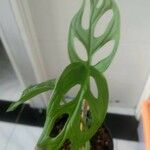
Monstera adansonii
Swiss-cheese-plant · Monkey mask · Tarovine · Adanson's monstera · Mountain Ears
Description
Source: leafsnapMonstera adansonii, commonly known as the Swiss cheese vine, is a popular houseplant from the Araceae family. Native to Central and South America, this plant is celebrated for its unique foliage, characterized by large, heart-shaped leaves with distinct holes or perforations. In its natural habitat, Monstera adansonii can reach up to 20 feet in height, but when grown indoors, it typically attains a height of up to 6 feet. This plant thrives in bright, indirect light and well-draining soil. While it can tolerate low light conditions, it may not grow as vigorously or produce as many leaves in such environments. Monstera adansonii requires moderate watering, allowing the soil to dry out slightly between waterings. A fast-growing plant, the Swiss cheese vine can be easily propagated through stem cuttings or by dividing mature plants. Its unique appearance and low maintenance needs make it an excellent addition to any indoor space. Moreover, according to NASA's Clean Air Study, Monstera adansonii helps purify indoor air by removing harmful toxins like formaldehyde and benzene. In summary, Monstera adansonii is an attractive houseplant with distinctive foliage patterns. It adds character and charm wherever it's placed and provides health benefits by improving air quality.
🌳 Though commonly recognized for their decorative appeal, swiss cheese-plant have also found a place in the field of biophilic design. This progressive discipline blends human living spaces with natural elements, promoting well‑being and productivity. Swiss cheese-plant, with their distinctive perforated leaves and lush growth, act as living artworks that encourage a connection to nature, so they function as more than mere decoration and become part of architectural wellness. Their use in forming green walls and planted spaces is now acknowledged as a way to enhance air quality and reduce stress within built environments, adding an interesting dimension to urban design and personal health.
Care Guide
💧 Water Every 7 days
The Swiss cheese plant thrives in high humidity and needs consistent moisture to maintain its lush foliage. It should be watered weekly. Although it is well-suited to tropical rainforests, it can also flourish indoors with regular misting to mimic its natural environment. The plant is resilient enough to withstand brief dry spells.
How should I water my Swiss cheese-plant?
There are multiple ways to water your Swiss cheese-plant effectively. If it is in a small indoor pot, you can bring it to the kitchen sink and use the faucet to add water. Hold the pot and stop watering once the water starts coming out of the drainage holes. Avoid doing this in cold climates as it can harm the plant's roots. Usually, using the faucet is fine, but if your tap water has a high level of fluorine, chlorine, or salts, consider using rainwater or lake water. The Swiss cheese-plant also responds well to overhead watering or watering directly into the soil, so you can use a watering can, hose, or any other tool you prefer.
What should I do if I give my Swiss cheese-plant too much or too little water?
If you realize that your Swiss cheese-plant is not getting enough water, the first step is to give it a thorough watering. Water it deeply until excess water runs out of the drainage hole in the container. If the plant is grown outside, water until the soil is completely moist. On the other hand, if you notice that your Swiss cheese-plant is getting too much water, start by reducing your watering schedule. It's also important to consider the soil and container that your plant is in. If the soil or container is not allowing water to drain properly, your plant will likely become overwatered again. To fix this, transfer your plant to looser soil and/or a container with larger drainage holes or a more porous material. Additionally, check the location of your plant. If it is in a corner or poorly ventilated area, it is recommended to move it to a window or around a door to improve ventilation. Ensuring that your plants are in a well-ventilated location can help prevent overwatering to some extent.
How frequently should I water my Swiss cheese-plant?
The Swiss cheese-plant does not need constant moisture in its soil. It's actually better to let the soil dry out between waterings. If you're growing this plant in a container, you can tell it's time to water by checking how dry the soil is. If the top half of the soil is dry, it's time to add water. You can feel the moisture level by sticking your fingers or a stick into the soil, or you can use a soil moisture meter. If you're growing the Swiss cheese-plant outdoors, you can plan to water it about once every other week, unless it has recently rained.
How much water should I give my Swiss cheese-plant?
To rehydrate the soil around your Swiss cheese-plant's roots, wait until the top half of the soil is dry, and then add enough water to moisten it again. The amount of water needed depends on the size of the container and the plant itself. For a small plant in a small to medium-sized container, one to two cups of water may be sufficient. Increase the amount of water for larger plants. To ensure proper hydration, check the soil by sticking your finger or a trowel into it. The soil should be completely moist. Another option is to water until you see excess water draining from the bottom of the container.
How can I know if I am giving my Swiss cheese plant enough water?
Both overwatering and underwatering can harm your Swiss cheese-plant's health, but they have distinct effects. If your plant doesn't receive enough water, its leaves may turn yellow or the edges may become brown and brittle. On the other hand, overwatering can cause yellow and brown marks to appear simultaneously on the leaves, potentially leading to diseases like root rot. By understanding these signs, you can successfully address both overwatering and underwatering problems.
☀️ Light Partial sun
The swiss cheese-plant grows best in places where the sunlight isn't too strong, similar to its typical growing conditions. It tolerates periods of lower light, but a complete lack of light can keep it from thriving. Excessive sunlight can cause undesirable effects, such as yellowing leaves.
What are the sunlight requirements for a Swiss cheese-plant?
The Swiss cheese-plant, or Monstera adansonii, thrives under specific sunlight conditions. It prefers about 3-6 hours of sunlight, categorizing it as needing partial sun. Full shade for this plant means it gets less than 3 hours of sunlight daily. It's crucial to observe how sunlight moves through your garden, aiming to find the perfect balance of light and shade. This balance ensures your plant’s happiness, promoting healthy growth while avoiding the adverse effects of too much or too little light.
What should I know about the Swiss cheese-plant's essentials?
The Swiss cheese-plant does well in environments that simulate its natural habitat, which means not overly intense sunlight. While it can manage with lower light levels, the absence of light can impede its growth, and too much sunlight may lead to yellowing leaves. In situations where natural light is insufficient, especially during winter or in less sunny areas, artificial lighting becomes crucial. LED lights are often recommended due to their ability to be customized to the needs of your plants. Depending on the plant's sunlight needs, the power of artificial light should be adjusted, and the light source should be placed 12-36 inches above the plant for 8-12 hours a day to mimic natural sunlight.
What symptoms indicate my Swiss cheese-plant isn't receiving the right amount of light?
There are several symptoms to watch for that indicate your Swiss cheese-plant is struggling with light conditions. New leaves growing smaller, leggy or sparse growth, faster leaf drop, and a halt in new growth suggest insufficient light. If the plant is exposed to too much light, it may show signs like chlorosis (yellowing leaves due to chlorophyll breakdown), sunscald, leaf curling, wilting from excessive water loss, and leaf scorching. These symptoms help identify whether the plant needs adjustments in its light exposure.
How can I address light-related issues for my Swiss cheese-plant?
Addressing light-related issues involves carefully adjusting the plant's exposure to sunlight. For indoor plants, gradually shifting them to sunnier spots each week or using artificial light, like grow lights for at least 8 hours a day, can help. Outdoors, the key is to move plants gradually to sunnier locations to prevent sunburn. Removing obstructions that block sunlight and, for smaller plants, considering transplanting to a sunnier spot with good drainage are effective strategies. It's important to remember that affected parts may not recover, but new growth should be healthy with proper light adjustments.
🌡️ Temperature 20–37.8°C
The Swiss cheese-plant comes from tropical regions and does best in temperatures of 68 to 100 °F (20 to 38 °C). It needs seasonal temperature changes — warmer in summer and cooler in winter — while staying within that range.
What is the ideal temperature range for Swiss cheese-plant?
The Swiss cheese-plant, native to tropical environments, thrives in temperatures between 68 to 100 °F (20 to 38 °C). It requires seasonal temperature adjustments, with warmer temperatures in the summer and cooler in the winter but always within this specified range. The plant loves heat, and exposure to cold temperatures can cause significant harm. During winter, it's beneficial to maintain temperatures above 20°C to ensure healthy growth. Temperatures nearing 0°C can be detrimental to the plant.
What should I do if my Swiss cheese-plant is exposed to low temperatures?
If your Swiss cheese-plant is exposed to low temperatures, it's crucial to take immediate action as it prefers warm climates and struggles with cold. Signs of cold stress include leaves lightening in color when temperatures fall below -5°C, eventually turning brown or black and exhibiting wilting or drooping after frost damage. To remedy this, trim off the frost-damaged parts and move the plant indoors to a warmer environment. Place it near a south-facing window for ample sunlight but ensure it's not too close to heaters or air conditioning vents to avoid air dryness.
How can I protect my Swiss cheese-plant from high temperatures?
During summer, it's important to keep your Swiss cheese-plant in conditions below 38°C to protect it from high temperatures. Exposure to temperatures above 43°C can lead to lighter leaf colors and increased susceptibility to sunburn. To mitigate the effects of high temperatures, trim away sunburned and dried parts of the plant. Relocate the plant to a shaded area, particularly away from the midday and afternoon sun. Ensure to water the plant in the morning and evening to maintain soil moisture and provide some relief from the heat.
💨 Humidity high (>60%)
This plant needs special care because it loves high humidity levels of 60-80% or more. The best way to achieve this is by placing a humidifier near the plant. Daily misting is also essential! Make sure the room has good ventilation.
🪴 Soil 6-7
🌱 Fertilizer
The ideal time to fertilize a Swiss cheese-plant is in early spring, as it comes out of dormancy. This encourages overall growth and flower development. Fertilizing improves the foliage, stems, and branches, and supports flowers that are larger, more vibrant, and longer-lasting. It helps move nutrients from the roots to the flowers and strengthens the plant's health and resistance to disease.
Why is it important for me to fertilize my Swiss cheese-plant?
The Swiss cheese-plant needs regular fertilization because its showy leaves require a lot of energy to produce and maintain. However, it also needs energy to support the growth of its stems, branches, roots, and other vital structures. Neglecting fertilization can result in two likely outcomes. Firstly, the leaves may lose their natural color and texture, making the plant look unhealthy and less attractive. Secondly, the plant's overall growth may slow down or become weak, which increases the risk of breakage.
When should I fertilize my Swiss cheese-plant?
To ensure the health of your Swiss cheese-plant, occasional feedings are important. You do not have to establish a fixed feeding schedule when planting these plants. A simple way to fertilize your Swiss cheese-plant is to apply the fertilizer while watering it sometimes. Additionally, during the growing season, your plant will require an adequate amount of water. To maintain its growth, you can feed it once every two to three weeks. This feeding frequency should be followed as long as your plant is producing new growth.
When is it not a good idea to add fertilizer to my Swiss cheese-plant?
For most of the year, you can fertilize your Swiss cheese-plant regularly. This is especially true during the active growing season of spring, summer, and early fall. However, during winter, it's important to refrain from fertilizing the plant. This is because the Swiss cheese-plant enters a dormant growth phase during this time. In this phase, the plant either doesn't produce any new growth or only produces very little. Since there is minimal active growth, the plant requires less energy, which is why fertilization isn't necessary during this period.
What kind of fertilizer does my Swiss cheese-plant need?
The fertilizer for a Swiss cheese-plant requires a specific blend of nutrients, but an ideal fertilizer has a ratio of 3 parts nitrogen, 1 part phosphorus, and 2 parts potassium (N-P-K). However, a general-purpose fertilizer with an even blend of nutrients can still work well sometimes. When using a balanced fertilizer, it's important to keep the volume ratio at 3 or lower for each nutrient. You can choose between granular or liquid-based fertilizer. If you opt for liquid fertilizer, it's recommended to dilute the strength by half. Granular fertilizer has few downsides, but using liquid fertilizer is often the most practical choice, especially when watering your Swiss cheese-plant.
How can I fertilize my Swiss cheese-plant?
Fertilizing a Swiss cheese-plant can be done in two simple ways. The first method involves mixing fertilizer with water in a watering can, then pouring it onto the soil. This allows the water to reach the plant's roots. Another option is to use a granular fertilizer, which can be sprinkled directly onto the soil. Granular fertilizers are typically slow-release, so you won't need to fertilize as frequently. Remember to water the plant while you feed it, as this is beneficial.
🪴 Pot & Repot Once a year
Repot a Swiss cheese-plant in spring or summer when temperatures are warm enough, choosing a slightly larger pot with good drainage. Water thoroughly after repotting and place it where it receives bright, indirect light. Consider adding a moss pole to support the plant as it grows.
✂️ Pruning
The Swiss cheese plant is known for its decorative leaves with unique perforations. To keep your plant healthy and attractive, it's important to prune it correctly. Start by removing any yellow leaves, then trim back long, leggy stems to promote bushier growth. You should also manage the aerial roots to keep them under control. The best time to prune is in early spring, as this helps improve light and air circulation, encourages vigorous growth, and manages the plant's size.
🌿 Propagating
🐛 Diseases & pets
☠️ Toxicity
Characteristics
- Plant Type
- Vine
- Life Cycle
- Perennial
- Genus
- Monstera
- Family
- Araceae
- Hardiness Zone
- 9-11
- Mature Height
- 3.05 m to 3.66 m
- Mature Spread
- 49 cm
- Leaf Color
- Green
- Leaf Type
- Evergreen
- Flower Color
- Cream, Purple
- Flower Size
- 12.70 cm to 15.24 cm
- Bloom Time
- All year round
- Planting Time
- Spring
- Harvest Time
- All year round
- Native Area
- Central America