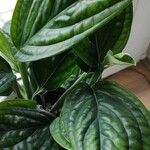
Monstera dilacerata
Care Guide
💧 Water
☀️ Light Partial sun
Centipede tongavine needs a moderate amount of light to thrive. Its native habitat features diffuse lighting, which promotes its growth. Too much light can scorch the leaves, while too little can cause reduced growth or wilting.
🌡️ Temperature 20–37.8°C
Centipede tongavine comes from regions where temperatures typically range between 68 and 100.4 °F (20 and 38 °C). The plant favors warmer conditions. As a hardy species, centipede tongavine can tolerate mild seasonal shifts, but temperatures below 68 °F might be damaging.
💨 Humidity
🪴 Soil 6-7
🌱 Fertilizer
Proper fertilization is essential for the health and appearance of Centipede tongavine. Apply fertilizer during the summer, repeating the application each month throughout the season. Nutrients provide energy for growth and support the plant’s various parts. Fertilizing improves Centipede tongavine’s flower display, ensuring the best blooms.
🪴 Pot & Repot
✂️ Pruning
🌿 Propagating
🐛 Diseases & pets
☠️ Toxicity
Characteristics
- Plant Type
- Herb, Vine
- Life Cycle
- Perennial
- Genus
- Monstera
- Family
- Araceae
- Hardiness Zone
- 10-12
- Mature Height
- 6.1 m to 7.92 m
- Mature Spread
- 10.06 m
- Leaf Color
- Green, Blue
- Leaf Type
- Evergreen
- Flower Color
- Cream
- Flower Size
- 3.05 cm
- Bloom Time
- Summer, Early fall
- Planting Time
- Spring, Autumn
- Harvest Time
- Late summer, Fall
- Native Area
- India, Malaysia, Vanuatu, Philippines, Bangladesh, Laos, Brunei, China, Indonesia, Cambodia, Vietnam, Myanmar, Japan, Papua New Guinea, Singapore, Thailand