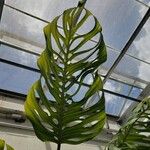
Monstera epipremnoides
Description
Source: leafsnapMonstera epipremnoides is a rare plant and is also known as Monstera Esqueleto. It has large leaves with oval-shaped holes.
Care Guide
💧 Water Every 1 week
Allow the top couple of inches of compost to dry out between waterings. Test for this by putting a finger into the container. Don’t allow the compost to completely dry out between waterings but equally don’t allow the plant to sit in a saucer of water or root rot (brown mushy roots, yellowing leaves, stunted growth) may occur. In practice, it will probably need watering between once a week and once a fortnight – slightly less in winter.
☀️ Light Partial sun
Monstera epipremnoides occurs naturally in habitats like forest understories or rocky areas, where it is exposed to shade. It prefers partial sun but can adapt to full sun or full shade, demonstrating its versatility and hardiness.
🌡️ Temperature 20–37.8°C
Monstera epipremnoides comes from tropical areas where the climate is generally warm and humid. Consequently, it is adapted to high temperatures and humidity. It dislikes sudden temperature changes and prefers a steady temperature environment, so avoiding temperature fluctuations indoors is important. It typically does not tolerate cold conditions and needs warmer temperatures to grow. If the surrounding temperature becomes too low, the plant may stop growing or even die.
💨 Humidity
🪴 Soil 6-8
🌱 Fertilizer
Monstera epipremnoides needs the most fertilizer during its active growth period, which occurs mainly in spring, summer, and early fall. Fertilization is required to supply essential nutrients that the soil may lack, encouraging healthy root and stem development as well as the attractive foliage that is a key characteristic of this plant.
🪴 Pot & Repot
✂️ Pruning
🌿 Propagating
🐛 Diseases & pets
☠️ Toxicity
The leaves (and flowers) of the plant are toxic if ingested due to containing calcium oxalate crystals. Vomiting and burning of the mouth may occur. Medical treatment may be needed in some cases so consider when growing near pets or small children.
Characteristics
- Plant Type
- Herb, Vine
- Life Cycle
- Perennial
- Genus
- Monstera
- Family
- Araceae
- Hardiness Zone
- 10-12
- Mature Height
- 3.05 m to 6.1 m
- Mature Spread
- 2.13 m to 3.05 m
- Leaf Color
- Dark Green, Forest Green
- Leaf Type
- Evergreen
- Flower Size
- 10.16 cm to 15.24 cm
- Bloom Time
- Summer, Early fall
- Planting Time
- Spring
- Harvest Time
- Late summer, Fall
- Native Area
- Costa Rica