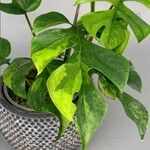
Monstera minima
مانسترا · برگ انجیری · Mini monstera
Description
Source: leafsnapMonstera minima, also known as Rhaphidophora tetrasperma, is a tropical plant native to Thailand and Malaysia. Belonging to the Araceae family, it is closely related to the popular Monstera deliciosa. Monstera minima features small, heart-shaped leaves that measure about 2-3 inches in size. The dark green leaves are adorned with distinct fenestrations, or holes, giving them a unique appearance. This plant grows as a vine, utilizing its aerial roots to climb trees or other structures. The plant thrives in bright, indirect light but can tolerate lower light conditions. It prefers well-draining soil that is kept consistently moist but not waterlogged. Monstera minima has gained popularity among houseplant enthusiasts due to its distinctive look and ease of care compared to other Monstera species. It serves as an excellent addition to any indoor garden or tropical-themed space. Overall, Monstera minima is an attractive and low-maintenance houseplant that adds character and charm wherever it's placed!
Care Guide
💧 Water Every 7 days
As a tropical plant, the Mini Monstera does best with regular watering. Aim to keep the soil consistently moist. It’s roots are sensitive to over- and underwatering, so keep it well-watered but avoid soaking.
☀️ Light Partial sun
Mini Monstera is native to habitats like forest understories and rocky areas, where it grows under natural shade. It prefers partial sun but can adapt to both full sun and full shade, showing its versatile and hardy nature.
🌡️ Temperature 20–37.8°C
Mini Monstera comes from tropical areas, where the weather is generally warm and humid. Therefore, it is adapted to high heat and moisture. It dislikes abrupt temperature shifts and does best in a steady thermal environment, so preventing indoor temperature swings is important. It typically cannot withstand cold and needs warmer conditions to grow. If the surrounding temperature falls too far, the plant may stop growing or even perish.
💨 Humidity
🪴 Soil 5-6
🌱 Fertilizer
Appropriate fertilizing is essential for a Mini Monstera’s health and appearance. Fertilize the Mini Monstera in summer, doing so monthly throughout the season. Nutrients supply energy for growth and help maintain the plant’s tissues. Feeding the plant improves its flower display, helping it produce its best blooms.
🪴 Pot & Repot Once a year
Repot a Mini Monstera in spring or summer once it’s warm enough, choosing a slightly larger pot with good drainage. After repotting, water thoroughly and place the plant in bright, indirect light. Consider adding a moss pole to support the plant as it grows.
✂️ Pruning
You can trim your Mini Monstera when you see overly long vines and old or diseased leaves at its base. If you want it to grow taller, prune off the top to encourage vigorous growth.
🌿 Propagating
🐛 Diseases & pets
☠️ Toxicity
The leaves (and flowers) of the plant are toxic if ingested due to containing calcium oxalate crystals. Vomiting and burning of the mouth may occur. Medical treatment may be needed in some cases so consider when growing near pets or small children.
Characteristics
- Plant Type
- Herb, Vine
- Life Cycle
- Perennial
- Genus
- Monstera
- Family
- Araceae
- Hardiness Zone
- 10-12
- Mature Height
- 1.52 m
- Mature Spread
- 30 cm to 49 cm
- Leaf Color
- Green
- Leaf Type
- Evergreen
- Bloom Time
- Summer, Early fall
- Planting Time
- Summer, Autumn
- Harvest Time
- Late summer, Fall
- Native Area
- Colombia, Panama