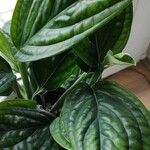
Monstera pinnatipartita
Monstera
Description
Source: leafsnapMonstera pinnatipartita is a species of flowering plant in the genus Monstera native to Central America and the tropical areas of South America. Like the more common Monstera deliciosa the plant has green foliage that becomes highly fenestrated when mature, though both immature and mature leaves are less heart shaped. Its name refers to the deeply split mature leaves that are pinnate.
Care Guide
💧 Water Once a week
During the growing season, it is crucial to water your plant regularly. However, allowing the soil to dry out slightly between each watering is essential. This helps prevent overwatering and promotes a healthy root system. When the plant's growth slows down in the fall and winter, you can reduce watering frequency. Instead, only water the plant occasionally during this time, as the plant's water needs are lower. To increase humidity levels indoors and benefit the plant, you can mist the foliage using a spray bottle filled with demineralized water or rainwater. This helps create a more humid microenvironment around the plant, mimicking its natural habitat.
☀️ Light Partial sun
Philodendron silver queen is found in habitats like forest understories and rocky sites where it grows in natural shade. It prefers partial sun but can tolerate both full sun and full shade, showing its adaptable, hardy nature.
🌡️ Temperature 20–37.8°C
The Philodendron Silver Queen comes from tropical areas, where the climate is usually warm and humid. Consequently, it is well suited to high temperatures and moisture. It does not tolerate sudden temperature shifts and favors a stable thermal environment, so avoiding indoor temperature fluctuations is important. It generally cannot endure cold and needs warmer conditions to grow. If the surrounding temperature falls too low, the plant’s growth may stop or it may die.
💨 Humidity
🪴 Soil 5-6
🌱 Fertilizer
The best time to fertilize a Philodendron silver queen is in early spring, as it breaks dormancy. This encourages overall growth and flower development. Fertilization improves foliage, stems, and branches, and supports flowers that are large, vibrant, and long-lasting. It helps move nutrients from the roots to the flowers and enhances the plant's health and resistance to disease.
🪴 Pot & Repot Once a year
Repot the Philodendron Silver Queen in spring or summer once it's warm enough, choosing a slightly larger pot with good drainage. Water thoroughly after repotting, and place the plant in bright, indirect light. Consider adding a moss pole to support it as it grows.
✂️ Pruning
This plant is easy to care for and the best time to prune it for better appearance is in its noticeable growing season. To prune, use a sterilized garden shear to cut off the dry, dead, or diseased leaves. Also cut the few overgrown branches and clean the leaves with a damp cloth to eliminate dust or dirt. All these help to destroy pests and give room for new growth.
🌿 Propagating
🐛 Diseases & pets
☠️ Toxicity
Monstera Pinnatipartita is toxic to humans and pets(dogs, cats, rabbits, horses). The toxic principle in this plant is the microscopic, sharp, needle-like insoluble calcium oxalates(raphides) which when ingested, can cause severe pain, a burning sensation or swelling of any part of the oral cavity. For safety when growing this plant, ensure to restrict your children and pets from coming in close contact with this plant, and wear a pruning glove when handling the plant.
Characteristics
- Plant Type
- Shrub
- Life Cycle
- Perennial
- Genus
- Monstera
- Family
- Araceae
- Hardiness Zone
- 10-12
- Mature Height
- 20.12 m
- Mature Spread
- 10.06 m
- Leaf Color
- Green
- Leaf Type
- Evergreen
- Flower Color
- Cream
- Flower Size
- 10.16 cm to 15.24 cm
- Bloom Time
- Summer, Early fall
- Planting Time
- Spring, Summer, Autumn
- Harvest Time
- Late summer, Fall
- Native Area
- Colombia, Honduras, Bolivia, Venezuela, Ecuador, Costa Rica, Panama