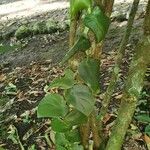
Monstera tuberculata
Shingle plant
Description
Source: wikipedia (CC BY-SA)Monstera tuberculata is a species of flowering plant in the family Araceae. It is sometimes referred to by the common names giant Monstera or giant velvet-leaf Monstera. It is native to Belize, Costa Rica, Guatemala, Southeast and Southwest Mexico, Nicaragua, Panama and Veracruz. It grows in lowland wet tropical biomes up to 200 metres (660 ft) in elevation. Similar to Monstera dubia and a few other species in its genus, when young M. tuberculata has a shingle-like growth habit with leaves tightly pressed against the trunks of trees. As it matures, it has short-stemmed, oval leaves that lack the fenestrations of better-known species like Monstera deliciosa. Unusually for an aroid, its fruit hangs like a pendant.
Care Guide
💧 Water
Monstera tuberculata needs moderate watering, usually about once a week. During hot weather, you might need to water it a bit more. To prevent overwatering and root rot, make sure the top layer of soil has dried out slightly before watering again. Also, to keep the plant's humidity levels up, lightly mist the leaves every other day.
☀️ Light Partial sun
Monstera tuberculata naturally occurs in places like forest understories and rocky areas, where it grows under natural shade. It prefers partial sun but can adapt to full sun or full shade, showing its versatile and hardy nature.
What are the sunlight requirements for Monstera tuberculata?
Monstera tuberculata requires about 3-6 hours of sunlight, which is considered 'Partial sun.' For locations defined as 'Full shade,' it requires less than 3 hours of sunlight. It's important to observe how sunlight moves through your garden throughout the day. Choosing the right spots that provide a harmonious balance of light and shade is crucial for the well-being of your Monstera tuberculata, ensuring its happiness and robust growth.
🌡️ Temperature 20–37.8°C
Monstera tuberculata comes from tropical areas where the climate is generally warm and humid. As a result, it is adapted to high temperatures and humidity. It does not tolerate sudden temperature shifts and prefers a consistent thermal environment, so avoiding temperature fluctuations indoors is important. It usually cannot withstand cold and requires warmer conditions to grow. If the ambient temperature falls too low, the plant may stop growing or even die.
💨 Humidity
🪴 Soil 6-7
🌱 Fertilizer
The best time to fertilize a Monstera tuberculata is in early spring when it comes out of dormancy. This supports overall growth and flower development. Fertilizing improves the foliage, stems, and branches, and encourages flowers that are large, vibrant, and long-lasting. It also helps move nutrients from the roots to the flowers and enhances the plant's health and resistance to disease.
🪴 Pot & Repot Every 12 months
✂️ Pruning
Monstera tuberculata features striking foliage and benefits from pruning in early spring to maintain its health and shape. To encourage new growth, trim any leggy or damaged stems just above a node. Regular pruning not only enhances air circulation and light penetration but also helps keep the plant in good condition. Be sure to wear gloves when pruning, as the sap can be irritating.
🌿 Propagating
🐛 Diseases & pets
☠️ Toxicity
Characteristics
- Plant Type
- Vine
- Life Cycle
- Perennial
- Genus
- Monstera
- Family
- Araceae
- Hardiness Zone
- 10-12
- Mature Height
- 3.05 m to 6.1 m
- Mature Spread
- 2.13 m to 3.05 m
- Leaf Color
- Dark Green, Forest Green
- Leaf Type
- Evergreen
- Flower Size
- 10.16 cm to 15.24 cm
- Bloom Time
- All year round
- Planting Time
- Spring, Summer, Autumn
- Harvest Time
- All year round
- Native Area
- Belize, Mexico, Guatemala, Nicaragua, Costa Rica, Panama