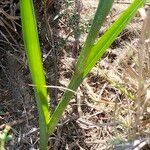
Moraea polystachya
Blue tulp · Butterfly Iris · Blue-tulip · Cape blue tulip
Description
Source: leafsnapMoraea polystachya is a species of plant in the family Iridaceae native to southern Africa.
Care Guide
💧 Water
The Karoo tulp thrives in arid regions due to its impressive drought tolerance. It needs to be watered weekly and can store water in its bulb, making it perfect for areas with irregular rainfall.
☀️ Light Full sun
Karoo tulp is a sun-loving, herbaceous perennial native to open habitats, frequently thriving in meadows and grasslands. It prefers full sun but can also tolerate partial sun.
What are the sunlight requirements for Karoo Tulp?
Karoo Tulp, also known by its botanical name Moraea polystachya, is a sun-loving perennial herbaceous plant that thrives in full sun, requiring above 6 hours of sunlight daily. It originates from open habitats, often flourishing in meadows and grasslands, and can also tolerate partial sun conditions. It's essential to observe how sunlight moves through your garden, choosing spots that offer an optimal balance of light and shade to ensure the plant's well-being.
What are the essentials for growing Karoo Tulp indoors with artificial lighting?
For indoor cultivation of Karoo Tulp where natural sunlight is limited, especially in winter or in less sunny spaces, artificial lighting serves as a crucial solution. Indoor plants benefit from LED lights, which can be customized to provide specific wavelengths needed for growth. Full sun plants need 30-50W/sq ft, partial sun plants need 20-30W/sq ft, while full shade plants require 10-20W/sq ft of artificial light. Position the light source 12-36 inches above the plant, simulating natural sunlight, and ensure it receives 8-12 hours of light daily to promote healthier, faster growth.
What symptoms indicate that Karoo Tulp is not receiving enough sunlight?
When Karoo Tulp lacks adequate sunlight, several symptoms may emerge: new leaves might grow smaller, the plant can show leggy or sparse growth, and there may be a premature drop of older leaves to conserve resources. Growth may slow down or halt altogether, and new leaves could appear lighter in color or exhibit chlorosis, turning yellow due to a lack of chlorophyll. Additionally, excessive sunlight can lead to symptoms like sunscald, leaf curling, wilting, and leaf scorching, indicating damage from overly intense sun exposure.
How can you address sunlight-related issues for Karoo Tulp?
To optimize Karoo Tulp's health and growth, indoor plants should be gradually moved to sunnier locations each week until they receive at least 6 hours of direct sunlight daily, ideally near a south-facing window. If moving the plant is not feasible, consider using artificial lighting like desk lamps or professional grow lights for at least 8 hours daily. For outdoor plants, gradual relocation to sunnier spots helps prevent sunburn. Pruning obstructive branches and choosing locations with ample sunlight and good drainage are key measures for dealing with ground-located plants. It's crucial to remember that while parts of the plant damaged by insufficient light may not recover, new growth will benefit from improved lighting conditions.
🌡️ Temperature 20–37.8°C
Karoo tulp is capable of adapting to a wide range of temperature conditions, but its distribution can still be constrained by various combinations of water and heat. It performs best in warm summer climates with sufficient rainfall or watering. Extended periods of cloudy, rainy weather, as well as sustained high temperatures, can raise the risk of Karoo tulp dying. In winter, adequate protection from cold can increase the plant's survival rate.
💨 Humidity
🪴 Soil 6-6
🌱 Fertilizer
The primary time to fertilize Karoo tulp is in early spring, when flowers are forming. Using the correct fertilizer promotes stronger blooms and helps the Karoo tulp produce attractive flowers. Fertilizing at that time ensures excellent flowers throughout the season and supplies energy for dormant growth phases.
🪴 Pot & Repot
✂️ Pruning
To promote healthy growth of karoo tulp, prune the plants from early to late spring by removing dead foliage and spent flowers. Thinning crowded areas encourages better air circulation and results in more vibrant blooms. Make sure to use clean, sharp tools for pruning, and apply mulch to help retain moisture in the soil. Timely pruning not only enhances the plant's health but also improves its overall appearance.
🌿 Propagating
🐛 Diseases & pets
☠️ Toxicity
Characteristics
- Plant Type
- Herb
- Life Cycle
- Perennial
- Genus
- Moraea
- Family
- Iridaceae
- Hardiness Zone
- 9-11
- Mature Height
- 61 cm
- Mature Spread
- 30 cm to 46 cm
- Leaf Color
- Green
- Leaf Type
- Deciduous
- Flower Color
- Yellow
- Flower Size
- 5.08 cm to 7.62 cm
- Bloom Time
- Mid spring, Late spring
- Planting Time
- Spring, Summer, Autumn
- Harvest Time
- Early summer, Mid summer
- Native Area
- South Africa, Namibia, Botswana