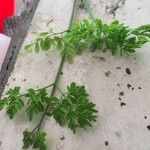
Moringa oleifera
Moringa · Drumstick Tree · Moringa Tree · Miracle Tree · మునగ
Description
Source: leafsnapMoringa oleifera, commonly known as the drumstick tree or horseradish tree, is a fast-growing deciduous tree native to the Indian subcontinent. It is widely cultivated in tropical and subtropical regions for its edible leaves, pods, and seeds. The plant has a long history of use in Ayurvedic medicine due to its numerous health benefits. The leaves of Moringa oleifera are highly nutritious and rich in vitamins A, C, and E, as well as minerals such as calcium and iron. They are often used to make tea or added to soups and stews. The pods can be eaten raw or cooked, much like green beans, while the seeds can be roasted and consumed like nuts. In addition to its nutritional value, Moringa oleifera has various medicinal properties. It has anti-inflammatory effects that may help reduce inflammation-related diseases such as arthritis. Additionally, it contains compounds that have been shown to lower blood sugar levels, potentially benefiting people with diabetes. The plant is easy to grow from seedlings or cuttings, making it an ideal crop for small-scale farmers in developing countries where malnutrition is prevalent. Its ability to grow quickly even under harsh conditions makes it an important source of food security, particularly during times of drought. Overall, Moringa oleifera is a versatile plant with numerous health benefits, making it an important crop both nutritionally and economically. This is especially true in developing countries where access to nutritious food sources is limited.
🌳 Moringa is a plant with a broad range of uses, spanning from food to industrial applications. Its nutritional value comes from being a concentrated source of vitamins and minerals. Surprisingly, moringa seeds yield an oil that can lubricate machinery and add moisture to cosmetic products. Additionally, moringa has a distinctive ability to act as a natural indicator of environmental contamination, since it can absorb and accumulate heavy metals from the soil.
🎭 Existence, development, and transformation
Care Guide
💧 Water Every 2 days
Moringa, which is native to arid regions, thrives with minimal water and is highly drought-tolerant. To promote strong roots and resilience, it is best to water moringa deeply but infrequently, about every 1-2 weeks. This moderate watering schedule is crucial for the plant's health, particularly in warmer climates.
How should I water my Moringa tree?
Your Moringa is not picky about how you water it, so feel free to use any common watering tool such as watering cans, hoses, or even cups. Regardless of the tool, make sure to apply the water directly to the soil and ensure that all areas are equally moistened for the entire root system to receive the necessary water. It is recommended to use filtered water instead of tap water, as tap water may contain harmful particles. Also, using water at or slightly above room temperature is best, as extremely hot or cold water can shock the Moringa. However, the Moringa generally responds well to any type of water it receives.
What should I do if I give my Moringa tree too much or too little water?
For outdoor plants, especially newly planted ones or seedlings, remember to water them enough for the first few months. This is important because once the roots are established, the plant can rely on rain most of the time. When Moringa is planted in pots, overwatering is often more likely to happen. If you accidentally overwater your Moringa, there are steps you can take to fix the situation. First, stop watering your plant right away to minimize the impact of overwatering. Then, remove your Moringa from its pot and check its roots. If you find that none of the roots have developed root rot, you can return the plant to its container. However, if you do see signs of root rot, trim away the affected roots and apply a fungicide to prevent further damage. Finally, repot your Moringa in well-draining soil. In the case of underwatering, simply water the plant more frequently. This is usually an easy fix. If you notice the leaves drooping, drying out, or falling off, watering it adequately will help the leaves regain fullness. Make sure to correct your watering frequency as soon as you notice signs of underwatering.
How frequently should I give water to my Moringa plant?
Most outdoor plants can rely on rainfall for their water needs. However, if your area doesn't receive enough rain, you should water your plants every 2 weeks in the spring and fall. In the summer, when plants require more water, you will need to water them more frequently. During the slower growth period in winter, you should water sparingly, and it may not be necessary to water at all. If your Moringa plant is young or recently planted, it will benefit from more frequent watering to help it establish and become more adaptable to drought conditions. For potted plants, there are two ways to determine when to water your Moringa. The first approach is to follow a set watering schedule, such as once a week or every other week. However, this might not always be accurate for your specific growing conditions. Another option is to assess the soil moisture level. It is typically best to wait until the top two to four inches of soil, about one-third to one-half the depth of the pots, have completely dried out before watering again. Keep in mind that during the summer, your watering frequency may need to increase as the plant's water needs are higher.
How much water does my Moringa plant need?
To water your Moringa plant effectively, you don't always need to use a large amount of water. If only a few inches of soil have dried since the last watering, it's enough to give the plant about five to ten ounces of water. You can also gauge the water volume based on the moisture of the soil. Keep track of how many inches of soil have dried between waterings. To ensure your Moringa gets enough moisture, water it until all the dry layers of soil are wet. If more than half of the soil has dried, you should consider giving more water than usual. Keep adding water until you see excess water draining from the pot's holes. If your Moringa is planted in an area that receives ample rainfall, it may not need additional watering. When the Moringa is young or establishing, it should get 1-2 inches of rain per week. As the plant grows, it can rely on rainwater alone, except during hot weather when there is no rain for 2-3 weeks. In such cases, it's recommended to give your Moringa a thorough watering to prevent it from experiencing stress.
How do I know if I'm giving my Moringa tree enough water?
Overwatering is a common issue for the Moringa plant, and there are clear signs to watch out for. When a Moringa is overwatered, its leaves turn yellow and may even fall off. Overwatering can also make the plant shrivel and cause root rot. On the other hand, an underwatered Moringa will also start to wilt and may have brown or brittle leaves. Regardless of whether you observe signs of overwatering or underwatering, taking action to restore the plant's health is important.
☀️ Light Full sun
Moringa requires ample sunlight for optimal growth, though it can tolerate moderate light if necessary. Native to areas with abundant sun, it thrives under those conditions. This preserves the plant’s health and facilitates photosynthesis. Insufficient or excessive sun exposure can cause stunted growth or leaf scorch, respectively.
What are the sunlight requirements for Moringa plants?
Moringa plants thrive best with generous amounts of sunlight, ideally flourishing in conditions that mimic their native environments which are abundant in sunlight. For optimal growth, these plants should be exposed to full sun, meaning above 6 hours of direct sunlight daily, but they can also adapt to partial sun, approximately 3-6 hours of sunlight. Insufficient or excessive sun exposure may lead to issues such as stunted growth or leaf burn.
How does artificial lighting support Moringa growth indoors?
Indoor Moringa plants require adequate lighting, especially when natural sunlight is insufficient, such as during winter or in less sunny spaces. Artificial lights, like LED lights, are beneficial as they can be customized to provide the specific light wavelengths needed. For plants that need full sun, 30-50 watts per square foot is recommended, 20-30 watts for partial sun plants, and 10-20 watts for full shade plants. The lights should be placed 12-36 inches above the plant and kept on for 8-12 hours per day to mimic natural daylight hours, promoting healthier, faster growth.
What are the signs of insufficient sunlight in Moringa plants?
When Moringa plants receive insufficient sunlight, especially indoors during the winter, several signs can indicate light deficiency. These include smaller new leaves, leggy or sparse growth due to longer spaces between leaves or stems, premature leaf drop as the plant tries to conserve resources, delayed or halted growth as the plant enters survival mode, lighter-colored new leaves indicating a lack of chlorophyll, and symptoms like chlorosis, sunscald, leaf curling, wilting, leaf scorching due to stress from varying light conditions.
How can I improve sunlight exposure for my indoor and outdoor Moringa plants?
To enhance sunlight exposure for Moringa plants, indoor plants can gradually be moved to sunnier locations, aiming for at least 6 hours of direct sunlight daily, preferably near a south-facing window. For plants that are large or not easily movable, consider using a desk or ceiling lamp for at least 8 hours daily, or investing in professional grow lights. Outdoors, move plants gradually to sunnier spots to avoid sunburn. Also, observe which areas block sunlight and consider pruning trees or bushes that cast shade. If possible, transplant smaller plants during their dormant period, typically late winter or early spring, to a location with ample sunlight and good drainage.
🌡️ Temperature 20–37.8°C
Moringa is native to tropical and subtropical regions and prefers temperatures between 68 to 100 ℉ (20 to 38 ℃) for optimal growth. In cooler conditions it may shed its leaves. In hotter conditions its growth can be stunted. During winter, it’s best to keep moringa in a warm, sunny location or use a grow light if kept indoors.
What is the native growth environment of Moringa?
The Moringa, or Moringa oleifera, thrives in tropical and subtropical regions. It grows best in temperatures ranging from 68 to 100°F (20 to 38°C), which are crucial for its optimal growth. In environments cooler than this range, the Moringa may shed its leaves, while in hotter conditions, it might experience stunted growth. It's particularly important to keep the plant in a warm, sunny spot during winter months, employing a grow light if necessary for indoor plants, due to its high heat preference. Lower temperatures can harm the plant, making it imperative to move it indoors during autumn to a location near a bright window, away from direct heat sources, while ensuring the temperature remains above 20°C to facilitate growth. Temperatures nearing 0°C can be detrimental to the Moringa.
How does low temperature affect Moringa and what are the solutions?
Moringa's preference for warm climates means it doesn't tolerate low temperatures well, requiring temperatures above 20°C for optimal growth. Exposure to temperatures below 0°C can be harmful, and at -5°C, the leaves may begin to lighten in color. Following frost damage, this discoloration can progress to brown or black, with the plant showing signs of wilting and drooping. To mitigate these effects, frost-damaged parts of the plant should be trimmed off and the plant should be moved to a warm environment indoors. It's advisable to place the Moringa near a south-facing window to ensure it gets enough sunlight, while avoiding placement near heating or air conditioning vents to prevent air dryness, which can be detrimental to its health.
What should be done if a Moringa experiences high temperatures?
During summer months, it's important to ensure that the Moringa does not remain in temperatures above 38°C. Exposure to temperatures exceeding 43°C can cause the leaves to lighten and increase the plant's susceptibility to sunburn. To address high temperature stress, sunburned and dried parts of the plant should be trimmed away. The plant should be relocated to an area that offers shade during the peak sun hours of midday and afternoon. Ensuring the soil remains moist by watering the plant in the morning and evening can also help the Moringa cope with the stress of high temperatures.
💨 Humidity normal (40-60%)
This plant will thrive in moderate humidity, which is probably the level in your home. However, misting it a few times a week can be very beneficial. Make sure the room has good ventilation.
🪴 Soil 6-7
🌱 Fertilizer
Providing fertilizer is essential for caring for Moringa. Consistent feeding during the growing season preserves energy for its showy leaves and supports overall growth. Ignoring fertilization can cause unhealthy leaves, reduced ornamental value, and stunted or weak growth that is prone to breaking.
Why should I put fertilizer on my Moringa plant?
Moringa requires regular fertilization because its showy leaves need a lot of energy to be produced and maintained. The challenge is that the plant needs energy not only for its leaves, but also for the growth of its stems, branches, roots, and other important structures. If fertilization is neglected, two things are likely to happen. Firstly, the leaves will lose their natural color and texture, making the plant look unhealthy and less visually appealing. Secondly, the overall growth of the plant will slow down or produce weak growth that is more prone to breakage.
When should I put fertilizer on my Moringa?
To ensure the well-being of your Moringa plant, occasional feedings are beneficial. Therefore, there is no need to establish a fixed feeding schedule when you first plant these plants. A simple way to fertilize your Moringa is to apply fertilizer while watering it at times. Additionally, providing an ample amount of water is important during the growing season. You can feed the plant once every two to three weeks, and this feeding frequency should be maintained while your plant is producing new growth.
When is the best time to not add fertilizer to my Moringa plant?
You can fertilize your Moringa regularly throughout most of the year, especially during the active growing season of spring, summer, and early fall. However, it's important to note that during the winter when the plant enters a dormant growth phase, it should not be given any fertilizer. During this phase, the Moringa will either not grow or show minimal growth. Since the plant is using less energy during this time, fertilization is unnecessary.
What kind of fertilizer does my Moringa tree require?
When fertilizing a Moringa plant, it's important to use a specific blend of nutrients that are present in relatively low amounts. The ideal fertilizer would have an N-P-K ratio of 3-1-2, but a general-purpose fertilizer with an even nutrient blend can also be effective in some cases. Regardless of the type of fertilizer you choose, it's crucial to make sure that the ratio number representing the volume of each nutrient is at 3 or lower. Fertilizers can come in granular or liquid form, and if you opt for the liquid variety, it's recommended to dilute the strength by half. While granular fertilizer has its advantages, using liquid fertilizer is often the more practical choice, especially when watering your Moringa plant.
How do I put fertilizer on my Moringa plant?
To easily fertilize a Moringa plant, you can either use a liquid or granular fertilizer. For the liquid fertilizer method, gather your fertilizer and a water container like a watering can. Dilute the fertilizer with water and pour it onto the soil, allowing it to soak down to the roots. It's recommended to water the plant while fertilizing. Alternatively, you can use granular fertilizer. Simply sprinkle it on the soil where your Moringa plant is located. Granular fertilizers are usually slow-release, so you won't need to fertilize as frequently as you would with a liquid one. Again, watering the plant while fertilizing is beneficial in both cases.
🪴 Pot & Repot 2-3 years
When repotting Moringa, select a pot 1-2 inches (2.5–5.1 cm) larger with sufficient drainage. Use a well-draining potting mix. Repot in spring or fall, making sure the root ball sits slightly below the rim of the flower pot. Water thoroughly after repotting and keep it in a warm location with indirect sunlight.
✂️ Pruning
Moringa benefits greatly from regular pruning in the spring. This practice encourages bushier growth and increases leaf production. To achieve this, trim back any long, leggy stems and thin out crowded areas. This improves light and air circulation, enhancing the plant’s health and maximizing the harvest. These proven techniques support optimal growth for moringa.
🌿 Propagating
🐛 Diseases & pets
☠️ Toxicity
Characteristics
- Plant Type
- Tree, Shrub
- Life Cycle
- Perennial
- Genus
- Moringa
- Family
- Moringaceae
- Hardiness Zone
- 9-12
- Mature Height
- 3.05 m to 11.89 m
- Mature Spread
- 46 cm
- Leaf Color
- Green, Blue, White, Red
- Leaf Type
- Evergreen
- Flower Color
- White, Cream
- Flower Size
- 2.03 cm
- Bloom Time
- All year round
- Planting Time
- Spring, Summer, Autumn
- Harvest Time
- All year round
- Native Area
- Nepal, Pakistan, Bangladesh, India