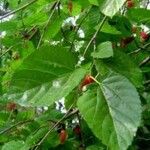
Morus australis
Wild Korean mulberry · White mulberry · Chinese White Mulberry · Common Mulberry · Kuwa
Description
Source: leafsnapMorus australis, also called Korean mulberry and Chinese mulberry, is a flowering plant species in the genus Morus found in East and Southeast Asia. The larvae of the freak (Calinaga buddha) feed on M. australis. The substance "Australone A", a prenylflavonoid, can be found in M. australis.Not a true mulberry (i.e. "Plants of the World Online" gives M. australis as a synonym of the accepted taxonomic designation, Broussonetia papyrifera, the paper mulberry), its fruits and leaves are edible, and it is used as feed in raising silkworms. It is widely used for fibre production, for paper and cloth. Both the Broussonetia and the Morus genera are within Moraceae family.
🌳 White mulberry isn't merely used to feed silkworms; it is also acknowledged for its phytoremediation capabilities. This plant can absorb heavy metals from contaminated soils, helping to clean up polluted sites. That capacity makes white mulberry a surprisingly useful asset in efforts to fight environmental pollution and restore ecosystem health.
Care Guide
💧 Water Every 1-2 weeks
White mulberry is a drought-tolerant plant that thrives with moderate moisture. Water it every one to two weeks, allowing the soil to dry out slightly between waterings. During the colder months, its watering needs decrease as the plant enters dormancy. This pattern reflects the seasonal changes typical of this deciduous species, which is commonly grown outdoors.
How should I water my White mulberry tree?
To support the growth of healthy roots, it's best to position a garden hose near the plant's base. Avoid spraying water directly onto the leaves. If the plant is outdoors and exposed to direct sunlight, be aware that the leaves may need more frequent watering. One option is to use bubblers, which can be attached to each plant to keep the roots moist. Soaker hoses are also helpful, especially when planting or removing plants, as they cover the entire garden or bed and encourage deep root growth. After watering, make sure to drain any excess water and wait for the soil to dry before watering again. To prevent the spread of diseases, water the plants at ground level rather than from above. On a sunny day, you may want to spray the entire bush with water. Whether the plant is in a pot or in the ground, it's important to remember that white mulberry prefers deep watering rather than light sprinkling.
What should I do if I give White mulberry too much water or too little water?
A White mulberry plant that is overwatered may show yellowing leaves, leaf drop, and wilting. The plant may also appear dull and unhealthy, with mushy stems. It is important to adjust your watering schedule to prevent these signs. Wilting can also indicate under watering, in which case the leaves may become crispy and dry. If the soil is dry and watering alone is not enough, give a thorough watering. This will help the White mulberry recover, but the plant may still have dry and yellow leaves due to root damage. Once the plant returns to normal, the yellowing of the leaves will stop. When keeping the White mulberry indoors, always check the moisture levels and avoid overwatering. Look for signs of black spots, and if present, allow the soil to dry out by refraining from watering for a few days. Overwatering can lead to root rot, so if you see discolored and slimy roots, consider transferring the plant to a different pot. Prevent root rot by avoiding excessively soggy soil. When planting the White mulberry outdoors, ensure the soil is not too dry by checking its moisture level with your fingers. Adequate watering is necessary for the plant's recovery.
How frequently should I give water to my White mulberry plant?
The White mulberry prefers deep, infrequent watering. When planted in pots, it is important to soak them in a gallon of water each time, as the soil in pots tends to dry out faster. In colder regions, water the plant every 3 to 5 days, preferably in the morning when the soil is dry. Check the soil inside the pot to determine if watering is needed. If the top 2-3 inches of soil is dry, it's time for a full watering. During hot days, check the moisture in the pot daily to prevent the soil from drying out quickly. For plants in the garden, water once a week in hot climates, but only when the top 2 to 3 inches of soil are dry. Take into consideration rainfall and avoid overwatering to prevent root rot. During spring and fall, when the White mulberry is outdoors, add a 3 to 4-inch layer of mulch to conserve water. Sandy soil requires more frequent watering as it drains faster, while clay soil requires less frequent watering to avoid root rot. To ensure watering is on schedule, mark the date on a calendar and pay attention to drooping leaves, which may indicate that watering is needed soon.
How much water should I give my White mulberry tree?
The White mulberry generally needs about a gallon of water on a regular basis. If you have potted plants, it's best to water them deeply until you see water dripping out of the bottom of the pot. Then, wait for the soil to dry before watering them again. To figure out how much water you've given your plant in a week, you can use a water calculator or a moisture meter. During the flowering period, make sure to provide plenty of water, but let the moisture evaporate afterwards to avoid root rot. If your White mulberry is planted outdoors and it receives adequate rainfall, you may not need to water it additionally. However, if it is young or newly planted, ensure it gets 1-2 inches of rain per week. As the White mulberry grows, it can rely solely on rainfall. Only if the weather is very hot or there is no rainfall for 2-3 weeks, consider giving it a thorough watering during the cooler part of the day to prevent heat damage. Additional watering will be necessary during prolonged dry periods.
Should I water my White mulberry tree more or less depending on the time of year or the climate?
The White mulberry requires outdoor conditions with rainfall, but if it is persistently dry, it may need to be watered. During the spring and fall growing seasons, the soil should be kept moist but not soggy. Alternating between dry and moist soil conditions is beneficial for the White mulberry's growth. In the summer, hot weather and lack of rain can cause the water to evaporate quickly, so it may need more frequent watering to keep the soil moist. During winter, the White mulberry requires less water as it goes dormant. It is recommended to use a well-draining but moisture-retentive soil mixture, such as terracotta, to help with water evaporation. Once the White mulberry starts to leaf out and go dormant, watering can be skipped since it can rely on fall and winter rains to survive. In the spring, it can be cultivated to encourage growth and blooming when the temperature gets warmer. Adequate drainage is crucial, especially in winter, to prevent ponding and ensure good plant health. When grown in pots, the White mulberry may have limited root growth, so it should be well-watered, especially during summer. Deep soaking the entire root system once or twice a week, depending on the weather, is recommended. Shallow sprinkles that reach the leaves should be avoided as they can encourage fungal growth and do not reach the roots effectively. Even during dormancy in fall or winter, the White mulberry should not be allowed to dry out completely. It is important to avoid overwatering and provide sufficient drainage to prevent the plants from sitting in water for too long. Applying mulch is beneficial as it reduces stress, conserves water, and promotes healthy blooms.
☀️ Light Full sun
White mulberry prefers to be grown in full sun but can tolerate moderate shade. Native to areas with plentiful sunlight, it does best when given abundant sun exposure. Too much shade can impede its growth and development, while extreme sun exposure can negatively affect the plant's overall health.
How many hours of sunlight should White mulberry have each day to grow healthily?
To promote healthy growth, it is important for White mulberry plants to receive a minimum of 3-6 hours of sunlight each day. While plants that can tolerate partial sunlight can also do well in full sun, they require less light for photosynthesis and are therefore more adaptable compared to plants that need either full sun or partial shade.
What kind of sunlight does White mulberry require?
White mulberry thrives in full or part sun conditions. It prefers direct morning light, but during summer, it requires protection from the intense afternoon sun. In temperate environments, excessive hot afternoon sun can lead to leaf burn, which harms the plant's overall health and appearance.
Can the sun hurt White mulberry? How can I keep White mulberry safe from sunlight and heat damage?
When moving white mulberry plants from indoors to outdoors, it is important to prevent sunburn by gradually acclimating them to brighter spots. Even if the plants are used to the summer sun, extreme heat can still damage them. To protect white mulberry plants during a heatwave, it is crucial to keep the soil consistently moist. This can be achieved by moving container plants to shaded areas or covering them with a shade cloth.
Should White mulberry be shielded from the sun?
White mulberry benefits from bright morning sun and some full sun exposure. However, it struggles with harsh and hot midday sun in the summer. When planted in the ground, the mulberry can gradually adjust to the increasing intensity of the summer sun. On the other hand, potted plants that have been indoors or in a protected area can be injured if suddenly exposed to direct summer sun during the hottest part of the day. To protect the mulberry from afternoon sun, it is recommended to plant or place it in an understory location where it will be shaded at midday by taller trees, plants, a building, or a landscape feature.
What will happen if White mulberry doesn't get enough sunlight?
If White mulberry doesn't get enough sun, it can have pale green or drooping, yellow leaves. It's normal for some leaves to fall, but if no new ones grow back, something is wrong. If the White mulberry does manage to grow in low light, the new growth is usually weak, pale, and attracts bugs. By noticing these signs and adjusting the lighting, you can make a big improvement.
🌡️ Temperature 10–35°C
White mulberry is native to regions where temperatures range from 50 to 95 °F (10 to 35 °C). This plant grows best within those temperature limits. During colder or hotter seasons, consider using temperature-control methods.
What temperature is best for White mulberry?
The ideal temperature for White mulberry to thrive is between 65 to 80 degrees Fahrenheit (18 to 27 degrees Celsius). During the primary growing phase, the highest temperature it can tolerate is 95 degrees Fahrenheit (35 degrees Celsius), while the lowest tolerable temperature is 15 degrees Fahrenheit (-10 degrees Celsius). This species is capable of surviving freezing winters and can withstand low temperatures. In summary, the preferred temperature range is between 65 to 80 degrees Fahrenheit (18 to 27 degrees Celsius), the highest temperature range is between 85 to 95 degrees Fahrenheit (30 to 35 degrees Celsius), and the lowest temperature range is -5 to 15 degrees Fahrenheit (-20 to -10 degrees Celsius), or even lower.
Do I need to change the temperature for White mulberry at different times when it is growing?
Research indicates that White mulberry may show signs of slowed growth when exposed to extended periods of high temperatures, particularly during the development of axillary buds and growth of main shoots. To promote strong growth following germination or transplanting, it is recommended to maintain consistent and cooler temperatures around 65℉(18℃).
How do I keep White mulberry plants warm when it's cold outside?
White mulberry can tolerate freezing temperatures when planted in the ground, as long as the temperature doesn't drop below 15℉(-10℃) during the winter months. However, if the mulberry is grown in pots or containers, it is important to protect the roots from the cold. This can be done by wrapping the container in a blanket or bringing it indoors where it will be shielded from the elements.
What will happen to White mulberry if the temperature is too high or too low?
White mulberry is more at risk when the temperature consistently rises too high rather than dropping too low. High temperatures can trigger hormone imbalances, reducing seed germination and photosynthesis efficiency. Signs of heat stress include wilting, browning leaves, and even potential death. Conversely, if White mulberry becomes too cold, it may stop nutrient uptake and photosynthesis, potentially resulting in plant death. In particular, a single freezing event during the growing season can cause a membrane phase transition, leading to a halt in plant functions and death.
What should I remember about temperature for White mulberry?
To promote successful budding, flowering, and new growth in White mulberry, it is crucial to maintain a consistent soil temperature. This can be achieved by implementing a few strategies: regular watering, covering bare soil with mulch, and opting for shaded planting locations.
💨 Humidity
🪴 Soil 6-7
🌱 Fertilizer
The White mulberry plant needs adequate nutrients to achieve optimal fruit production. Fertilize in early spring to promote new growth and bloom development. Regular fertilization helps keep the plant healthy, enables it to produce more delicious fruit, and prevents nutrient deficiency issues such as yellow leaves and poor fruit production.
Why should I add fertilizer to my White mulberry tree?
Regular fertilization can help White mulberry plants stay healthy and produce more delicious fruit. The growth of plants, especially fast growing ones, depletes the soil of nutrients. If plants are not fertilized regularly, they may face various problems. Nutrient deficiency can cause issues with the foliage, such as yellow leaves or a reddish color. It can also lead to shape deformities, withered tips, or dieback in large areas of the plant. Bark disorders, slow growth, poor shoot development, and a lack of fruit production can also result from nutrient deficiency.
When should I fertilize my White mulberry tree?
To maximize growth and blooming potential, it is best to fertilize White mulberry trees in early spring before the buds emerge. During this time, the tree uses the stored winter reserves to support new growth. Fertilizing about 2 to 4 weeks prior to the expected bloom allows enough time for the nutrients to penetrate the soil and be absorbed by the tree, contributing to its overall development. While continuing to feed the tree during spring is beneficial, fertilizing in autumn should be avoided as it can lead to excessive foliage growth late in the season, making the leaves vulnerable to winter damage.
When is the best time to not fertilize my White mulberry tree?
When it comes to fertilizing White mulberry, it's best to avoid doing so in the first year of growth. If it's not necessary, be cautious about providing fertilizer. Additionally, refrain from fertilizing if you pruned 20% of the plant or more the previous year. It's also important to hold off on fertilizing plants that are diseased or damaged, as this can do more harm than good. Remember that fertilizer is not a cure-all; instead, address the underlying issue before considering feeding the plant again. Furthermore, avoid fertilizing White mulberry after the peak of summer, as this can cause excessive growth right before winter. Additionally, refrain from fertilizing during hot and dry periods, as the dry soil may not effectively deliver the fertilizer and it can stimulate growth that requires more water, which might not be available. It's best to utilize fertilizer earlier in the season when temperatures are cooler. Lastly, keep in mind that White mulberry can absorb fertilizer applied to nearby plants or lawns, so be cautious about inadvertently providing plants with a double-dose of fertilizer.
What kind of food does my White mulberry tree need?
Using fertilizer that contains a balance of nitrogen, phosphorus, and potassium can bring many benefits to plants. Nitrogen is important for leaf growth and chlorophyll production. Phosphorus helps support the root system and promotes the development of blossoms, fruits, and seeds. Potassium plays a role in photosynthesis and the movement of water and nutrients throughout the plant. When choosing a fertilizer, you can opt for a commercial one that is specifically designed for a particular type of tree. Alternatively, you can use organic sources of nitrogen such as manure, feather meal, or blood meal. To ensure you apply fertilizer accurately, conducting a soil test can give you a better understanding of the condition of your soil. For commercial fertilizers, if your soil lacks sufficient phosphorus and potassium according to the soil test, you can use a balanced granular fertilizer with a ratio of 10-10-10 or similar. In most cases, nitrogen in the soil is continuously depleted with rainfall. If your soil already has enough phosphorus and potassium, it would be more appropriate to use a high-nitrogen fertilizer with a ratio of 6-2-1 or 10-2-2.
How do I help my White mulberry grow better?
To properly fertilize your White mulberry tree, it's important to follow the specific instructions for the type of fertilizer you are using. Over-fertilizing can be harmful, so determining the correct amount is crucial, especially for fruit trees. As a general rule, the age of the tree or the diameter of the trunk can be used to estimate the amount of fertilizer needed. It's recommended to use one-tenth of a pound of fertilizer per year or per inch of trunk, not exceeding one pound. Keep in mind that the White mulberry shouldn't be fertilized for the first few years. Applying granular or organic fertilizers like blood meal involves sprinkling them around the tree's base, extending all the way to the drip line. Be careful not to let the fertilizer come in contact with the trunk. Over time, the granules will break down and filter into the soil to be absorbed by the roots. After fertilizing, spread a one-inch layer of compost around the tree's base and water it thoroughly.
🪴 Pot & Repot
✂️ Pruning
For optimal growth, white mulberry trees should be pruned regularly, ideally in late winter when they are dormant. This timing minimizes sap loss and promotes vigorous spring growth. Key pruning techniques include removing dead branches, thinning the canopy to improve air circulation, and shaping the tree to enhance both the health of the foliage and fruit production.
🌿 Propagating
🐛 Diseases & pets
☠️ Toxicity
Characteristics
- Plant Type
- Tree, Shrub
- Life Cycle
- Perennial
- Genus
- Morus
- Family
- Moraceae
- Hardiness Zone
- 6-9
- Mature Height
- 3.05 m to 7.62 m
- Mature Spread
- 3.05 m to 6.1 m
- Leaf Color
- Green
- Leaf Type
- Deciduous
- Flower Color
- Green, White, Yellow
- Flower Size
- 2.54 cm
- Bloom Time
- Mid spring, Late spring, Early summer
- Planting Time
- Spring, Autumn, Winter
- Harvest Time
- Mid summer
- Native Area
- Russia, Nepal, India, Indonesia, Cambodia, Vietnam, Myanmar, Japan, Koppen, Bhutan, Laos, South Korea, China