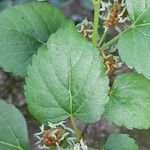
Morus indica
Indian Mulberry · Japanese mulberry · Shahtoot · Tutu · Indian Morus
Description
Source: leafsnapMorus indica is a member of the genus Morus, of the family of flowering plants Moraceae, commonly known as the mulberry family. As with other mulberries, Morus indica is a deciduous tree. Morus indica is native to the temperate and sub-tropical Himalayan region. It is currently cultivated in India, China, Japan, and East Africa.
🌳 In numerous rural communities, twigs from the siamese rough bush are used as natural toothbrushes because they are fibrous and have antibacterial properties. This traditional practice is an effective, sustainable way to care for the teeth that is often overlooked today in an era dominated by plastic toothbrushes. The plant’s coarse leaves have also been used as sandpaper, illustrating the siamese rough bush’s versatility in traditional life.
Care Guide
💧 Water
☀️ Light Partial sun
Siamese rough bush flourishes under plentiful light comparable to the high intensity provided by the sun. This preference comes from its native habitats, where light is abundant. However, excessive exposure to very intense light can damage the plant's structure and inhibit its growth.
🌡️ Temperature 20–37.8°C
Siamese rough bush comes from tropical areas, where the climate is usually warm and humid. Therefore, it is well adapted to high temperatures and humidity. It does not like sudden temperature shifts and prefers a steady temperature environment, so it's important to avoid temperature fluctuations indoors. It typically cannot tolerate cold temperatures and needs higher temperatures to grow. If the ambient temperature falls too low, the plant may stop growing or even die.
💨 Humidity
🪴 Soil 6-7
🌱 Fertilizer
Fertilization is essential for caring for the Siamese rough bush. Regular feeding during the growing season helps maintain the energy needed for its showy leaves and supports overall growth. Failing to fertilize can lead to unhealthy leaves, reduced ornamental appeal, and stunted or weak growth that is prone to breakage.
🪴 Pot & Repot 2-3 years
When repotting Siamese rough bush, select a pot 1–2 inches (2.5–5.1 cm) larger with good drainage. Use a well-draining potting mix. Repot in spring or fall, making sure the root ball is slightly lower than the rim of the flower pot. Water thoroughly after repotting and put it in a warm location with indirect sunlight.
✂️ Pruning
🌿 Propagating
🐛 Diseases & pets
☠️ Toxicity
Characteristics
- Plant Type
- Tree, Shrub
- Life Cycle
- Perennial
- Genus
- Morus
- Family
- Moraceae
- Hardiness Zone
- 10-12
- Mature Height
- 3.96 m to 10.06 m
- Mature Spread
- 30 cm
- Leaf Color
- Dark Green, Forest Green
- Leaf Type
- Evergreen
- Flower Color
- Yellow, Green
- Flower Size
- 0.51 cm to 0.76 cm
- Bloom Time
- Late spring, Early summer, Mid summer
- Planting Time
- Spring, Autumn
- Harvest Time
- Mid summer
- Native Area
- Nepal, Sri Lanka, India, Malaysia, Indonesia, Cambodia, Vietnam, Myanmar, Philippines, Bhutan, Bangladesh, Laos, Thailand, China