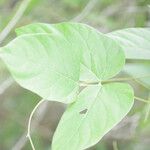
Mucuna pruriens
Cow-itch · Cowage · Velvet-bean · Itchweed · Buffalo bean
Description
Source: leafsnapMucuna pruriens is a tropical legume native to Africa and tropical Asia and widely naturalized and cultivated. Its English common names include monkey tamarind, velvet bean, Bengal velvet bean, Florida velvet bean, Mauritius velvet bean, Yokohama velvet bean, cowage, cowitch, lacuna bean, and Lyon bean.The plant is notorious for the extreme itchiness it produces on contact, particularly with the young foliage and the seed pods. It also produces many medium-sized red swollen bumps along with the itching. It has agricultural and horticultural value and is used in herbalism.
Care Guide
💧 Water
Velvet bean, native to tropical regions, thrives in humid environments. It requires weekly watering to avoid waterlogging. In warm climates, mulching is beneficial as it helps retain soil moisture, reduces water stress, and supports healthy growth cycles.
How should I water my Velvet bean plant?
The Velvet bean has specific water preferences and is particular about how it is watered. Using the wrong watering technique can potentially harm your tomatoes. To properly water the Velvet bean, it is best to directly apply water to the soil in a slow and gentle manner. Avoid pouring all the water at once or using overhead watering. Despite watering slowly, make sure the soil is deeply moistened to provide sufficient moisture for the Velvet bean's growth.
What should I do if I give my Velvet bean too much or too little water?
If you have overwatered your Velvet bean and are worried about disease, take immediate action. The best approach is to remove the plant from its current location and let the roots dry out before replanting in a new location with well-draining soil. If you grow in pots, consider moving the plant to a pot with better drainage. If you have underwatered your plant, simply increase the frequency of watering.
How often should I give water to my Velvet bean?
Velvet bean has a high water requirement during the growing season. To meet this need, it is recommended to water early and frequently in the spring and summer. In the early parts of the season, watering once or twice a week is sufficient. As the season progresses, it is necessary to increase the frequency of watering and it may be required to water twice a day or more during the summer, depending on the weather. After the major growth phases of the velvet bean, watering can be reduced to once a week until the end of the growing season.
How much water does my Velvet bean plant need?
Velvet beans are a popular choice among gardeners, both professionals and amateurs, and as a result, we have gathered useful knowledge on how to take care of these plants. One aspect that we know is the ideal amount of water a Velvet bean should receive. Typically, they need about 1 - 1.5 inches of water per week, which should be evenly spread out during your weekly watering routine. In warmer weather, you may need to increase the amount of water, but generally, a good starting point is around two inches per week.
How can I know if I'm giving enough water to my Velvet bean plant?
Both underwatering and overwatering can cause problems for your Velvet bean, and these problems may present with similar symptoms. For instance, foliage discoloration and wilting can occur due to either overwatering or underwatering. When your Velvet bean is underwatered, you will notice curling and drooping leaves initially, followed by a decrease in leaf vitality. Underwatering may also result in stunted growth and poor overall development, as this plant requires a significant amount of water for both its flowers and overall health. On the other hand, overwatering is more likely to contribute to diseases such as rot and can produce unpleasant odors from the soil. The symptoms of underwatering tend to appear more quickly compared to overwatering. Additionally, indications of overwatering can be observed in the soil, particularly when there is excessive standing water or waterlogged conditions.
☀️ Light Full sun
The velvet bean performs best with abundant daylight, which is essential for its healthy growth. It does not require shade tolerance. Both excessive and insufficient light can cause the plant to become unhealthy. Its natural habitat offers plentiful access to daylight.
What are the sunlight requirements for Velvet bean?
Velvet bean requires full sun, which means it needs more than 6 hours of sunlight a day to thrive well. It's important to observe how sunlight moves through your garden over the day to choose spots that offer a perfect balance of light and shade, ensuring the plant's happiness and healthy growth. Velvet bean does not tolerate shade well, and either overexposure or underexposure to light can lead to an unhealthy plant. Therefore, providing ample daylight is essential for its growth.
How can artificial lighting support Velvet bean growth indoors?
When natural sunlight is insufficient, especially during winter or in less sunny indoor spaces, artificial lighting becomes crucial for Velvet bean's growth. To promote optimal growth under artificial lighting, select the right type of light, such as LED, which can be customized to provide specific wavelengths needed by plants. Full sun plants, like the Velvet bean, require 30-50W/sq ft of artificial light. Position the light source 12-36 inches above the plant to mimic natural sunlight and ensure it's on for 8-12 hours per day to simulate the length of natural daylight hours.
What are some common symptoms of light deficiency in Velvet bean?
When Velvet bean is grown indoors with limited light, it may show symptoms of light deficiency that include smaller new leaves compared to the mature ones, leggy or sparse growth, faster leaf drop, slower or halted growth, paler new leaves, and symptoms of stress from excessive sunlight like chlorosis, sunscald, leaf curling, wilting, and leaf scorching. These symptoms help identify if the plant is receiving insufficient light and if adjustments are needed to ensure healthy growth.
What solutions can help improve light exposure for Velvet bean?
To optimize light exposure for Velvet bean, gradually move plants to a sunnier location each week until they receive at least 6 hours of direct sunlight daily. For indoor plants, consider using a south-facing window or artificial light, keeping lamps on for at least 8 hours daily. Outdoors, avoid sudden changes in light intensity to prevent sunburn. If light obstructions like trees are an issue, prune branches or consider transplanting smaller plants to sunnier locations during their dormant period, ensuring they have ample sunlight and good drainage for healthy growth.
🌡️ Temperature 20–37.8°C
Velvet bean is native to regions where temperatures are mainly in the range of 68 to 100 °F (20 to 38 ℃). It thrives in that temperature range and can adapt to slight variations in seasonal extremes.
What is the ideal temperature range for Velvet bean cultivation?
Velvet bean, scientifically known as Mucuna pruriens, thrives best in temperatures ranging from 68 to 100\u00b0F (20 to 38\u00b0C). It is native to regions that typically experience these temperature conditions. To ensure optimal growth, especially during winter cultivation, it's beneficial to maintain temperatures above 20\u00b0C, always keeping the plant above the freezing point to avoid damage.
How should Velvet bean be protected from low temperatures?
Velvet bean has a moderate tolerance to low temperatures but performs best within 20\u00b0C to 38\u00b0C. When temperatures drop below 0\u00b0C, or especially down to -5\u00b0C, the leaves may darken, and the plant may exhibit signs of water-soaked necrosis, wilting, and eventually turning brown. In such cases, it's recommended to trim the frost-damaged parts and move the plant indoors to a warm environment. Setting up a makeshift greenhouse can also provide cold protection. If indoors, placing the plant near a south-facing window ensures enough sunlight, supplemented with artificial lighting if necessary.
How to care for Velvet bean during high-temperature conditions?
When temperatures rise above 38\u00b0C, up reaching 43\u00b0C, Velvet bean's growth may slow, and its leaves can lighten in color, making it susceptible to sunburn. To mitigate these effects, it's suggested to trim away the sunburnt or dried parts and relocate the plant to shade, especially avoiding the afternoon sun. Ensuring the soil remains moist by watering in the morning and evening can help the plant cope with high temperatures.
💨 Humidity
🪴 Soil 6-7
🌱 Fertilizer
To feed Velvet bean, apply natural or commercial fertilizer high in nitrogen for leaf growth, phosphorus for roots and blossoms, and potassium for photosynthesis and maximum fruit production. Plant in spring, enrich the soil with compost or manure, and fertilize seedlings when they reach a height of 2-4 inches. Insufficient macronutrients cause slow growth, wilting, and problems with fruit quality.
🪴 Pot & Repot
✂️ Pruning
Pruning velvet bean plants from early to late spring helps enhance their growth and flowering while preventing them from spreading excessively. To encourage bushier development and maintain the overall health of your garden, use clean, sharp tools to remove any overgrown or diseased parts.
🌿 Propagating
🐛 Diseases & pets
☠️ Toxicity
Characteristics
- Plant Type
- Herb, Vine
- Life Cycle
- Annual
- Genus
- Mucuna
- Family
- Fabaceae
- Hardiness Zone
- 9-11
- Mature Height
- 7.62 m to 15.24 m
- Mature Spread
- 2.13 m to 4.88 m
- Leaf Color
- Dark Green, Green
- Leaf Type
- Deciduous
- Flower Color
- Purple, Lavender
- Flower Size
- 15.24 cm to 32.92 cm
- Bloom Time
- Summer, Early fall, Mid fall
- Planting Time
- Spring
- Harvest Time
- Late summer, Fall, Early winter
- Native Area
- Sri Lanka, Burkina Faso, Somalia, India, Malaysia, Angola, Pakistan, Nigeria, Kenya, Uganda, Tanzania, Zimbabwe, Guinea-Bissau, Benin, Sierra Leone, Indonesia, Cambodia, Equatorial Guinea, Liberia, Cameroon, Burundi, Brazil, Ghana, Ethiopia, Congo, Nepal, Malawi, Central African Republic, South Africa, Zambia, Sudan, Philippines, Laos, Bangladesh, Guinea, Chad, China, Colombia, Solomon Islands, Vietnam, Myanmar, Togo, Papua New Guinea, Senegal, Côte d'Ivoire, Bhutan, Congo (DRC), Thailand