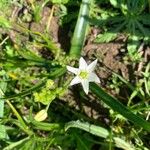
Muilla maritima
Sea muilla · Sea Goldenstar · Common muilla
Description
Source: leafsnapMuilla maritima is a species of flowering plant known by the common names sea muilla and common muilla. It is native to California and Baja California, where it grows in many types of habitats from the coast to the Mojave Desert and Sierra Nevada foothills and other inland mountains, in grassland, woodland, desert, and forest floras. It is a perennial plant growing from a corm and producing an erect flowering stem up to half a meter tall. The onion-like leaves at the base of the stem may be 60 centimeters long. The flowering stem bears an umbel-shaped array of many flowers on pedicels up to 5 centimeters long. Each flower has six tepals which are green-tinged white in color with brownish midribs and no more than 6 millimeters in length. At the center of the flower are six erect stamens with blue, green, or purplish anthers.
Care Guide
💧 Water
☀️ Light Full sun
Common muilla is a perennial herbaceous plant that prefers sunny sites and comes from open habitats, commonly growing in meadows and grasslands. It prefers full sun but can also tolerate partial sun.
What are the sunlight requirements for Common muilla (Muilla maritima)?
Common muilla, also known by its botanical name Muilla maritima, thrives under specific sunlight conditions. For optimal growth, these plants require 'Full sun', which is characterized by exposure to sunlight for above 6 hours daily. Alternatively, they can also grow under 'Partial sun', defined as about 3-6 hours of sunlight each day. It's important to observe the movement of sunlight through your garden to identify areas that offer the right mix of light and shade, ensuring your plants grow happily and healthily.
🌡️ Temperature 15–35°C
Common muilla can tolerate a wide range of temperature conditions, yet its distribution may still be constrained by specific combinations of water and heat. It performs best in warm summer climates with adequate rainfall or watering. Prolonged stretches of cloudy, rainy weather and extended high temperatures can raise the likelihood of Common muilla dying. In winter, proper protection against cold can improve the plant's survival rate.
💨 Humidity
🪴 Soil 6-7
🌱 Fertilizer
A single fertilizer application in spring is generally enough for Common muilla, though repeated feedings can enhance growth. Apply fertilizer about once every month to a month and a half. Fertilization improves the leaves' appearance and function, helping maintain even color and a healthy texture. It also promotes root development and nutrient uptake for the plant's long-term health.
🪴 Pot & Repot
✂️ Pruning
The common muilla is a bulbous perennial plant that features grass-like leaves and star-shaped white flowers. To maintain its health and promote growth, prune the plant in the spring. Start by removing dead foliage and then cut back the flower stems after they bloom. This practice enhances air circulation, encourages more blooms, reduces pests, and ensures vigorous regrowth each season.
🌿 Propagating
🐛 Diseases & pets
☠️ Toxicity
Characteristics
- Plant Type
- Herb
- Life Cycle
- Perennial
- Genus
- Muilla
- Family
- Asparagaceae
- Hardiness Zone
- 7-10
- Mature Height
- 61 cm
- Mature Spread
- 61 cm
- Leaf Color
- Green
- Leaf Type
- Deciduous
- Flower Color
- White, Lavender
- Flower Size
- 1.27 cm
- Bloom Time
- Early spring, Mid spring
- Planting Time
- Spring, Summer, Autumn
- Harvest Time
- Late spring, Early summer
- Native Area
- Mexico