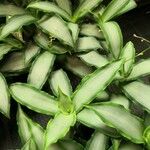
Murdannia loriformis
Severalflower Dewflower · Angel grass
Description
Source: leafsnapMurdannia loriformis, commonly known as the creeping herb, is a perennial plant belonging to the family Commelinaceae. Native to Southeast Asia, it can be found in countries such as Thailand, Vietnam, and Malaysia. The plant features long, slender green leaves with a striking purple underside. It produces small blue or purple flowers that bloom in clusters during the summer months. Traditionally, Murdannia loriformis has been used for medicinal purposes, such as treating fever, inflammation, and providing pain relief. Recent studies reveal that it contains compounds with antioxidant properties, which may help protect against oxidative stress. This plant is easy to grow and can be propagated through stem cuttings or division of its rhizomes. While it prefers moist soil conditions, it can tolerate periods of drought once established. Overall, Murdannia loriformis is a versatile plant, prized both for its attractive foliage and its potential health benefits.
Care Guide
💧 Water Every 7 days
The Severalflower Dewflower thrives in a balanced environment of moisture and dryness, typically needing water every one to two weeks. Native to Asia, this plant can withstand drought conditions but flourishes with consistent watering when grown indoors. During its active growing season, it requires more frequent watering.
☀️ Light Full sun
Severalflower dewflower is a herbaceous perennial that prefers sunny sites and originates in open habitats, frequently occurring in meadows and grasslands. It favors full sun but can also tolerate partial sun.
What are the sunlight requirements for Severalflower dewflower?
Severalflower dewflower, or Murdannia loriformis, is a perennial herbaceous plant that thrives best in full sun, requiring more than 6 hours of sunlight daily. It can also tolerate partial sun conditions, which means about 3-6 hours of sunlight. The plant originates from open habitats like meadows and grasslands, indicating its preference for ample sunlight. It's important to observe how sunlight moves through your garden throughout the day to find the best spot for your Severalflower dewflower, providing it with the perfect balance of light and shade.
How can artificial lighting be used for Severalflower dewflower indoors?
When natural sunlight is not sufficient, especially during winter or in less sunny spaces, artificial lighting can be a vital solution for growing Severalflower dewflower indoors. LED lights are recommended because they can be tailored to provide specific wavelengths needed by the plant. For full sun plants, aim for 30-50W per square foot. The artificial light source should be placed about 12-36 inches above the plant to mimic natural sunlight, ensuring that most plants receive 8-12 hours of light per day. This promotes healthier and faster growth by compensating for the lack of natural sunlight.
What are the symptoms of light deficiency in Severalflower dewflower?
When Severalflower dewflower does not receive adequate light, it may exhibit several symptoms indicating light deficiency. These include smaller new leaves, leggy or sparse growth, premature leaf drop, slower or halted new growth, and paler new leaves or chlorosis. In cases of excessive sunlight, symptoms like sunscald, leaf curling, wilting, and leaf scorching can occur. These signs reflect the plant's struggle with either too much or too little sunlight, affecting its ability to perform photosynthesis and maintain overall health.
What are the solutions for light-related issues in Severalflower dewflower?
To address light-related issues in Severalflower dewflower, consider moving the plant gradually to a sunnier location, ensuring at least 6 hours of direct sunlight daily. If moving the plant is not feasible, especially for large or indoor plants, artificial lighting such as desk lamps or professional grow lights can be used for at least 8 hours daily. For outdoor plants, adapt them to brighter conditions by gradually shifting them to sunnier spots, avoiding sudden changes that might cause sunburn. For plants affected by obstructions, reducing these by pruning or transplanting them during their dormant period can also help increase sunlight exposure. Remember, parts of the plant that have been significantly affected by poor lighting conditions may not recover, but new growth will indicate improvement.
🌡️ Temperature 20–37.8°C
Severalflower dewflower comes from tropical areas, where the climate is generally warm and humid. Consequently, it is well suited to high temperatures and humidity. It does not tolerate sudden temperature shifts and prefers a consistent temperature, so avoiding indoor temperature fluctuations is important. It typically cannot withstand cold and needs warmer conditions to grow. If the ambient temperature becomes too low, the plant may stop growing or even die.
What is Severalflower dewflower?
The Severalflower dewflower, scientifically known as Murdannia loriformis, is a plant species whose specific characteristics, common uses, and notable features were not detailed in the provided information. Additional details such as its growth conditions, benefits, and any related folklore or historical usage were also not mentioned.
💨 Humidity
🪴 Soil 5-6
🌱 Fertilizer
Proper fertilization is essential for Severalflower dewflower's health and appearance. Fertilize Severalflower dewflower during summer, repeating the application monthly throughout the season. Nutrients provide the fuel for growth and support the plant's parts. Fertilization improves Severalflower dewflower's flower display, ensuring the best blooms.
🪴 Pot & Repot Every 12 months
✂️ Pruning
The Severalflower Dewflower has slender, grass-like leaves and small blue flowers. Prune it from early to late spring to remove dead foliage, improve air circulation, and enhance its shape. Always use clean tools when pruning to prevent disease, ensuring optimal recovery and vibrant growth.
🌿 Propagating
🐛 Diseases & pets
☠️ Toxicity
Both humans and pets have not been known to become ill after eating it. If too much food is consumed, it could cause nausea, vomiting, and appetite loss. M. Loriformis herbal extracts have shown promise in the treatment of early cancer. Additionally, herbalists incorporate this plant into concoctions to cure pneumonia, detoxification, throat infections, colds, and other diseases.
Characteristics
- Plant Type
- Herb
- Life Cycle
- Perennial
- Genus
- Murdannia
- Family
- Commelinaceae
- Hardiness Zone
- 9-11
- Mature Height
- 40 cm
- Mature Spread
- 40 cm
- Leaf Color
- Green
- Leaf Type
- Evergreen
- Flower Color
- Red, Purple, Blue
- Flower Size
- 2.54 cm
- Bloom Time
- Summer, Early fall, Mid fall
- Planting Time
- Spring, Summer, Autumn
- Harvest Time
- Late summer, Fall, Early winter
- Native Area
- Sri Lanka, India, Vietnam, Japan, Philippines, Bangladesh, Thailand, China