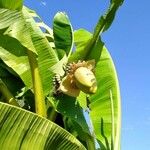
Musa basjoo
Japanese banana · Japanese fibre banana · Basjoo · Japanese fiber banana · Hardy Banana
Description
Source: leafsnapMusa basjoo, commonly known as the Japanese banana or hardy banana, is a flowering plant species in the banana family. Native to Japan, it has gained popularity worldwide as an ornamental plant due to its appealing foliage and ability to withstand cold temperatures. The Musa basjoo plant can reach heights of up to 6 meters and features large, broad leaves that can grow up to 2 meters long. The leaves are a glossy green with prominent veins running through them. The plant also produces small flowers arranged in clusters on long stalks. One of the most remarkable characteristics of Musa basjoo is its ability to survive cold temperatures as low as -15°C (5°F) when properly protected during winter. This makes it an excellent choice for gardeners in colder climates who wish to create a tropical atmosphere in their gardens. Musa basjoo thrives in well-draining soil rich in organic matter and requires regular watering during the growing season for optimal growth. It also benefits from regular applications of a balanced fertilizer. Overall, Musa basjoo is an attractive ornamental plant that imparts a tropical flair even in colder climates. It is relatively easy to grow, provided its care requirements are met.
💡 Legend has it that if you water the hardy banana tree for one hundred days, a banana genie will appear and grant you a wish.
🌳 Surprisingly, the hardy banana is better known not for edible fruit but for its ornamental qualities and its resilience in non-tropical areas. Gardeners and landscape designers commonly use hardy banana for its lush, tropical foliage and its notable ability to tolerate colder climates — dressing gardens with a tropical atmosphere far from the equator. Notably, its fibers can be made into textiles, and its sturdy pseudostems could potentially inspire research into sustainable materials.
🎭 Closely bonded to each other
Care Guide
💧 Water Every 7 days
The hardy banana plant, which originates from subtropical regions, thrives in humid, moist environments. To maintain its lush foliage, it needs consistent moisture and should be watered weekly. This adaptable outdoor plant benefits greatly from rainwater during the growing season, which promotes healthy and vigorous growth.
How should I water my Hardy banana plant?
The Hardy banana has specific water preferences, and how you water it is important. Failure to use the correct watering technique can harm your tomatoes. The recommended method for watering the Hardy banana is to directly apply water to the soil in a slow and gentle manner. Avoid pouring all the water into the soil at once and avoid overhead watering. While watering slowly, ensure deep watering to adequately moisten all the soil.
What should I do if I give my Hardy banana plant too much water or too little water?
If you notice that you have given too much water to your Hardy banana and you are worried about the risk of disease, take action right away. The best solution for an overwatered Hardy banana is to remove it from its current growing spot. Once the plant is out of the ground, let the roots dry out a bit before planting it in a new spot with well-draining soil. If you grow your banana in a pot, you might also want to transfer it to a pot with more or larger drainage holes. On the other hand, if you've underwatered your plant, simply increase the frequency of watering.
How frequently should I water my Hardy banana?
Hardy banana requires a lot of water throughout the growing season. To meet this high water need, it is recommended to water the plant regularly in the spring and summer. In the beginning of the season, watering once or twice a week is sufficient. As the season progresses, increase the frequency of watering. During summer, you may need to water the plant twice a day or more, depending on the weather. After the plant has completed its major growth phases, you can reduce watering to about once a week until the end of the growing season.
How much water does my Hardy banana plant need?
Hardy banana plants are very popular among both professional and amateur gardeners. Thanks to their widespread cultivation, we now have a good understanding of how to take care of them. This includes knowing the appropriate amount of water they need. On average, a Hardy banana plant should receive about 1 - 1.5 inches of water per week. It is important to evenly distribute this amount during your weekly watering routine. During hot weather, you may need to provide additional water, but, in general, aiming for about two inches of water per week is a good starting point.
How can I know if I'm giving enough water to my Hardy banana plant?
Both underwatering and overwatering can cause problems for your Hardy banana, and they can often present with similar symptoms. For example, both overwatering and underwatering can result in foliage discoloration and wilting. When your Hardy banana is underwatered, its leaves will initially curl and droop, and you may notice a decrease in leaf vigor. Underwatering can also inhibit proper growth and development, as this plant requires ample water for both its flowers and overall health. On the other hand, overwatering is more likely to lead to diseases like rot and can create unpleasant odors emanating from the soil of your plant. The symptoms of underwatering tend to appear faster than those of overwatering. Additionally, if you observe an excess of standing water or waterlogged soil, it is likely that overwatering is occurring.
☀️ Light Full sun
Hardy banana does best in locations that receive sunlight for most of the day. It can tolerate partial shade, but plentiful light encourages the healthiest growth. Originating from areas exposed to copious daily light, it is therefore resilient in those conditions. Insufficient light can slow its growth, while too much light can scorch it.
What are the sunlight requirements for a Hardy Banana?
The Hardy Banana, or Musa basjoo, thrives in full sun conditions, requiring more than 6 hours of sunlight per day. It can also grow in partial sun, which is about 3-6 hours of sunlight per day. Observing how sunlight moves through your garden and choosing the right balance of light and shade is crucial for the optimal growth of your plants. This ensures they get enough light without the adverse effects of overexposure.
How does sunlight affect the growth of a Hardy Banana?
Sunlight plays a significant role in the growth and health of a Hardy Banana. It flourishes in areas where sunlight is abundant for most of the day, and while it can tolerate partial shade, maximum exposure to sunlight fosters the healthiest growth. Originating from regions with high light exposure, Hardy Bananas demonstrate resilience in such conditions. However, inadequate lighting can slow down growth, and too much direct light may cause scorching.
Can artificial lighting be used for Hardy Banana plants? If so, how?
Yes, artificial lighting can be beneficial for Hardy Banana plants, especially when natural sunlight is insufficient, such as in winter or less sunny spaces. For optimal growth under artificial lights, choose the right type of light, such as LED, which can provide specific light wavelengths needed by the plants. Full sun plants require 30-50W/sq ft, partial sun plants need 20-30W/sq ft, and full shade plants require 10-20W/sq ft of artificial light. The light source should be placed 12-36 inches above the plant, and most plants need 8-12 hours of light per day.
What symptoms indicate insufficient or excessive sunlight in Hardy Banana plants?
Symptoms of insufficient sunlight in Hardy Banana plants include smaller new leaves, leggy or sparse growth, faster leaf drop, slower or no new growth, and lighter-colored new leaves. Excessive sunlight can cause chlorosis (yellowing of leaves), sunscald, leaf curling, wilting, and leaf scorching. These symptoms reflect the plant's struggle to adapt to its lighting conditions, highlighting the need for optimal sunlight exposure.
How to manage sunlight exposure for Hardy Banana plants?
Optimizing sunlight exposure for Hardy Banana plants involves gradually moving them to sunnier spots to receive at least 6 hours of direct sunlight daily. For indoor plants, use a south-facing window or artificial lighting if the plant is large. Outdoors, avoid sudden changes in light intensity to prevent sunburn. Additionally, minimizing obstructions like trees by pruning can help increase sunlight access. For smaller plants, transplanting during the dormant period to a sunnier location with good drainage can significantly improve sunlight exposure.
🌡️ Temperature 15–37.8°C
The hardy banana originates from subtropical areas and favors a temperature range of 59 to 100 ℉ (15 to 38 ℃). In winter the plant is cold-hardy and can endure temperatures as low as 10 ℉ (-12 ℃) if it is properly mulched. In summer, keep the plant well watered and shaded to avoid heat stress.
What is the native region and preferred temperature range for the Hardy Banana?
The Hardy Banana, or Musa basjoo, is native to subtropical regions and thrives in a temperature range of 59 to 100°F (15 to 38°C). It is designed to grow best within these temperatures, ensuring optimal growth and health.
How does the Hardy Banana cope with cold winters?
During the winter, the Hardy Banana shows a notable cold hardiness, capable of tolerating temperatures as low as 10°F (-12°C) when properly mulched. It has a moderate tolerance for cold, generally requiring no extra protection above -5°C. If temperatures drop below -5°C, temporary protection measures such as wrapping the plant with plastic film, fabric, or other materials are necessary. Once the temperature rises, these protections should be removed to prevent any potential damage to the plant.
What should I do if the Hardy Banana is exposed to low temperatures?
If the Hardy Banana is exposed to temperatures below its comfortable threshold, especially under -10°C, its leaves may droop and, in severe cases, wilt and fall off. You can trim off the frost-damaged parts to help the plant recover. To prevent further frost damage, wrapping the plant with non-woven fabric, cloth, and constructing a wind barrier to protect it from cold wind are effective solutions.
How does the Hardy Banana react to high temperatures and how can I protect it?
During the summer, when temperatures exceed its tolerance level above 38°C, reaching up to 43°C, the Hardy Banana might experience symptoms like lighter leaf color, dry and withered leaf tips, leaf curling, and increased susceptibility to sunburn. To protect the plant, trim away any sunburned or dried-up parts. Moving the plant to a shaded location or using a shade cloth can help protect it from midday and afternoon sun. Watering the plant in the morning and evening will also help keep the soil moist and aid in cooling the plant.
💨 Humidity high (>60%)
This plant needs special care because it loves high humidity levels of 60-80% or more. The best way to achieve this is by placing a humidifier near the plant. Daily misting is also essential! Make sure the room has good ventilation.
🪴 Soil 5-6
🌱 Fertilizer Every 30 days
The hardy banana plant needs adequate nutrients to produce fruit at its best. Fertilize in early spring to promote new growth and flower development. Regular feeding keeps the plant healthy, results in more flavorful fruit, and prevents nutrient deficiency problems such as yellowing leaves and reduced fruit production.
Why should I put fertilizer on my Hardy banana?
Plants, especially fast-growing ones, constantly drain the soil of nutrients as they grow. To maintain the health of the Hardy banana plant and enhance the quality of its fruit, it's important to regularly fertilize it. Neglecting fertilization for an extended period can lead to various problems for plants. Nutrient deficiency can result in issues with the foliage, such as yellowing leaves, reddish coloration, misshapen leaves, withered tips, or significant sections of the plant dying off. It can also affect the bark, resulting in problems like stunted growth, underdeveloped shoots, and a lack of fruit production.
When should I fertilize my Hardy banana plant for the best results?
The best time to fertilize Hardy banana is in early spring, before the buds emerge. During this time, the plant utilizes its stored reserves to promote new growth. To support bloom development, it is recommended to fertilize about 2 to 4 weeks before the expected blooming period. This allows enough time for the nutrients to be absorbed and distributed throughout the plant. It is possible to continue fertilizing during spring, but it is advised to avoid fertilizing in autumn as it can lead to excessive foliage growth late in the season. This can make the leaves vulnerable to damage during winter.
When should I not use fertilizer on my Hardy banana plant?
To ensure the healthy growth of Hardy banana, it is recommended to avoid fertilizing in the first year. Only provide fertilizer if necessary, and be careful not to fertilize if you pruned 20% or more of the plant the previous year. If the plant is diseased or damaged, avoid fertilizing as it can worsen the situation. Instead, focus on addressing the root cause of the issue. It is important not to fertilize after the peak of summer, as this can cause excessive growth before winter. Additionally, avoid fertilizing during hot and dry periods, as the dry soil is less effective in delivering the fertilizer and can lead to increased growth that may not have sufficient water supply. It is best to fertilize earlier in the season when temperatures are cooler. Lastly, be mindful that nearby plants or lawns can absorb the fertilizer, so be cautious to prevent overdosing them.
What kind of fertilizer should I use for my Hardy banana plant?
Using fertilizer that contains a balance of nitrogen, phosphorus, and potassium can bring many benefits to plants. Nitrogen is important for leaf growth and chlorophyll production. Phosphorus helps support the root system and promotes the development of blossoms, fruits, and seeds. Potassium plays a role in photosynthesis and the movement of water and nutrients throughout the plant. When choosing a fertilizer, you can opt for a commercial one that is specifically designed for a particular type of tree. Alternatively, you can use organic sources of nitrogen such as manure, feather meal, or blood meal. To ensure you apply fertilizer accurately, conducting a soil test can give you a better understanding of the condition of your soil. For commercial fertilizers, if your soil lacks sufficient phosphorus and potassium according to the soil test, you can use a balanced granular fertilizer with a ratio of 10-10-10 or similar. In most cases, nitrogen in the soil is continuously depleted with rainfall. If your soil already has enough phosphorus and potassium, it would be more appropriate to use a high-nitrogen fertilizer with a ratio of 6-2-1 or 10-2-2.
How should I fertilize my Hardy banana plant?
To properly fertilize your Hardy banana, it is crucial to follow the directions for the specific type of fertilizer you are using. Over-fertilizing can be harmful, so determining the correct amount is important, especially for fruit trees. A general guideline is to use the age or trunk diameter of the tree. Estimate about one-tenth of a pound of fertilizer per year or per inch of trunk, with a maximum of one pound. It's worth noting that a Hardy banana does not need to be fertilized in the first few years. To apply the fertilizer, sprinkle granular fertilizers or organic fertilizers, like blood meal, around the base of the tree all the way to the drip line. Be careful not to let the fertilizer touch the trunk. Over time, the granules will break down and filter into the soil, where the roots can absorb them. After fertilizing, spread a one-inch layer of compost around the base of the tree and give it a thorough watering.
🪴 Pot & Repot 2-3 years
When repotting Hardy banana, select a pot 1–2 inches (2.5–5.1 cm) larger with ample drainage. Use a well-draining potting mix. Repot in spring or fall, making sure the root ball sits slightly below the rim of the flower pot. Water thoroughly after repotting and place it in a warm spot with indirect sunlight.
✂️ Pruning
Pruning hardy banana plants in early summer helps remove dead leaves, which enhances growth and improves airflow, thus reducing the risk of disease. After the plant blooms, cutting back the spent flower stalks redirects energy to other parts of the plant. This practice not only aids in managing the plant's size but also enhances its visual appeal, ensuring that hardy banana plants thrive in diverse climates.
🌿 Propagating
🐛 Diseases & pets
☠️ Toxicity
Japanese banana plants are not toxic. Its leaves are actually used in the field of cooking in different parts of the world. It flowers are also edible and used in some gourmet dishes. However, any part of this plant can still because a potential allergic reaction for some people.
Characteristics
- Plant Type
- Herb
- Life Cycle
- Perennial
- Genus
- Musa
- Family
- Musaceae
- Hardiness Zone
- 8-11
- Mature Height
- 2.44 m to 3.96 m
- Mature Spread
- 1.83 m to 2.44 m
- Leaf Color
- Green
- Leaf Type
- Evergreen
- Flower Color
- Yellow
- Flower Size
- 2.03 cm to 3.05 cm
- Bloom Time
- Late spring, Summer, Early fall
- Planting Time
- Spring, Summer, Autumn
- Harvest Time
- Mid summer, Late summer, Early fall
- Native Area
- Vietnam, China