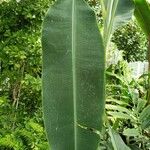
Musa ornata
Flowering banana · Bronze banana · French plantain
Description
Source: leafsnapMusa ornata, the flowering banana, is one of more than 50 species of banana in the genus Musa of the family Musaceae. Most of these species are large tropical evergreen perennials, mainly from lowland areas with high temperature and humidity. Musa ornata originated in southeast Asia, and is cultivated for its commercial and ornamental value. The fruit is attractive but tends to be inedible.
Care Guide
💧 Water 1-2 times a week
The flowering banana plant thrives in the humid conditions typical of tropical rainforests. For optimal growth, it should be watered every two weeks, ensuring the soil remains consistently moist without becoming too dry or waterlogged. As an evergreen plant, the flowering banana retains its leaves throughout the year, making it important to maintain stable moisture levels in every season.
☀️ Light Full sun
The flowering banana thrives when it receives abundant sunlight throughout the day. It can still grow with reduced light, although that is not ideal. Coming from habitats with plenty of sun, this plant makes efficient use of sunlight for nourishment and producing flowers. Both too much and too little sunlight can harm its health and hinder flowering.
🌡️ Temperature 20–37.8°C
The flowering banana comes from tropical areas, which are generally warm and humid. Consequently, it is adapted to high temperatures and humidity. It does not tolerate sudden temperature changes and prefers a steady thermal environment, so avoiding indoor temperature fluctuations is important. It typically cannot withstand cold and requires relatively high temperatures for growth. If the surrounding temperature falls too low, the plant may stop growing or even die.
💨 Humidity
🪴 Soil 5-7
🌱 Fertilizer
Appropriate fertilization is essential for the health and appearance of the Flowering banana. Fertilize the Flowering banana in summer, repeating the treatment monthly throughout the season. Nutrients support growth and upkeep of the plant's parts. Fertilization improves the Flowering banana's floral display, helping it achieve the best blooms.
🪴 Pot & Repot 2-3 years
To ensure optimal growth for your flowering banana plant, repot it every 2-3 years during the spring season. Select a container that is one size larger than the current one to allow room for root expansion. Once repotted, place the plant in bright, indirect light and maintain consistent moisture levels. Use a high-quality, well-draining soil mix to promote healthy development.
✂️ Pruning
To help your flowering banana flourish, it's important to prune it properly from early to late spring. Start by removing any dead leaves and cutting back old flower stalks to stimulate growth and encourage new blooms. Regular pruning not only helps manage the plant's size, but also prevents disease and improves air circulation, leading to a healthier and more vibrant plant.
🌿 Propagating
🐛 Diseases & pets
☠️ Toxicity
Characteristics
- Plant Type
- Herb
- Life Cycle
- Perennial
- Genus
- Musa
- Family
- Musaceae
- Hardiness Zone
- 9-11
- Mature Height
- 1.83 m to 2.74 m
- Mature Spread
- 1.52 m
- Leaf Color
- Green
- Leaf Type
- Evergreen
- Flower Color
- Lavender
- Flower Size
- 2.54 cm to 5.08 cm
- Bloom Time
- Summer, Early fall, Mid fall
- Planting Time
- Summer, Autumn
- Harvest Time
- Fall, Early winter, Mid winter
- Native Area
- Bangladesh, India