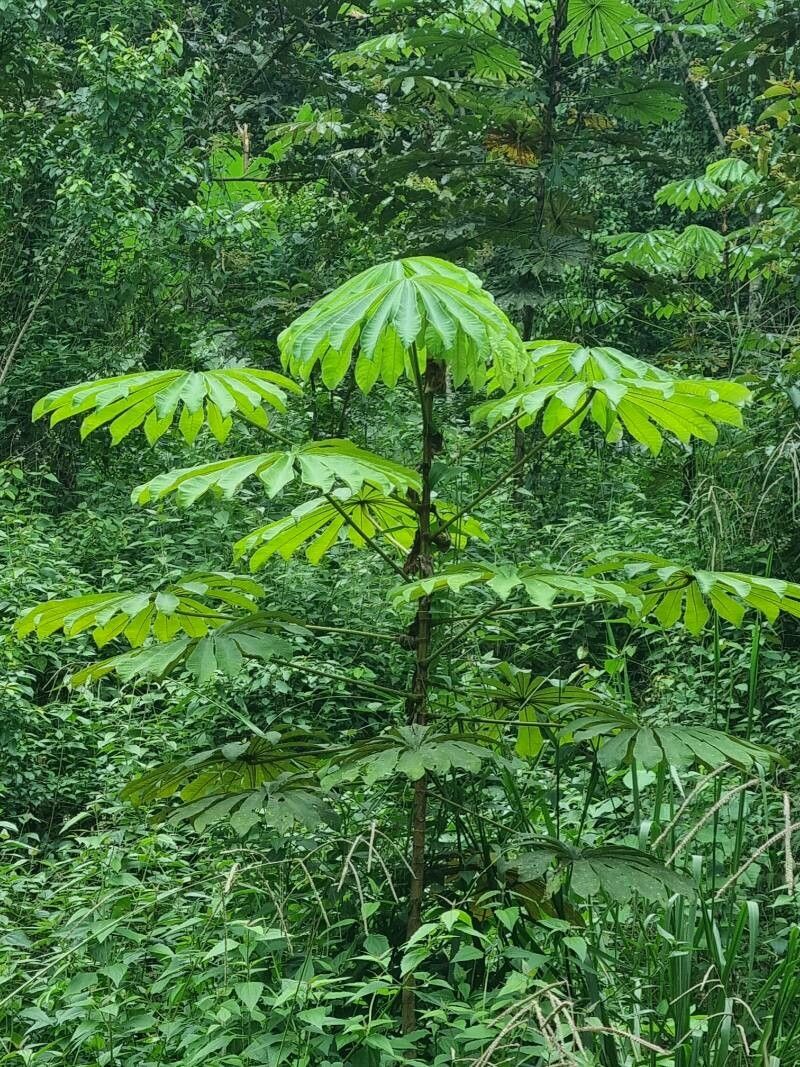
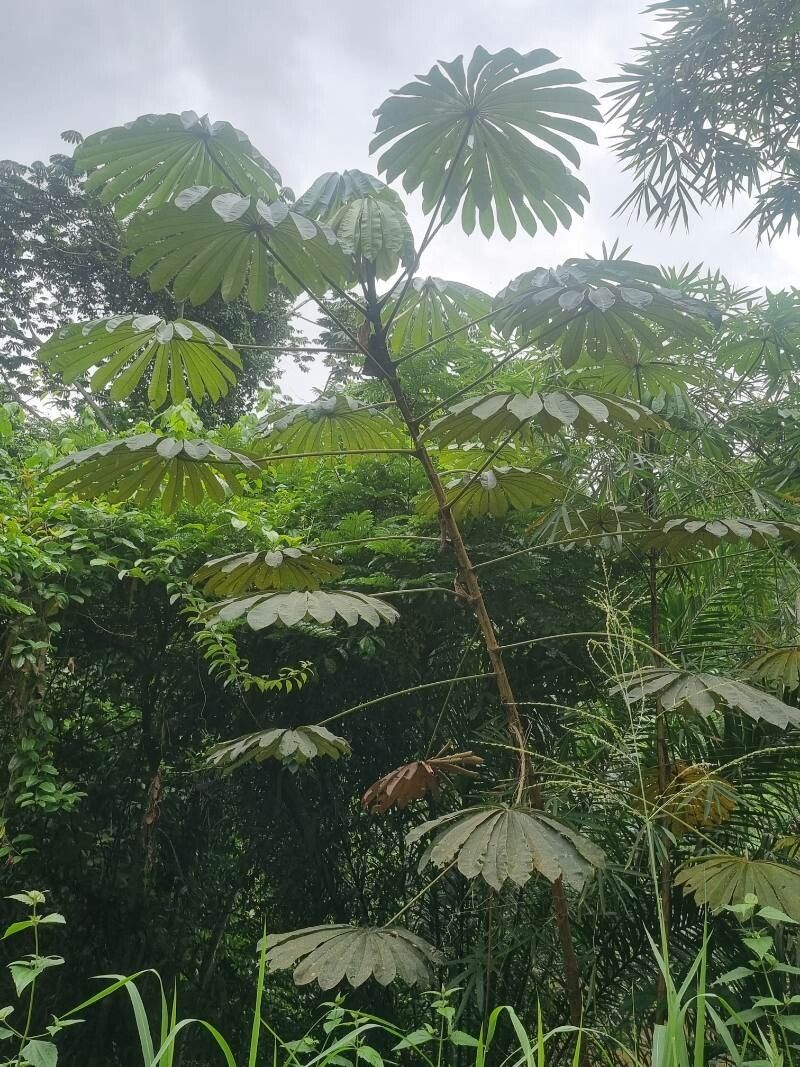
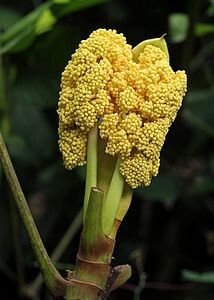
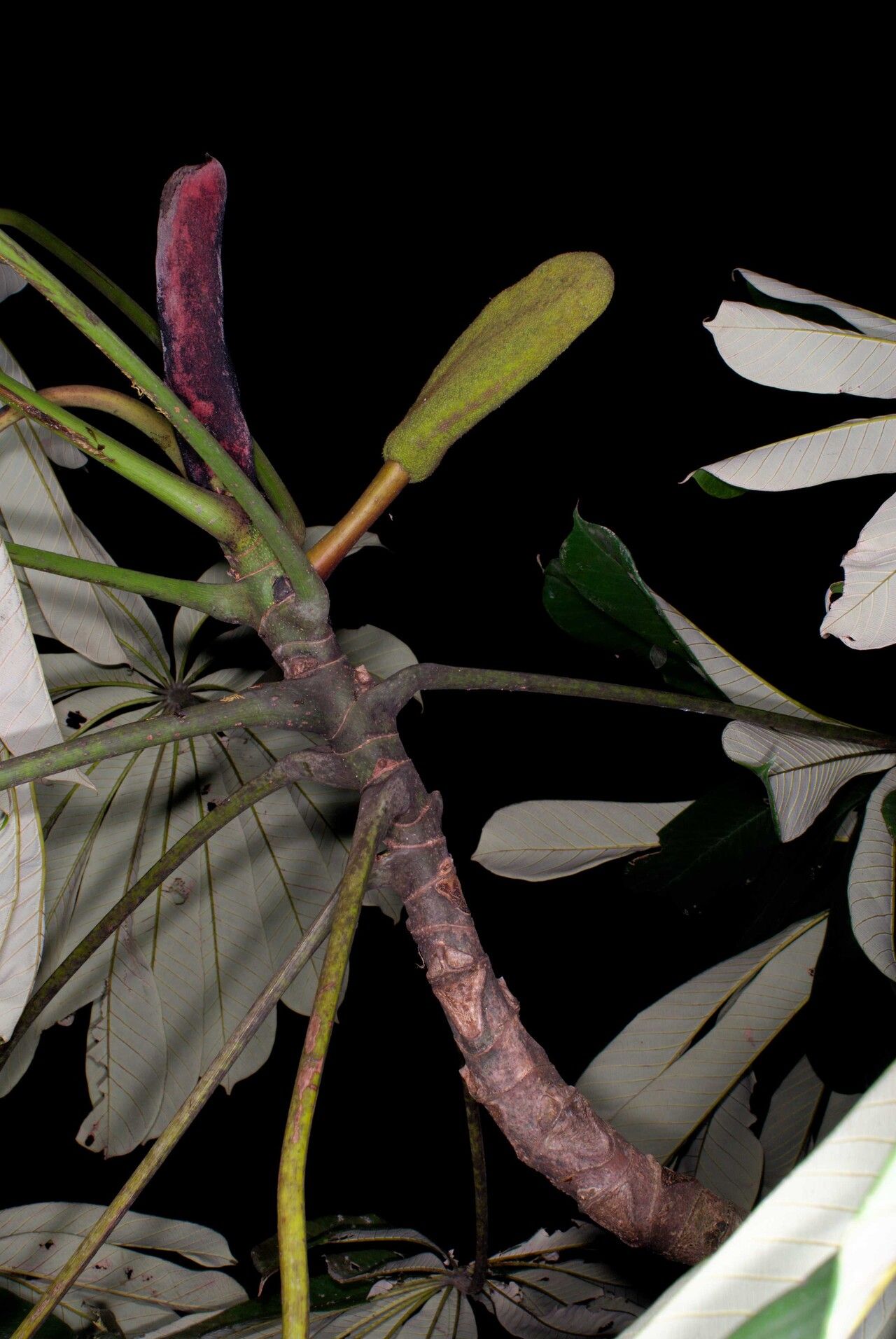
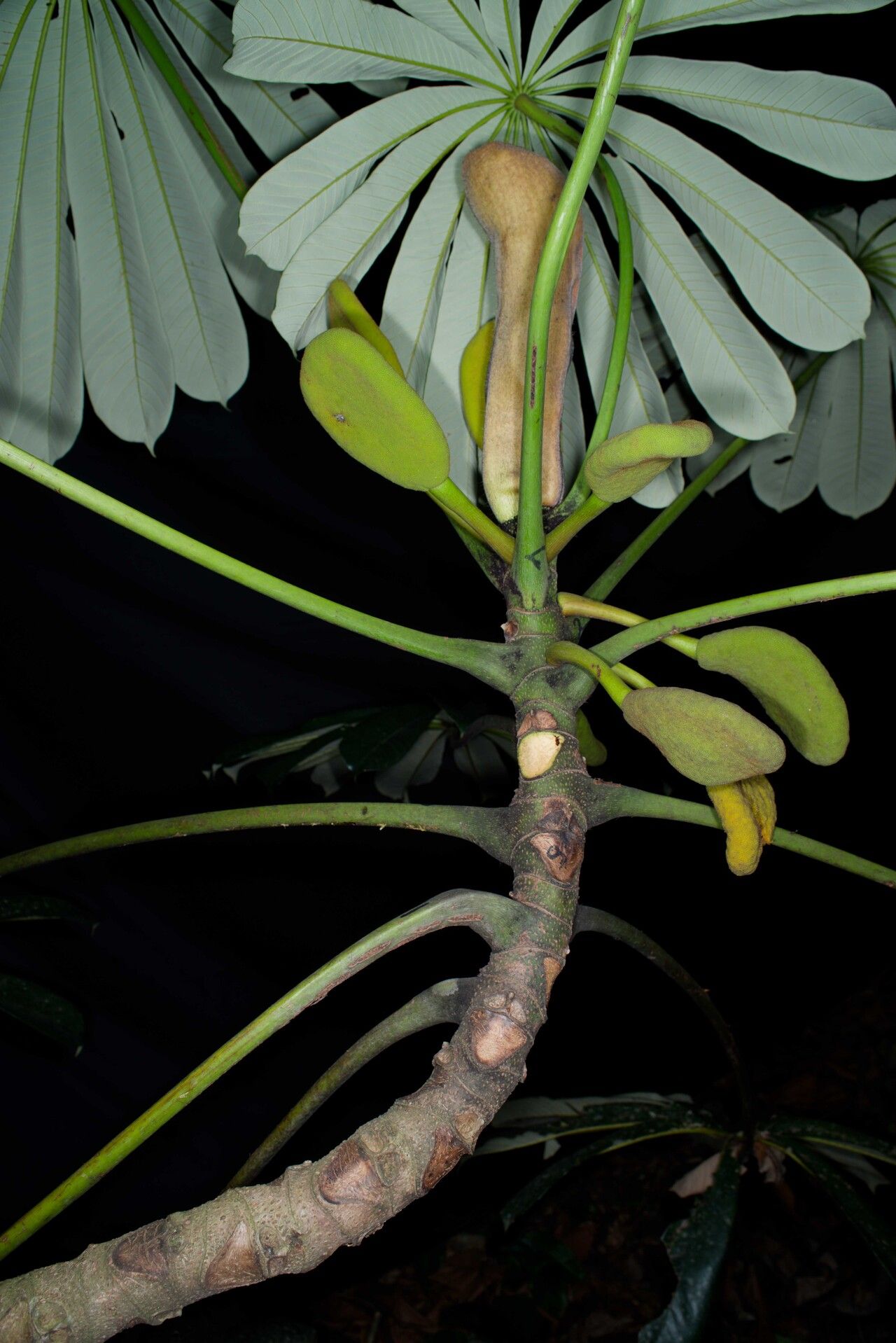
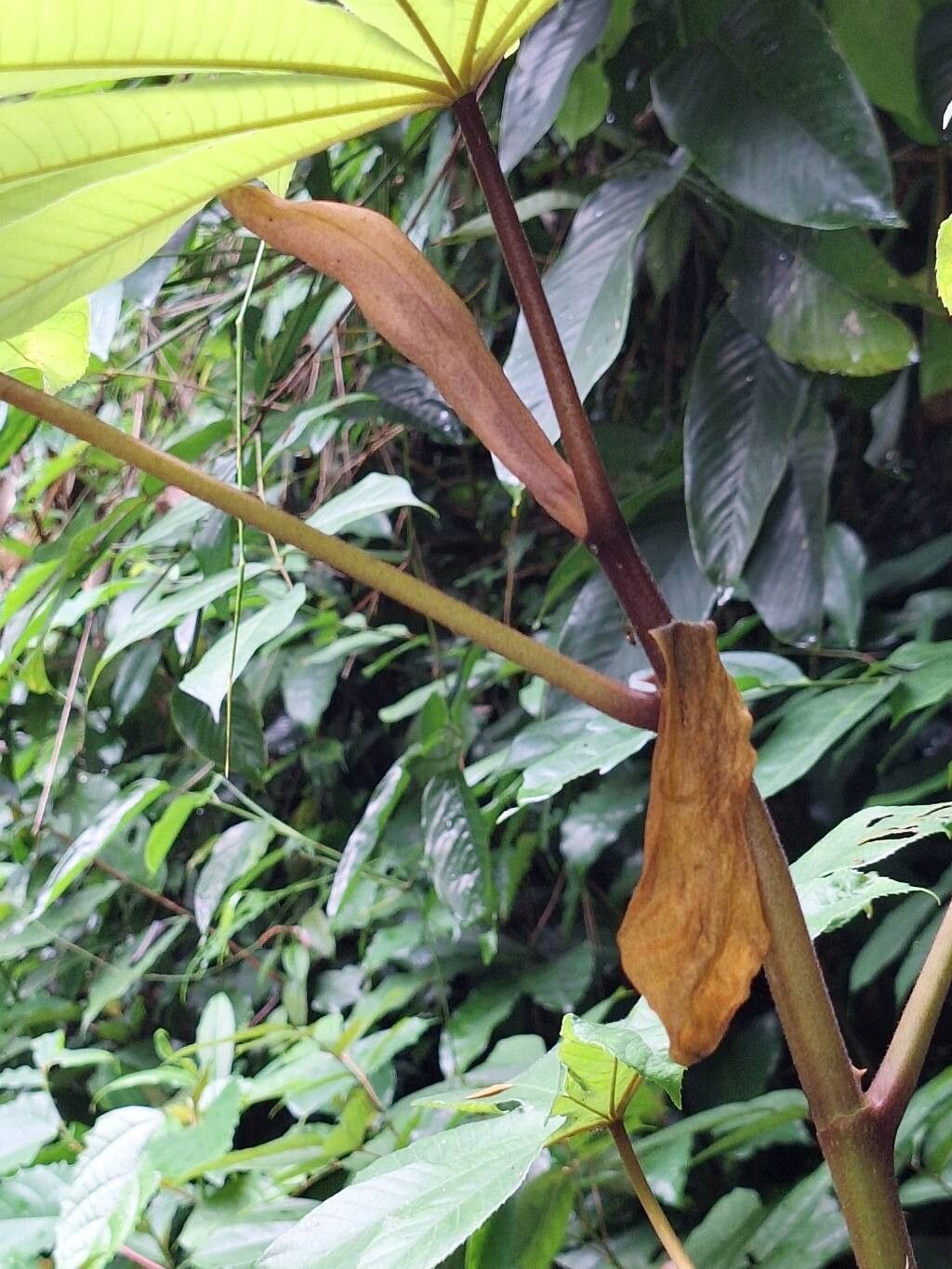
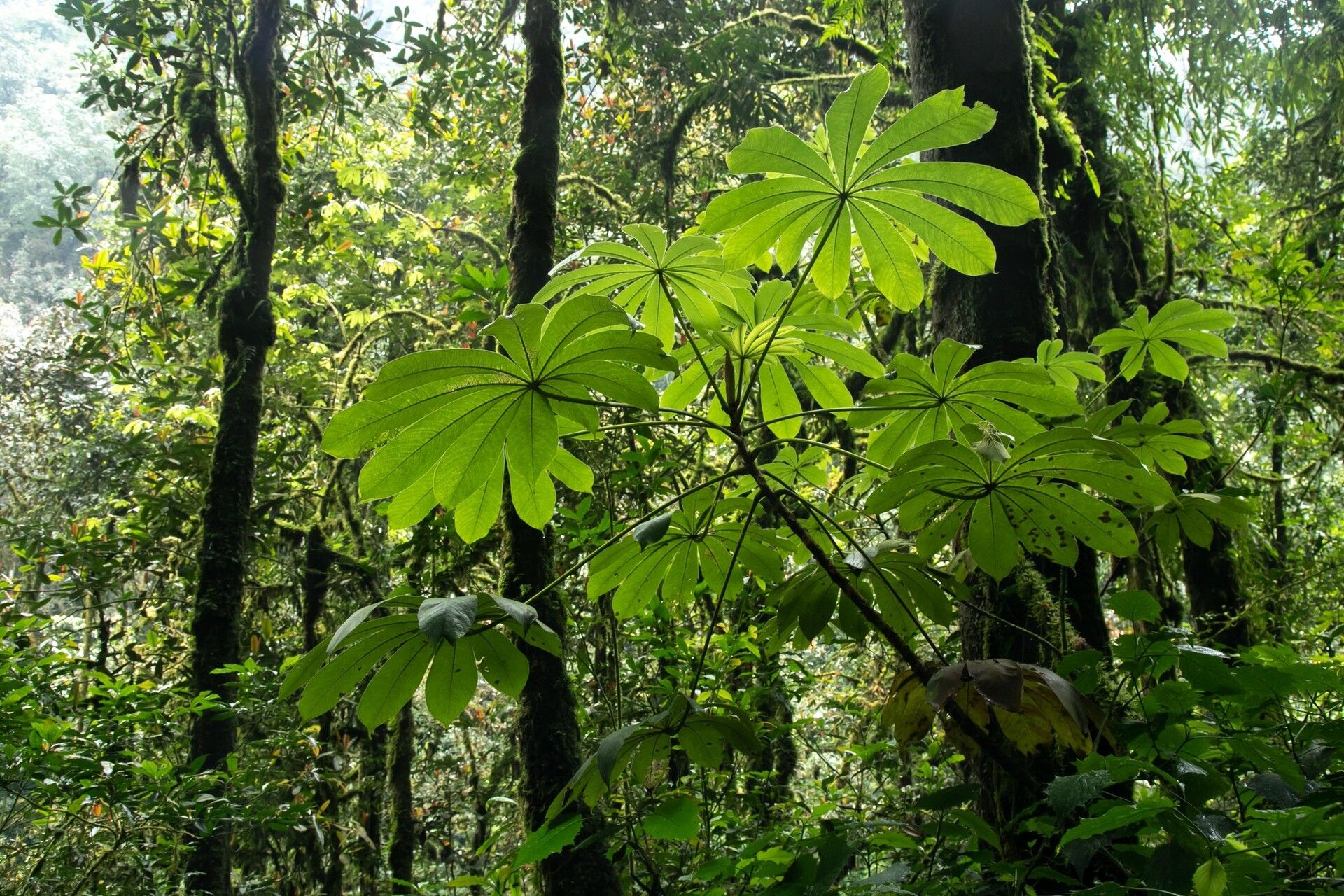
Musanga cecropioides, the African corkwood tree or umbrella tree, is found in tropical Africa from Sierra Leone south to Angola and east to Uganda. It is typical in secondary forests. This tree is also known as parasolier, n'govoge, govwi, doe, kombo-kombo, musanga, and musanda.
The Aga umbrella tree is resistant to disease and, in general, does not commonly suffer from illnesses. Regarding maintenance, this species is fairly easy to care for. When grown outdoors it needs only light watering, and mature specimens typically do not require pruning. Conversely, younger or smaller plants should be trimmed after they finish flowering. The Aga umbrella tree is well suited to anyone who has an outdoor area, such as a garden or a deck, and it does not demand extensive gardening experience.
How to keep Musanga Cecropioides.
Light
The Aga umbrella tree comes from open habitats, such as sunny meadows and forest edges, which supply abundant light. It thrives in Full Sun but can also tolerate Partial Sun, making it adaptable to different light levels.
Temperature
The Aga umbrella tree comes from tropical areas, where the climate is generally warm and humid. Therefore it is well adapted to high temperatures and humid conditions. It does not tolerate sudden temperature changes and prefers a stable temperature environment, so avoiding indoor temperature fluctuations is important. It generally cannot withstand cold and needs warmer temperatures to grow. If the surrounding temperature drops too low, the plant may stop growing or even die.
Fertilizer
Fertilizing is essential for the care of the Aga umbrella tree. Regular feedings during the growing season preserve the energy needed for its showy foliage and encourage overall growth. If fertilization is ignored, leaves can become unhealthy, its ornamental value may decline, and growth may be stunted or weak and more susceptible to breaking.
Pruning
To maintain a healthy structure for an umbrella tree, it's important to prune it in early spring. Begin by removing any dead or diseased wood and trimming back overgrown branches. Pay special attention to the lower branches to improve air circulation and allow more sunlight to penetrate. Regular pruning not only encourages vigorous growth but also adapts to the tree's rapid growth, so you may need to adjust the frequency of pruning as needed.
Botanical profile.
- Plant Type
- Tree
- Life Cycle
- Perennial
- Genus
- Musanga
- Family
- Urticaceae
- Hardiness Zone
- 10-12
- Mature Height
- 14.94 m to 29.87 m
- Mature Spread
- 10.06 m to 14.94 m
- Leaf Color
- Dark Green, Forest Green
- Leaf Type
- Evergreen
- Bloom Time
- All year round
- Planting Time
- Spring, Summer, Autumn
- Harvest Time
- All year round
- Native Area
- Angola, Nigeria, Congo, Guinea, Gabon, Uganda, Benin, Sierra Leone, Equatorial Guinea, Cameroon, Liberia, Togo, Ghana, Côte d'Ivoire, Congo (DRC), Central African Republic
Other names.