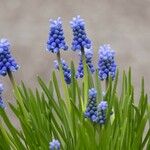
Muscari botryoides
Κούκος (Koukos) · Grape-hyacinth · Small Grape-hyacinth · Common grape hyacinth · Compact grape-hyacinth
Description
Source: leafsnapMuscari botryoides is a bulbous perennial plant of the genus Muscari and one of a number of species and genera known as grape hyacinth. It is sometimes grown as an ornamental plant. The flowers are close together, and are almost totally round. The lower fertile flowers point downwards, while upper ones, usually paler and sterile, point upwards. The flowers are bright blue with white lobes at the end in the wild species, but other colours are available, including white. M. botryoides is originally from central and south-eastern Europe, growing in open woodland and mountain meadows.The name botryoides is derived from the appearance of a miniature cluster of grapes. M. botryoides is said to be much less invasive than species such as M. neglectum, nevertheless it is listed as invasive in Tennessee.
🌳 The compact grape hyacinth's bright cobalt-blue blossoms not only enhance the look of gardens but also have a distinctive role in perfumery because of their sweet, grape-like scent. The perfume industry's search for new fragrances makes extracting the plant's essential oil an intriguing prospect. Furthermore, its vivid blooms could provide a source of natural dyes. Additionally, the plant's bulbs are toxic, which suggests they could help deter pests from other plants and crops.
🎭 Reproductive Ability, Garden Area, Sorcery, Psychic Powers
Care Guide
💧 Water
The compact grape hyacinth thrives in temperate regions with moderate moisture, preferring soil that remains consistently moist but not waterlogged. Watering once a week helps ensure optimal growth. This bulbous plant stores water in its bulb, allowing it to adapt well to different climates, making it suitable for both indoor and outdoor cultivation.
What should I do if I give Compact grape hyacinth too much or too little water?
Over-watering Compact grape hyacinth can cause yellow leaves to develop. Typically, yellow leaves appear at the end of the blooming period, but if they occur before the flowers have bloomed, it indicates over-watering. To fix this, ensure proper drainage and refrain from watering for a few days. Adding sawdust to the soil can help absorb excess moisture. If the situation persists, check if the seedpods have rotted by digging them up and examining them for changes in color and texture. If decay is severe, promptly remove the affected seedpods. In contrast, under-watered Compact grape hyacinth may also have yellow leaves, along with drooping stems, smaller curled leaves, and brown patches. If you've provided too little water, there's no need to panic as Compact grape hyacinth can tolerate some drought. Simply give it a good drink without saturating the surrounding soil, ensuring it remains moist. Avoid over-watering, as prolonged periods of water can lead to root rot and fungus growth on the bulbs. This can be identified by spots on the leaves and buds, as well as discolored and dying leaf tips.
How much should I water my Compact grape hyacinth?
The growth and watering needs of your Compact grape hyacinth depend on its location and current state. After planting, water the hyacinth well once to stimulate growth. Then, you can leave it until shoots appear. If the hyacinth is in a pot, water it when the top 1-2 inches of soil feels dry. Container plants dry out faster, so make sure the soil is damp. If the hyacinth is in a flower bed or border and it has rained during the week, no additional water is needed. The hyacinth is somewhat drought-resistant, but excessive watering can cause rotting and eventually death. Therefore, be cautious about how often you water the plant.
Do I need to change how often I water my Compact grape hyacinth depending on the time of year or the weather?
To properly care for your Compact grape hyacinth, follow these watering guidelines. Typically, watering once a week is sufficient, but beware that as the temperature increases, the soil will dry out more quickly. In this case, you will need to water more frequently. Remember that Compact grape hyacinth prefers a dry soil environment over excessive moisture. During the summer, Compact grape hyacinth goes dormant, and its above-ground parts will completely dry up and die. If you have planted it outdoors, watering is generally unnecessary. However, if your region experiences heavy rainfall, it may be advisable to dig out the plants to protect the buds from rot caused by excessive water. For potted Compact grape hyacinth, once the dormant part has dried out completely, stop watering altogether. Dig up the buds and store them in a cool location with no watering required. Alternatively, you may choose to keep them in the soil in a cool area until the next growing season, resuming watering accordingly.
What do I need to consider when planting my Compact grape hyacinth inside or outside?
To effectively monitor and care for your containers of plants, it is important to consider moisture levels. If they become excessively wet, move them to a protected area until they dry out. When weather conditions improve, you can return them to their original position. When planting outdoors, it is crucial to choose well-drained soil to prevent waterlogging and decay. Additionally, it is important to avoid overwatering the bulbs while they are still dormant. Allow the soil to completely dry out before providing small amounts of water. Once new shoots begin to grow, you can water more regularly. Indoors, your Compact grape hyacinth is more prone to rot in low light and poor ventilation. Be cautious when watering indoors and make sure a significant portion of the soil is dry before watering. If the plant is consistently moist for extended periods indoors, consider if it is in an unfavorable location. Outdoors, adequate ventilation and ample light provide a relatively safe environment for the plant.
☀️ Light Full sun
Compact grape hyacinth grows best in locations that receive plenty of sunlight during the day. It can tolerate areas where the light is partially filtered. In ideal conditions, the plant displays vigorous growth and bright blooms. Excessive shade or overly intense sun can lead to stunted growth or cause the blooms to fade.
What are the sunlight requirements for Compact Grape Hyacinth?
Compact Grape Hyacinth, or Muscari botryoides, thrives under full sun conditions, which means the plant benefits from more than 6 hours of sunlight daily. It can also grow in partial sun, receiving about 3-6 hours of sunlight. The key is to observe the movement of sunlight through your garden, ensuring you pick spots with the ideal balance of light and shade to keep your plants thriving.
Can Compact Grape Hyacinth grow in artificial lighting?
Yes, Compact Grape Hyacinth can grow under artificial lighting, especially in conditions where natural sunlight is not sufficient, like during winter or in locations that receive less sun. Optimal growth under artificial lights can be achieved by selecting the right type of light, such as LED, which can be customized for plants' needs. Full sun plants like the compact grape hyacinth need 30-50W/sq ft of light, and the light source should be placed 12-36 inches above the plant. It's also important to mimic natural daylight hours, ensuring plants receive 8-12 hours of light per day.
What are the symptoms of improper lighting for Compact Grape Hyacinth?
Symptoms of improper lighting for Compact Grape Hyacinth include lighter-colored new leaves indicating insufficient sunlight, and potential adverse effects on future flowering and fruiting. Insufficient light leads to slower or no new growth as the plant enters survival mode. Too much light can result in chlorosis, where leaves lose their green color and turn yellow, sunscald with damaged plant tissue, leaf curling as a defense mechanism against excessive sunlight, wilting due to increased water loss, and leaf scorching characterized by brown, dry, and crispy leaf edges.
How can you address lighting issues for Compact Grape Hyacinth?
To address lighting issues for Compact Grape Hyacinth, a gradual adjustment to increasing light conditions is recommended. For indoor plants, progressively move them to sunnier locations or use artificial lighting such as desk lamps or professional grow lights for at least 8 hours daily. Outdoor plants should also be moved gradually to avoid sunburn. Reducing obstructions, like pruning tree branches that block sunlight, or transplanting smaller plants to sunnier spots ensures they receive adequate sunlight. Remember, parts of the plant damaged by insufficient light may not recover, but new growth will be healthy with improved lighting.
🌡️ Temperature 5–35°C
Compact grape hyacinth originates from temperate regions and generally does best in temperatures of about 68 to 95 °F (20 to 35 °C). In colder seasons, it is recommended, when possible, to alter its surroundings to resemble those native temperature conditions.
What temperature is best for Compact grape hyacinth?
The ideal temperature range for Compact grape hyacinth varies depending on the time of year. There are two main seasons to consider: the growing season and the dormancy season. During the growing season, when the plant starts sprouting, the best temperature range is between 65-80℉ (18-27℃). If the temperature drops below 15℉ (-10℃), the plant may suffer and its leaves may turn brown and wilt. However, if it's a short cold snap, the Compact grape hyacinth could survive with some assistance. Similarly, during the warmer months, the plant needs protection from excessively high temperatures. The upper limit is 95-105℉ (35-40℃), as anything higher can harm the foliage and blooms. High temperatures can cause wilting, drooping, and sunburn on the leaves, which may be challenging for the Compact grape hyacinth to recover from. Fortunately, there are various simple and quick methods to address this issue.
The first year or baby Compact grape hyacinth needs specific temperatures.
If you have recently planted a Compact grape hyacinth outside for the first time, it may need some extra care during the coldest months. Frost can be especially harmful to new plants and may prevent them from growing back in the spring. To protect your Compact grape hyacinth, make sure it stays above 40℉(5℃) by either bringing it indoors or using mulch or fabric barriers. During the first year or two, it is best to plant Compact grape hyacinth in a shadier area. Smaller and weaker plants have a harder time regulating their own temperature in hot weather. Limit direct sunlight to five hours per day and provide shade and regular watering or misting to keep them cool in the summer.
How can I keep Compact grape hyacinth safe when it gets really hot or really cold?
If cold temperatures below 15℉(-10℃) happen during the growing season, there are ways to protect Compact grape hyacinth. If it's in a container, just bring it inside with indirect light until the temperatures rise. For ground-planted Compact grape hyacinth, you can use mulch or horticultural fabric to create an insulated barrier around the plant, protecting it from frost and cold wind. On the other hand, if temperatures go higher than 80℉(27℃) during the day, limit the plant's exposure to six hours or less of sunlight per day, preferably in the morning. Setting up shade cloth or a fine plastic mesh can lessen direct sunlight during the hottest times. Installing a misting system that emits cooling mist around the base of the plant during the day can also lower ground temperatures.
Suggestions for the ideal temperature during the resting period for Compact grape hyacinth.
Compact grape hyacinth needs cold weather to remain dormant until it's time to sprout. It's important for it not to sprout too early before the last frost, as this could be fatal. Ideally, winter temperatures should stay below freezing, but if they reach 40℉(5℃), that's also okay. In some cases, a warm spell during winter can cause premature sprouting. If there's still a risk of frost, covering the sprout with clear plastic on stakes can help protect it. Remember to remove the covering once the danger of frost has passed. Sometimes, Compact grape hyacinth will naturally sprout at the right time, but using this method increases the chances of success.
💨 Humidity
🪴 Soil 6-7
🌱 Fertilizer
For Compact grape hyacinth, the primary time to apply fertilizer is in early spring when the flowers are developing. The correct fertilizer promotes better blooms and helps Compact grape hyacinth produce attractive flowers. Fertilizing in early spring guarantees excellent flowers during the season and supplies energy for dormant growth phases.
Why should I add fertilizer to my Compact grape hyacinth?
Fertilizing your Compact grape hyacinth is important for a few reasons. Firstly, it will help the plant produce beautiful blooms. It is especially effective to fertilize in early spring to ensure excellent flowers during that season. In addition, fertilizer provides the plant with energy that it can store in the ground during its dormant growth phases. By giving your Compact grape hyacinth extra nutrients during fall planting or late spring, you will help it hold more energy to use when active growth resumes.
When should I fertilize my Compact grape hyacinth for the best results?
To make sure your Compact grape hyacinth thrives and produces beautiful blooms, there are a few key times to fertilize. The first is in early spring when the flowers are forming. By using the right fertilizer, you can encourage better blooms. Additionally, you can fertilize your Compact grape hyacinth later in the spring, once the flowers have faded. This will provide the plant with plenty of energy to store and utilize for the following year. If you're planting your Compact grape hyacinth for the first time in the fall, it's also beneficial to apply fertilizer during that time. Doing so gives your plant the best chance of producing a healthy set of flowers during its initial growing season.
When is it not a good idea to put fertilizer on my Compact grape hyacinth?
To properly fertilize a Compact grape hyacinth, there are specific times to keep in mind. These times include the fall planting process, the early spring bloom period, and the late spring following the bloom period. Fertilizing at any other time of the year is unnecessary and may actually harm your plant. It's important to note that a Compact grape hyacinth goes through a noticeable dormant phase where it requires less fertilizer and water. This period occurs during winter, which is expected. However, it also has a dormant phase in the summer. After the flowers fade, the leaves will stay for a short time before dying back to the ground. Once the leaves have died back, the plant has re-entered its dormant phase and will not require any fertilizer.
Which fertilizer should I use for my Compact grape hyacinth?
When fertilizing Compact grape hyacinth, there are several options to choose from. To simplify things, a balanced fertilizer with equal amounts of nitrogen, phosphorus, and potassium is recommended. Fertilizer ratios like 10-10-10 or 5-5-5 are effective. It is also advisable to use granular fertilizer rather than liquid. For a more specific approach, consider using a fertilizer that is rich in the three main nutrients but higher in phosphorus. Many gardeners believe that higher phosphorus content encourages better and longer-lasting flowers. Organic materials such as bonemeal can be used to add phosphorus and benefit the blooming abilities of Compact grape hyacinth.
How can I add plant food to my Compact grape hyacinth?
To properly fertilize your Compact grape hyacinth, follow these steps: 1. During fall planting, after digging a small hole for your bulb, add granular slow-release fertilizer to the hole. Make sure to water continually to maintain consistent soil moisture. 2. In early spring, fertilize again as the plant emerges and develops its flowers. Use a granular fertilizer with a balanced mix of nutrients, sprinkling it on the ground. As you apply the fertilizer, gently water the soil at the same time.
🪴 Pot & Repot 2-3 years
Repot compact grape hyacinths every 2-3 years in the spring to promote healthy bulb growth. Use a slightly larger container and make sure to water moderately, allowing the soil to dry out between waterings. Choose well-draining soil to prevent rot, and avoid compacting the soil to protect the plant's delicate roots.
✂️ Pruning
The compact grape hyacinth showcases clusters of small, bell-shaped blue flowers. To encourage vigorous growth and blooming, prune in early spring to remove spent stems and any damaged foliage. Make sure to use sharp, sanitized tools to prevent disease. Avoid heavy pruning to maintain the plant's health.
🌿 Propagating
🐛 Diseases & pets
☠️ Toxicity
Muscari botryoides has no toxic effects reported.
Characteristics
- Plant Type
- Herb
- Life Cycle
- Perennial, Annual
- Genus
- Muscari
- Family
- Asparagaceae
- Hardiness Zone
- 4-9
- Mature Height
- 15 cm to 30 cm
- Mature Spread
- 0.61 m to 1.83 m
- Leaf Color
- Green
- Leaf Type
- Deciduous
- Flower Color
- Blue, Purple
- Flower Size
- 2.54 cm
- Bloom Time
- Spring
- Planting Time
- Winter, Spring, Autumn
- Harvest Time
- Late spring, Early summer
- Native Area
- Austria, Slovakia, Romania, Montenegro, Bulgaria, Poland, Greece, Croatia, Slovenia, Ukraine, Serbia, Germany, Italy, Switzerland, Albania, Hungary, France