Muscari latifolium
Broad-leaved grape hyacinth
Description
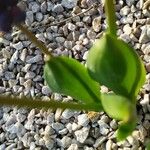
Source: leafsnapMuscari latifolium, the broad-leaved grape hyacinth, is a species of flowering plant in the family Asparagaceae. The Latin specific epithet latifolium means "broad-leaved".
Care Guide
💧 Water Every week
The broad-leaved grape hyacinth thrives in temperate environments and requires moderate watering, ideally about once a week. While it can tolerate short periods of dryness, it's important to provide additional watering during prolonged dry spells to prevent the soil from becoming too dry. When growing this plant outdoors, it's essential to pay attention to seasonal rainfall patterns to ensure it remains in optimal health.
☀️ Light Full sun
Broad-leaved grape hyacinth grows best in full sun but can tolerate lower light levels. Native to sunny regions, it thrives and displays greater vigor when given plenty of light. Excessive sun can scorch it, while too little light may prevent it from flowering.
What are the sunlight requirements for Broad-leaved grape hyacinth?
Broad-leaved grape hyacinth, also known as Muscari latifolium, thrives best under full sun conditions, requiring above 6 hours of sunlight daily for optimal growth. However, it can also adapt to partial sun environments, where it receives about 3-6 hours of sunlight. It's important to monitor the movement of sunlight through your garden to ensure your plants get a balanced exposure of light and shade, enhancing their growth and well-being. This species' origin from sunny regions underlines its affinity for abundant sunshine, although both overexposure and underexposure carry their risks, potentially leading to scorching or inadequate blooming, respectively.
How does artificial lighting support Broad-leaved grape hyacinth indoors?
For Broad-leaved grape hyacinth growing indoors where natural sunlight may be insufficient, artificial lighting can serve as an essential growth promoter, especially in winter or less sunny spaces. Utilizing the right type of artificial light like LED, which can be adjusted to supply specific light wavelengths, helps in mimicking natural sunlight conditions. Full sun plants require 30-50W/sq ft, partial sun plants 20-30W/sq ft, and full shade plants 10-20W/sq ft of artificial light. It's crucial to position the light source 12-36 inches above the plant, ensuring it receives 8-12 hours of light daily to simulate the natural daylight hours and support its growth.
What signs indicate Broad-leaved grape hyacinth is not receiving enough light?
When Broad-leaved grape hyacinth is deprived of adequate sunlight, it may exhibit several symptoms indicative of light deficiency. These include the development of smaller new leaves, leggy or sparse growth, premature leaf drop to conserve resources, delayed or halted growth reflecting a survival mode, lighter-colored or irregularly patterned new leaves due to insufficient chlorophyll, and symptoms of chlorosis where leaves turn yellow. Additionally, excessive sunlight exposure can cause sunscald, leaf curling as a protective response, wilting due to rapid water loss, and leaf scorching marked by brown, crispy leaf edges, all of which compromise the plant's health and photosynthetic ability.
How can I improve sunlight exposure for my Broad-leaved grape hyacinth?
Improving sunlight exposure for Broad-leaved grape hyacinth involves several strategies tailored to indoor, outdoor, and ground plantings. Indoors, gradually relocating the plant to sunnier spots weekly, ensuring at least 6 hours of direct sunlight, and utilizing south-facing windows are effective methods. Artificial lighting, such as desk lamps or professional grow lights, can supplement sunlight for large or stationary plants. Outdoors, a gradual shift to brighter areas prevents sunburn, allowing plants to acclimatize to the increased light intensity. For ground plantings, reducing obstructions by pruning nearby trees and transplanting smaller plants during their dormant period to sunnier locations with good drainage can significantly enhance light availability, fostering healthier growth. It's important to note that while parts of the plant affected by insufficient light may not recover, new growth following increased light exposure should be robust and healthy.
🌡️ Temperature 5–32.2°C
Broad-leaved grape hyacinth grows best in temperatures from 41 to 89.6 °F (5 to 32 °C). Native to temperate climates, it favors moderate conditions. Measures may be necessary to protect it in extreme temperatures, particularly during hot summers or freezing winters.
What is the ideal temperature range for Broad-leaved grape hyacinth?
Broad-leaved grape hyacinth, or Muscari latifolium, thrives in a temperature range of 41 to 89.6°F (5 to 32°C). Native to temperate climates, it enjoys moderate conditions and can usually withstand the cold well without needing special frost protection. Despite its strong cold resistance, in extreme temperature conditions such as hot summers or freezing winters below -30°C, it may require adjustments to ensure its survival.
How should Broad-leaved grape hyacinth be cared for in cold conditions?
In cold conditions, Broad-leaved grape hyacinth displays extraordinary cold tolerance and performs best when temperatures remain above 5°C. Nonetheless, it should be kept above -25°C during winter. If temperatures are expected to fall below -30°C, it's crucial to protect it by covering with soil or straw. Additionally, to prepare for winter and early spring, water the plant abundantly before the first freeze of autumn to maintain soil moisture, avoiding drought and water scarcity.
What are the signs of temperature stress in Broad-leaved grape hyacinth and how can they be addressed?
Temperature stress in Broad-leaved grape hyacinth can manifest in two ways: low and high temperature stress. For low temperature stress, where winter temperatures fall below -30°C, the plant may not show immediate signs of change but could have decreased or no sprouting in spring. The solution is to remove any parts that failed to sprout. For high temperature stress, when summer temperatures exceed 32°C and especially if over 35°C, symptoms include lighter leaf color, curling, susceptibility to sunburn, wilting, and drying. These issues can be addressed by trimming sunburned and dried parts, relocating the plant to a shaded area, or using shade cloth to protect it from the midday and afternoon sun, and watering it in the morning and evening to ensure the soil remains moist.
💨 Humidity
🪴 Soil 6-7
🌱 Fertilizer
The best time to fertilize a Broad-leaved grape hyacinth is in early spring, as it comes out of dormancy and starts active growth. Fertilizer supplies essential nutrients needed for healthy development. Although Broad-leaved grape hyacinth has fairly low fertilizer requirements, giving it an annual feed can improve its survival and encourage better, longer-lasting blooms.
🪴 Pot & Repot
✂️ Pruning
Pruning broad-leaved grape hyacinth in early spring improves its vibrant blue flowers and overall health. By removing dead leaves and spent stems, you maintain the plant's aesthetic appeal, encourage growth, and prevent disease. This care ensures the plant remains vigorous in the following seasons.
🌿 Propagating
🐛 Diseases & pets
☠️ Toxicity
Characteristics
- Plant Type
- Herb
- Life Cycle
- Perennial
- Genus
- Muscari
- Family
- Asparagaceae
- Hardiness Zone
- 4-8
- Mature Height
- 15 cm to 49 cm
- Mature Spread
- 0 cm to 10 cm
- Leaf Color
- Green
- Leaf Type
- Deciduous
- Flower Color
- Blue, Black, Violet
- Flower Size
- 0.25 cm
- Bloom Time
- Early spring, Mid spring
- Planting Time
- Spring
- Harvest Time
- Late spring, Early summer
- Native Area
- Turkey