Myrica californica
Pacific Bayberry · California wax myrtle · Pacific wax myrtle
Description
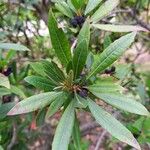
Source: leafsnapMyrica californica, commonly known as California bayberry, is a species of flowering plant in the Myricaceae family. It is native to the western coast of North America, ranging from British Columbia to Baja California. Typically, the plant grows as a shrub or small tree, reaching heights of up to 10 meters. Its dark green leaves are aromatic when crushed, and its small yellow-green flowers bloom in late winter or early spring. The fruit of Myrica californica is a small, berry-like drupe containing a single seed. This fruit has a pleasant aroma and can be used to make candles, soaps, and other fragrant products. The plant thrives in moist soils and is commonly found along streamsides or in wetlands. Once established, it can tolerate some drought conditions. Indigenous peoples have used Myrica californica for medicinal purposes, treating colds, headaches, and stomach ailments. The leaves have also been used to make tea. Overall, Myrica californica is an important native species with cultural significance. It provides habitat for wildlife such as birds and insects, while also offering practical uses for humans through its fragrant fruit.
🎭 Affection, Fertility, Youthfulness
Care Guide
💧 Water Every 7 days
☀️ Light Full sun
Pacific Wax Myrtle grows best with plenty of sunlight but can withstand moderate light. As a plant native to generally sunny habitats, it does better with generous sun exposure. However, too much or too little sun can affect its growth, causing leaf scorch or stunted development, respectively.
🌡️ Temperature 15–35°C
Pacific Wax Myrtle is naturally adapted to mild coastal climates and prefers temperatures from 59 to 95 °F (15 to 35 ℃). It may struggle in very hot or very cold conditions, so seasonal changes to its environment might be necessary.
💨 Humidity
🪴 Soil 6-7
🌱 Fertilizer
Fertilize your Pacific Wax Myrtle in early spring to encourage healthy growth. Regular feeding boosts the plant’s overall health, leading to vigorous development, better tolerance of challenging conditions, and greater resistance to pests and diseases. Stick to a consistent fertilization schedule to maintain foliage that is vibrant, deeply colored, and lush.
🪴 Pot & Repot
✂️ Pruning
🌿 Propagating
🐛 Diseases & pets
☠️ Toxicity
Characteristics
- Plant Type
- Shrub
- Life Cycle
- Perennial
- Genus
- Myrica
- Family
- Myricaceae
- Hardiness Zone
- 7-9
- Mature Height
- 3.66 m to 10.97 m
- Mature Spread
- 10.06 m
- Leaf Color
- Green, Gray
- Leaf Type
- Evergreen
- Flower Color
- Yellow, Red, White, Green, Purple
- Flower Size
- 2.54 cm
- Bloom Time
- Early spring, Mid spring
- Planting Time
- Spring
- Harvest Time
- Late summer, Early fall, Mid fall