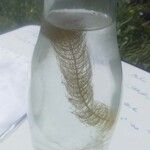
Myriophyllum alterniflorum
Alternate-Flower Water-Milfoil · Alternateflower watermilfoil · Alternate Water-milfoil · Alternate-flowered water milfoil · Slender Water-milfoil
Description
Source: leafsnapMyriophyllum alterniflorum, known as alternate water-milfoil or alternateflower watermilfoil, is a species of water-milfoil. It is native to Europe and Asia,has been introduced to North America and inhabits aquatic habitat, such as ponds and streams.
Care Guide
💧 Water
Alternate water milfoil thrives in aquatic environments, needing a constant supply of moisture and weekly watering. It is mainly grown as an outdoor aquatic or bog plant. To ensure its health and growth, it is crucial to regularly monitor water levels, as the plant prefers stable hydration and should not be allowed to dry out.
☀️ Light Full sun
The alternate water milfoil prospers when it gets plentiful sunlight throughout the day. Sufficient solar radiation is essential for its optimal growth. Although it can endure some shade, too little sun can adversely affect its health and development. Its native habitat is likewise sunlit, which has allowed it to adapt to those conditions.
What are the sun requirements for Alternate water milfoil?
Alternate water milfoil thrives best when it receives a generous amount of sunlight throughout the day, as this is critical for its peak growth. It prefers locations that offer full sun, meaning above 6 hours of sunlight, but it can also tolerate partial sun, which is about 3-6 hours of sunlight daily. Although some shade is tolerable, a lack of sufficient sunlight can adversely affect the plant's health and development, as its native habitat comprises sun-drenched areas offering optimal growth conditions.
How does artificial lighting support plant growth indoors?
Indoor plants, including the Alternate water milfoil, require adequate lighting for optimal growth, especially when natural sunlight is insufficient, such as during winter or in less sunny spaces. Artificial lights serve as an essential solution, promoting faster and healthier plant growth. LED lights are preferred for their ability to be tailored to provide specific wavelengths needed by plants. Guidelines suggest that full sun plants need 30-50W/sq ft, partial sun plants need 20-30W/sq ft, and full shade plants need 10-20W/sq ft of artificial light. The light source should be placed 12-36 inches above the plant to mimic natural sunlight effectively, ensuring the plant receives 8-12 hours of light daily.
What are common symptoms of light deficiency in plants?
When Alternate water milfoil is subjected to inadequate lighting, several symptoms can manifest, indicating light deficiency. These include smaller new leaves, leggy or sparse growth, faster leaf drop, slower or no new growth, and lighter-colored new leaves. In cases of excessive sunlight, symptoms could be chlorosis or yellowing of leaves, sunscald, leaf curling, wilting, and leaf scorching. These symptoms reflect the plant's struggle with the light conditions, either for want of more light or suffering from too much direct exposure.
How can I address insufficient sunlight for my plants?
To counter insufficient sunlight, gradually shift your plants to sunnier locations to allow them to adapt seamlessly. For indoor plants not easily moved or large in size, consider artificial lighting solutions, keeping them on for at least 8 hours daily for sufficient light exposure. For outdoor plants, progressively moving them to areas receiving optimal sunlight can help avoid sunburn from sudden light intensity changes. Additionally, observe and minimize obstructions blocking sunlight and consider transplanting smaller plants to more sunlit locations during their dormant period for enhanced growth and health.
🌡️ Temperature 5–35°C
Alternate water milfoil can tolerate a wide range of temperatures, though its distribution can still be restricted by particular combinations of moisture and heat. It performs best in warm summer climates with sufficient rainfall or irrigation. Long stretches of cloudy, rainy weather or prolonged high temperatures can raise the risk of Alternate water milfoil dying. In winter, adequate protection from cold can boost the plant's survival chances.
💨 Humidity
🪴 Soil
🌱 Fertilizer
🪴 Pot & Repot
✂️ Pruning
Alternate water milfoil has delicate, feathery foliage that grows beneath the water's surface. To improve its health and promote growth, it's beneficial to prune the plant in early spring. Cutting back dead or overcrowded stems encourages robust regrowth and helps maintain good water quality. Be sure to use clean tools while pruning to prevent the spread of disease, ensuring the plant remains vibrant and healthy.
🌿 Propagating
🐛 Diseases & pets
☠️ Toxicity
Characteristics
- Plant Type
- Herb
- Life Cycle
- Perennial
- Genus
- Myriophyllum
- Family
- Haloragaceae
- Hardiness Zone
- 5-9
- Mature Height
- 0.3 m to 1.22 m
- Mature Spread
- 20 cm to 40 cm
- Leaf Color
- Green, Olive Drab
- Leaf Type
- Deciduous
- Flower Size
- 0.51 cm to 3.56 cm
- Bloom Time
- Early summer, Mid summer
- Planting Time
- Summer, Autumn
- Harvest Time
- Late summer, Early fall
- Native Area
- Tunisia, Sweden, Czech Republic, Poland, Greece, Morocco, Ukraine, China, Russia, Lithuania, Norway, Germany, Portugal, Italy, Spain, Switzerland, Denmark, Iceland, Estonia, Finland, France, Ireland, United Kingdom, Algeria, Latvia, Belgium, Netherlands