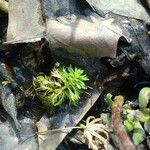
Myriophyllum aquaticum
Brazilian water-milfoil · Water-feather · Thread-of-life · Parrot's-feather · Brazilian Watermilfoil
Description
Source: leafsnapMyriophyllum aquaticum is a flowering plant, a vascular dicot, commonly called parrot's-feather and parrot feather watermilfoil.
Care Guide
💧 Water Every 3 days
☀️ Light Full sun
Parrot's feather prefers spots where it gets sunlight for the majority of the day, though it can also tolerate conditions with only about half a day's light. It does best with ample illumination, while diminished sunlight can suppress its growth. Both excessive and insufficient light can negatively affect the plant's vigor.
What are the sunlight requirements for Parrot's feather?
Parrot's feather requires a substantial amount of sunlight to thrive optimally. It benefits most from environments where it can receive full sun exposure, which means above 6 hours of direct sunlight daily. However, it is adaptable and can also prosper in partial sun, defined as about 3-6 hours of sunlight. It's essential to monitor the movement of sunlight through your garden to identify the spots that offer a balance of light and shade, ensuring the plants' well-being.
How does light affect the growth and health of Parrot's feather?
The growth and health of Parrot's feather are significantly influenced by the amount of light it receives. Ample sunlight exposure is crucial for the plant, as it favors environments where sunlight is plentiful throughout most of the day. Parrot's feather can adapt to locations with half-day light exposure, but a scarcity of light may inhibit its growth and vitality. Inadequate or excessive light can negatively impact the plant, affecting its health. In indoor settings, artificial lighting can be a vital solution to provide the necessary light exposure, especially in less sunny spaces or during winter. LED lights, with a specific wattage based on the plant's natural sunlight requirement, along with appropriate distance and duration of exposure, can help in promoting healthier growth.
What are the symptoms of light deficiency in Parrot's feather?
When Parrot's feather experiences light deficiency, it may exhibit several symptoms that indicate it's not receiving adequate sunlight. These symptoms include the development of smaller leaves than usual, leggy or sparse growth due to longer spaces between leaves or stems, faster leaf drop to conserve resources, delayed or halted growth as the plant enters survival mode, lighter-colored or pale new leaves suggesting a lack of chlorophyll, and symptoms of chlorosis where leaves lose their green color and turn yellow. Moreover, excessive sunlight can cause issues like sunscald, leaf curling as a defense mechanism, wilting from increased water loss, and leaf scorching indicated by brown, crispy leaf edges.
How can you address light-related issues in Parrot's feather?
Addressing light-related issues in Parrot's feather involves gradually adapting the plant to the ideal light conditions, both indoors and outdoors. For indoor plants, progressively moving them to sunnier locations, ensuring they receive at least 6 hours of direct sunlight daily, or supplementing with artificial light for at least 8 hours a day, can enhance growth and health. For outdoor plants, it's crucial to avoid sudden changes in light exposure to prevent sunburn. If your plant is in the ground and experiencing insufficient light, consider pruning obstructions like branches that block sunlight or transplanting smaller plants during their dormant period for better light access and drainage. While affected parts may not recover, new growth should be healthier with improved light conditions.
🌡️ Temperature 15–37.8°C
Parrot's feather is naturally suited to temperatures between 68 and 100 °F (20 to 38 ℃). The plant does best in warm conditions and may need temperature adjustments or protection in colder months to stay healthy.
What is the ideal temperature range for Parrot's feather?
Parrot's feather, known botanically as Myriophyllum aquaticum, is best suited to a temperature range of 68 to 100 °F (20 to 38 °C). It thrives in warm conditions, so during colder months, it may be necessary to adjust its environment or provide protection to maintain its health.
Does Parrot's feather need special frost protection in winter?
Parrot's feather possesses strong cold resistance, typically not requiring special frost protection measures even during winter. However, should winter temperatures be expected to fall below -15°C, it's crucial to protect the plant. This protection can be provided by covering the plant with insulating materials such as soil or straw. Additionally, it's beneficial to water the plant abundantly before the first freeze in autumn to ensure the soil remains moist and freezes in that state, helping prevent winter and early spring droughts and water scarcity.
How does low temperature affect Parrot's feather and how can you mitigate these effects?
Parrot's feather is cold-tolerant and thrives best when the temperature remains above 20°C, ideally staying above 0°C during winter. Exposure to temperatures below -15°C doesn't usually produce noticeable changes during the winter but can lead to a decrease in sprouting or no sprouting at all in the spring. To mitigate these effects, any parts of the plant that have failed to sprout by spring should be removed to promote healthy new growth.
How does high temperature affect Parrot's feather and what are the solutions?
During the summer, it's crucial to ensure that Parrot's feather doesn't exceed temperatures of 38°C. Temperatures above 43°C can lead to the leaves becoming lighter in color, prone to curling, susceptible to sunburn, and in severe cases, causing the entire plant to wilt and dry out. To counteract these issues, trim away sunburned and dried-up parts of the plant. Moving the plant to a shaded location or using a shade cloth can protect it from the midday and afternoon sun. Additionally, watering the plant in the morning and evening to maintain soil moisture will help combat the effects of high temperatures.
💨 Humidity
🪴 Soil
🌱 Fertilizer
🪴 Pot & Repot
✂️ Pruning
Parrot's feather is known for its vibrant, feathery leaves and its preference for aquatic environments. To encourage healthy growth and prevent the plant from becoming invasive, it's best to prune it from early to late spring. Use sterilized tools to remove any dead stems, which helps maintain water quality and keeps the plant looking healthy and robust.
🌿 Propagating
🐛 Diseases & pets
☠️ Toxicity
Characteristics
- Plant Type
- Herb
- Life Cycle
- Perennial, Annual
- Genus
- Myriophyllum
- Family
- Haloragaceae
- Hardiness Zone
- 7-11
- Mature Height
- 8 cm to 15 cm
- Mature Spread
- 3.05 m
- Leaf Color
- Green, Blue
- Leaf Type
- Evergreen
- Flower Color
- White
- Flower Size
- 2.54 cm
- Bloom Time
- Summer, Early fall, Mid fall
- Planting Time
- Spring, Summer, Autumn
- Harvest Time
- Late summer, Fall, Early winter
- Native Area
- Brazil, Uruguay, Bolivia, Paraguay