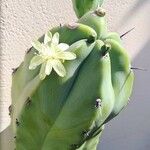
Myrtillocactus cochal
Description
Source: leafsnapThe cactus grows to be eight to ten feet tall and wide, with funnel-shaped ivory blooms. It features a woody stem with several dark green branches. Each areola has six to eight ribs, a central spine, and shorter radial spines. In late spring and early summer, the shrub produces beautiful white cupped flowers. They are open during the day and close in the evening. Edible, somewhat sour globular red fruit arrive after blossoming. The plant's stems were once utilized as firewood, and the fruit was consumed by the locals. For its spectacular, bold silhouette, use it as a single specimen or grow it in containers.
Care Guide
💧 Water 2 to 3 times a week
Myrtillocactus cochal is a drought-tolerant plant that requires thorough watering only when the soil has completely dried out. During the growing season, which lasts from spring to fall, it should be watered 1-2 times per week. In winter, water it less frequently. It's recommended to use rainwater or distilled water to prevent soil compaction. Be careful not to splash water on the stem, as this can lead to rot.
☀️ Light Full sun
Native to dry regions, the Baja California Candelabra Cactus does best in full sun, as its native habitat features intense sunlight and little shade. It will also tolerate partial sun, giving it some flexibility in where it can grow.
🌡️ Temperature 20–37.8°C
The Baja California Candelabra Cactus does best in warm conditions and needs higher temperatures during the growing season to stimulate growth and metabolic processes. It favors abundant sunlight, proper moisture levels, and good ventilation. It can be damaged by very low temperatures and by overwatering. It’s also important to maintain balance and avoid excessively high heat and overly dry conditions.
💨 Humidity
🪴 Soil 0-0
🌱 Fertilizer
For the Baja California Candelabra Cactus, apply light amounts of fertilizer once or twice a year during the active growing season. Do not fertilize in winter or summer when the plant is dormant. Use less fertilizer for plants that have been repotted, and wait a couple of months after repotting before you begin fertilizing. Fertilizing helps maintain healthy growth and promotes blooming.
🪴 Pot & Repot
✂️ Pruning
Myrtillocactus cochal has fleshy, segmented stems and thrives in dry conditions. To maintain its shape and prevent disease, prune it in early spring by removing any dead segments. Be careful not to over-prune, as this can affect its natural form. By encouraging good air circulation and light penetration, you can promote the plant's overall health and vitality.
🌿 Propagating
🐛 Diseases & pets
☠️ Toxicity
Characteristics
- Plant Type
- Succulent
- Life Cycle
- Perennial
- Genus
- Myrtillocactus
- Family
- Cactaceae
- Hardiness Zone
- 9-11
- Mature Height
- 2.13 m to 3.96 m
- Mature Spread
- 0.91 m to 2.13 m
- Leaf Color
- Dark Green
- Leaf Type
- Evergreen
- Flower Size
- 2.03 cm to 3.05 cm
- Bloom Time
- Mid spring, Late spring, Early summer
- Planting Time
- Summer
- Harvest Time
- Mid summer, Late summer, Early fall
- Native Area
- Mexico