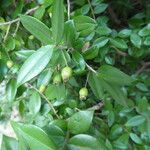
Myrtus communis
مورت · انار · مورد · Myrtle · Common Myrtle
Description
Source: leafsnapMyrtus communis, commonly known as the common myrtle, is an evergreen shrub or small tree that belongs to the Myrtaceae family. Native to the Mediterranean region, it thrives in various habitats such as rocky hillsides, woodlands, and coastal areas. The plant can grow up to 5 meters tall and features a dense, bushy form with glossy green leaves that emit a pleasant aroma when crushed. In summer, the common myrtle produces small white or pink flowers, which are followed by blue-black berries. Although the berries are edible, they are not commonly consumed. The plant has been prized for centuries for its medicinal properties, particularly its antiseptic and astringent qualities. Additionally, ancient Greeks and Romans used myrtle for wreaths during weddings and other celebrations. Apart from its medicinal uses, Myrtus communis is also cultivated as an ornamental plant due to its attractive foliage and flowers. It can be grown in containers or directly in well-drained soil with full sun exposure. Overall, Myrtus communis is a versatile plant that offers both practical benefits for medicine-making and aesthetic value, making it an excellent addition to any garden for those seeking beauty and functionality.
💡 In the Jewish faith, the common myrtle holds significant symbolic value. It is an important element of the Sukkot Festival, as its use is prescribed in the Torah. During the festival, a branch of common myrtle is woven together with the fruit of the citron tree, a willow branch, and a date palm branch. These four species are then waved together as part of a ceremonial service to God.
🌳 Common myrtle is more than a mere ornamental plant; it holds a wealth of potential. Its leaves and berries can be distilled to yield essential oils prized in aromatherapy and perfumery. Moreover, common myrtle is used in the production of traditional crafts and handmade goods, and its aromatic qualities have led to its use in religious and ceremonial contexts, showing its multifaceted utility across various industry sectors.
🎭 Affection, happiness, memory, innocence, purity, good fortune, prosperity
Care Guide
💧 Water Every 7 days
The common myrtle is native to the Mediterranean region and grows best in well-drained soil with moderate moisture. It should be watered every 1 to 2 weeks, allowing the soil to dry out slightly between waterings. As an evergreen plant, the common myrtle needs consistent moisture to thrive, especially outdoors where it can benefit from natural rainfall.
When Should I Water My Common Myrtle?
Watering your common myrtle is vital for its growth, flower production, and disease resistance. To determine the right time to water, observe the soil dryness; the top 1 to 2 inches of soil should be dry to the touch. Also, look out for the condition of the leaves; wilted or discolored leaves can indicate the need for water. During the pre-flowering stage, ensure the plant is adequately watered to avoid bud drop. In seasons with warm temperatures and high sunlight exposure, common myrtle's water needs increase. Avoid watering too early or too late to prevent root rot or dehydration, respectively. Understanding these signs will help you maintain an optimal watering schedule.
How Should I Water My Common Myrtle?
For watering common myrtle effectively, adopt a deep but infrequent watering approach, ensuring water drains out of the pot's bottom before the next watering session. This technique encourages healthy root growth and prevents root rot. Use a watering can with a rose-like nozzle to deliver a gentle and even flow at the plant's base, avoiding the leaves. This method helps in preventing disease and ensures the plant receives the right amount of hydration without the risk of overwatering.
How Much Water Does Common Myrtle Really Need?
Common myrtle adapts well to dry conditions, thanks to its Mediterranean origin. The amount of water it needs varies with factors like pot size, root depth, and plant size. Generally, around 2 liters of water per session is recommended, ensuring thorough soil saturation without waterlogging. Signs of adequate hydration include vibrant and healthy leaves, even soil moisture, and regular growth and blooming. Overwatering and underwatering can lead to yellowing leaves, root rot, or wilted leaves respectively. Always allow the soil to dry slightly between watering sessions and adjust the amount based on your plant's specific needs, considering climate and environmental conditions.
What Kind of Water is Best for Common Myrtle?
Common myrtle thrives best with purified water sources such as distilled water due to its low mineral content. Rainwater and filtered water are suitable alternatives. If using tap water, treatment to remove chlorine and fluoride might be necessary due to common myrtle's moderate sensitivity to these elements. Let the tap water sit out for 24 hours before use for dechlorination, and consider using a carbon filter for additional purification. Water at room temperature is preferred to avoid shocking the plant.
How Do Common Myrtle's Watering Needs Change with the Seasons?
In spring, as common myrtle exits dormancy, it requires more water to support new growth, maintaining consistently moist soil. Summer demands frequent watering to prevent soil dryness, especially in high temperatures. Watering can be adjusted in the cool morning or late evening hours. During autumn, reduce watering as the plant's growth slows down, allowing the top soil layer to dry out. In winter, common myrtle enters dormancy, significantly reducing its water needs; ensure the soil dries out well between watering sessions. Seasonal changes in temperature and natural rainfall patterns should guide your watering routine.
☀️ Light Full sun
Common myrtle needs plenty of light and does best when the sun shines on it for most of the day. It can tolerate milder light conditions, but if light is too limited it may show poor growth and pale foliage. Conversely, too much sun can scorch the leaves.
What are the sunlight requirements for Common myrtle?
Common myrtle requires full sun exposure to thrive, generally defined as above 6 hours of direct sunlight per day. It can also grow in partial sun, which means about 3-6 hours of sunlight daily. It's essential to carefully observe how sunlight moves through your garden to provide your plants with the ideal balance of light and shade, ensuring they remain healthy and happy.
What should I consider about sunlight when growing Common myrtle?
When growing Common myrtle, it's crucial to ensure the plant gets ample light exposure for the majority of the day. Too little sunlight may result in poor growth and faded foliage, while too much exposure can cause foliage burn. During less sunny conditions or in winter, artificial lighting such as LED lights can be used to supplement natural sunlight, ensuring your plant continues to grow healthy. For full sun plants, use 30-50W/sq ft of artificial light, for partial sun plants 20-30W/sq ft, and for full shade plants 10-20W/sq ft. Adjust the light source's distance and duration to mimic natural sunlight as closely as possible.
What are signs of insufficient sunlight in Common myrtle?
Symptoms of insufficient sunlight in Common myrtle include smaller new leaves, leggy or sparse growth, faster leaf drop, slower or stopped new growth, and lighter-colored or chlorotic leaves. If your Common myrtle is exposed to too much sunlight, it may experience symptoms like sunscald, leaf curling, wilting, leaf scorching, and reduced overall health. These symptoms indicate that the plant is struggling with the current light conditions.
How can I address sunlight-related issues for my Common myrtle?
To optimize growth and address sunlight-related issues with your Common myrtle, gradually introduce it to locations with more sunlight, aiming for at least 6 hours of direct sunlight daily if indoor. Keep curtains open during the day or use artificial lighting to supplement light intake. For outdoor plants, avoid sudden changes in light intensity to prevent sunburn. If sunlight obstruction is an issue, consider pruning trees or moving smaller plants to sunnier locations. Note that parts of the plant affected by insufficient sunlight might not recover, but new growth should be healthy with improved light exposure.
🌡️ Temperature 15–35°C
The native temperature habitat of common myrtle varies, but it typically prefers temperatures between 59 and 95 ℉ (15 and 35 ℃). In colder climates it may require protection from frost during the winter months. In summer it can tolerate higher temperatures if provided with adequate water.
What is the ideal temperature range for common myrtle?
The ideal temperature habitat for common myrtle ranges from 59 to 95°F (15 to 35°C). In regions where the temperature falls below this range, especially in colder climates, common myrtle requires protection against frost during the winter months. Nonetheless, it is capable of enduring hotter temperatures during summer, provided it receives sufficient water to keep it hydrated.
How should common myrtle be protected in cold weather?
Common myrtle possesses some degree of cold tolerance, and no special precautions are necessary if temperatures do not drop below its tolerable growing minimum. However, if colder weather is anticipated, which might lower temperatures beyond its tolerance, it is advisable to wrap the plant in protective materials such as plastic film, fabric, or other suitable covers. These protections should be removed once the temperature rises, to avoid any potential harm to the plant.
What are the symptoms of common myrtle experiencing low temperatures?
Common myrtle shows a moderate tolerance to low temperatures, thriving best when kept above its suitable growth minimum temperature. During the winter, it is essential to maintain the temperature above its tolerable growing minimum. If temperatures fall below this plant's growth limit, the leaves may droop. Although they can recover from mild exposure, severe cold may result in wilted leaves that eventually fall off.
How can common myrtle be protected from low temperature damage?
To protect common myrtle from damage due to low temperatures, frost-damaged parts should be trimmed off. Before facing cold temperatures again, it's important to wrap the plant with insulating materials such as non-woven fabric or cloth, and also to construct a wind barrier to shield it from cold winds. These measures can help mitigate the impact of cold stress on the plant.
What are the symptoms of common myrtle experiencing high temperatures?
When exposed to high temperatures, particularly during summer, common myrtle should ideally be maintained below its suitable growth maximum temperature. If the temperature surpasses its tolerable growing maximum, the plant may exhibit symptoms such as lighter leaf color, dry and withered leaf tips, curled leaves, and increased susceptibility to sunburn.
💨 Humidity normal (40-60%)
This plant will thrive in moderate humidity, which is probably the level in your home. However, misting it a few times a week can be very beneficial. Make sure the room has good ventilation.
🪴 Soil 5-7
🌱 Fertilizer
Fertilize your Common myrtle in early spring to encourage healthy growth. Regular fertilization improves overall health, leading to vigorous growth, greater resilience to harsh conditions, and increased resistance to pests and diseases. Keep a consistent fertilization schedule for your Common myrtle to maintain vibrant, deeply colored, and lush foliage.
Why should I add fertilizer to my Common myrtle?
No matter which type of Common myrtle you have, fertilizing regularly will promote the plant's overall health. Providing the proper nutrients will result in stronger growth and enhance its ability to withstand harsh conditions and combat diseases and pests. The beautiful foliage of the Common myrtle is a key feature, so it's important to maintain it. To achieve this, establish and follow a fertilization schedule tailored to your specific Common myrtle. This will encourage the development of vibrant, lush leaves.
When should I fertilize my Common myrtle?
To ensure healthy growth, it is recommended to fertilize your Common myrtle for the first time in late winter or early spring. This provides the necessary nutrients for the plant to thrive once the weather warms up. If you live in a warm climate region, it can be beneficial to give your Common myrtle an additional fertilizer feeding in early fall. This will provide extra nutrients for the upcoming growing season and help the plant withstand the winter cold without suffering foliage damage. Early fertilization will also allow new branches to grow strong enough to endure the cold winter.
When is it a bad idea to fertilize my Common myrtle?
There are a few times during the year when you should avoid fertilizing your Common myrtle. Firstly, during the early and mid-winter months when the plant is dormant and doesn't require feeding. Additionally, it is not advisable to fertilize this plant during late spring and summer, as the weather is typically hotter and drier, which can negatively affect the plant's response to fertilization. To prevent these issues, it is recommended to stick to a fertilization schedule that includes feeding only in early spring and early fall.
What kind of fertilizer should I use for my Common myrtle plant?
Common myrtles require nitrogen as their primary nutrient, but this does not diminish the importance of phosphorus and potassium. These three main nutrients are necessary in decent amounts, hence a balanced fertilizer like a 10-10-10 can be effective. However, a more precise nutrient ratio often leads to optimal growth. Fertilizers with a slightly higher nitrogen content, such as 10-6-4, tend to work better. Granular and liquid-based fertilizers are both suitable options for fertilizing.
How should I add fertilizer to my Common myrtle plant?
To fertilize your Common myrtle, you have two options: granular fertilizer or liquid fertilizer. If you choose granular fertilizer, simply sprinkle it on the soil at the right time. The nutrients in the granules will be released slowly over time. It's a good idea to lightly water your myrtle before applying the fertilizer. Alternatively, you can use liquid fertilizer, although this is less common. To do this, mix the fertilizer with water and pour it around the base of your myrtle. Sometimes it's helpful to do a soil test beforehand to check the pH levels.
🪴 Pot & Repot 2-3 years
Select a pot 1–2 inches (2.5–5.1 cm) larger with ample drainage. Use a well-draining potting mix. Repot in spring or fall, making sure the root ball sits slightly below the rim of the pot. Water thoroughly after repotting and place in a warm spot with indirect sunlight.
✂️ Pruning
To ensure common myrtle grows well, it should be pruned regularly, ideally in early spring before new growth starts. Trim back one-third of the plant to encourage a bushier appearance and remove any dead branches. This practice improves the plant's shape, air circulation, and light penetration, leading to healthier growth.
🌿 Propagating
🐛 Diseases & pets
☠️ Toxicity
Characteristics
- Plant Type
- Shrub
- Life Cycle
- Perennial
- Genus
- Myrtus
- Family
- Myrtaceae
- Hardiness Zone
- 8-9
- Mature Height
- 4.88 m
- Mature Spread
- 2.44 m to 3.66 m
- Leaf Color
- Green
- Leaf Type
- Evergreen
- Flower Color
- White
- Flower Size
- 1.02 cm to 3.05 cm
- Bloom Time
- Early summer, Mid summer
- Planting Time
- Spring, Autumn
- Harvest Time
- Mid summer, Late summer, Fall
- Native Area
- Mediterranean