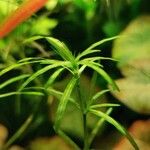
Najas guadalupensis
Southern naiad · Guadalupe Waternymph · Southern waternymph · Common Waternymph · Common Water-nymph
Description
Source: leafsnapNajas guadalupensis, commonly known as Southern naiad or Guadalupe naiad, is an aquatic plant species belonging to the family Hydrocharitaceae. Native to North and Central America, it thrives in freshwater habitats such as ponds, lakes, streams, and rivers. This plant features a slender stem that can grow up to 2 meters in length, with leaves arranged in whorls of 3 to 6. The leaves are narrow, linear, and pointed, measuring about 1 to 3 centimeters long. Additionally, the plant produces small, inconspicuous flowers. Najas guadalupensis plays a crucial ecological role by providing habitat for fish and other aquatic organisms. It also contributes to improved water quality by absorbing excess nutrients from the water column. The plant has various uses, including serving as a food source for ducks, geese, and other waterfowl. Indigenous peoples of North America have also used it medicinally to treat various ailments. In summary, Najas guadalupensis is a valuable aquatic species with significant ecological importance, contributing to the health and balance of freshwater ecosystems.
Care Guide
💧 Water Every 7 days
☀️ Light Full sun
Southern naiad comes from habitats with abundant sunlight, such as the shallow margins of ponds and lakes. It prefers full sun but can also tolerate partial sun.
🌡️ Temperature 10–37.8°C
Southern naiad can tolerate a wide range of temperatures, but its distribution may still be restricted by different combinations of moisture and heat. It does best in warm summer climates with sufficient rainfall or watering. Prolonged stretches of cloudy, rainy weather, as well as extended high temperatures, can increase the chance of Southern naiad dying. In winter, appropriate protection from cold can improve the plant's survival rate.
💨 Humidity
🪴 Soil
🌱 Fertilizer
🪴 Pot & Repot
✂️ Pruning
The Southern naiad, characterized by its thin, grass-like leaves, thrives in aquatic environments. To encourage growth and control its spread, prune it in early spring by removing any damaged foliage. Regular pruning helps prevent overgrowth and maintains water quality. Always use clean, sharp tools to minimize the risk of disease.
🌿 Propagating
🐛 Diseases & pets
☠️ Toxicity
Characteristics
- Plant Type
- Herb
- Life Cycle
- Annual
- Genus
- Najas
- Family
- Hydrocharitaceae
- Hardiness Zone
- 6-11
- Mature Height
- 10 cm to 91 cm
- Mature Spread
- 10 cm to 30 cm
- Leaf Color
- Dark Green, Olive Drab
- Leaf Type
- Evergreen
- Bloom Time
- Summer, Early fall, Mid fall
- Planting Time
- Spring, Summer, Autumn
- Harvest Time
- Late summer, Fall, Early winter