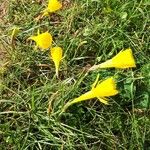
Narcissus bulbocodium
Petticoat daffodil · Hoop petticoat daffodil · Hoop petticoat · Hoop-petticoat Narcissus · Scented Narcissus
Description
Source: leafsnapNarcissus bulbocodium, commonly known as the hoop petticoat daffodil, is a small, bulbous perennial plant belonging to the Amaryllidaceae family. Native to the Mediterranean region, it thrives in rocky and grassy areas. This plant features a single stem that can grow up to 20 cm in height, topped with a solitary flower. The flower consists of six yellow petals surrounding an orange-yellow, cup-shaped corona at the center. The blooms appear from late winter to early spring. Narcissus bulbocodium prefers well-drained soil and can thrive in either full sun or partial shade. It is easy to grow and requires minimal care once established. Historically, the plant has been used for its antibacterial properties in medicinal applications. However, it's important to note that all parts of Narcissus plants are toxic if ingested by humans or animals. Overall, Narcissus bulbocodium is an attractive ornamental plant with unique flowers that bring color and interest to any garden or landscape setting.
Care Guide
💧 Water Every 7 days
The petticoat daffodil thrives in well-drained soil with moderate moisture. It does well with weekly watering but can endure short dry spells. This hardy plant flourishes outdoors, where seasonal rainfall promotes its bulbous growth, resulting in striking, trumpet-like blooms each spring.
What should I do if I give too much or too little water to Petticoat daffodil?
If you notice yellow leaves on your Petticoat daffodils, it could mean that they have been over-watered. This is normal towards the end of their blooming period, but if the leaves turn yellow before the flowers have bloomed, it's a sign of excessive watering. To remedy this, make sure there is proper drainage and refrain from watering for a few days. Adding sawdust to the soil can help absorb excess moisture. If the situation doesn't improve, check if the seedpods have rotted by digging them up and checking for color and texture changes. If they show severe decay, remove them promptly. Under-watered Petticoat daffodils display similar yellow leaves as over-watered ones, along with drooping stems, smaller curling leaves, and brown patches. If you've given them too little water, don't panic. They are somewhat drought-tolerant, so simply give them a good drink without saturating the surrounding soil. Just ensure that the soil remains moist, but avoid overwatering as it can lead to root rot and fungus growth on the bulbs. This fungus can cause damage, resulting in spotted leaves and buds, as well as discolored, dying leaf tips.
How often do I need to water my Petticoat daffodil?
The growth of your Petticoat daffodil depends on its location and current state. Once planted, give them a good initial watering to start their growth. After that, leave them alone until shoots appear. If your daffodil is in a pot, water it when the top 1-2 inches of soil feels dry. Potted plants dry out faster than bedded plants, so make sure the soil stays damp. If your daffodil is planted outside, it won't need extra water if it has rained during the week. The Petticoat daffodil can tolerate some drought, but be cautious not to overwater. Excessive watering can cause the seed ball to rot and the plant to die.
Should I water my Petticoat daffodil more or less depending on the season or climate?
To care for your Petticoat daffodil, water it once a week while it's growing. As the temperature increases, the soil will dry out faster, so you'll need to water more frequently. Remember that a dry soil is better than an overly wet one for your daffodil. During the summer, the Petticoat daffodil will enter a dormant phase, and the above-ground parts will dry up and die. If you planted it outdoors and it rains frequently in your area, you don't need to water it. However, if there's too much rainfall, it's advisable to dig them out to protect the buds from rot caused by excess water. If you planted the daffodil in pots, stop watering it completely once the dormant part dries out. After the above-ground part has completely dried, dig up the buds and store them in a cool location or keep the soil dry. You can resume watering when the next sowing season arrives or keep them in the soil in a cool place until the next growing season.
What do I need to consider when planting my Petticoat daffodil inside or outside?
To ensure the health of your plants, it's important to monitor their moisture levels. If your containers become overly wet or waterlogged, you should move them to a sheltered area and allow them to dry out. Once the weather improves, you can return them to their original position. When planting outdoors, it's crucial to select well-drained soil to prevent waterlogging and decay. For both indoor and outdoor plants, it's best to limit watering until the buds start to grow. Letting the soil dry out completely before providing small amounts of water can effectively prevent bulb rot. Once new shoots have emerged, you can start watering them regularly. Keep in mind that Petticoat daffodils are more prone to rot indoors due to low light and poor ventilation. Thus, be cautious when watering them indoors and ensure that a significant portion of the soil is dry before adding more water. If you find it challenging to maintain moisture levels indoors, consider if your plant is located in an unsuitable spot. Conversely, outdoor plants will thrive better with adequate ventilation and ample sunlight.
☀️ Light Full sun
Preferably, the petticoat daffodil performs best when it receives uninterrupted sunlight throughout the day. It will tolerate lower light levels, but longer periods of exposure encourage healthier growth. Too little sunlight can inhibit its development, while excessive exposure without any shade may harm the plant. The habitats where it naturally grows reflect its need for abundant light.
What are the sunlight requirements for a Petticoat daffodil?
Petticoat daffodil thrives in full sun, requiring more than 6 hours of sunlight daily for optimal growth. It can also tolerate partial sun, needing about 3-6 hours of sunlight. Watching how sunlight moves through your garden helps in determining the best spots that provide a balance of light and shade, which is crucial for the health of your plants. Petticoat daffodil, in its essence, does well with day-long sunlight without obstruction but can manage with less. However, to ensure its health and growth, longer intervals of exposure to light are beneficial. Insufficient sunlight can hinder its growth, while too much direct exposure without any shade can cause damage.
How do indoor lighting conditions affect Petticoat daffodils?
For indoor Petticoat daffodils, when natural sunlight is insufficient, especially during winter or in less sunny spaces, artificial lighting becomes essential. LED lights are a popular choice because they can provide specific wavelengths needed for plant growth. Full sun plants need 30-50W/sq ft of artificial light, partial sun plants require 20-30W/sq ft, and full shade plants need 10-20W/sq ft. The light source should be placed 12-36 inches above the plant, and the duration of the light should mimic natural daylight hours, with most plants needing 8-12 hours of light per day.
What are the symptoms of improper lighting conditions in Petticoat daffodils?
Petticoat daffodil may exhibit several symptoms when subjected to improper lighting conditions. These include the development of small leaves, leggy or sparse growth, faster leaf drop, slower or halted growth, lighter-colored new leaves, chlorosis, sunscald, leaf curling, wilting, and leaf scorching. These symptoms reflect either insufficient light conditions manifesting as stunted growth and pale leaves, or excessive light exposure resulting in damage like leaf scorching and wilting.
What solutions can address Petticoat daffodils' lighting issues?
To address lighting issues for Petticoat daffodils, gradually acclimatize them to receive at least 6 hours of direct sunlight by moving them closer to a sunnier location each week or using a south-facing window. For plants that are large or not easily movable, artificial lighting such as desk, ceiling lamps, or professional plant grow lights can supplement light for at least 8 hours daily. Outdoors, the process involves careful relocation to sunnier spots while avoiding drastic light intensity changes to prevent sunburn. You can also reduce sun obstructions, such as pruning trees, or relocate smaller plants during their dormant period to a better-lit area.
🌡️ Temperature 0–35°C
Petticoat daffodil is native to regions where temperatures range from 32 to 95 degrees Fahrenheit (0 to 35 degrees Celsius). Preferring moderate climates, it tolerates cold winters and hot summers easily. If average temperatures fall outside this range, adjust its care in different seasons.
What is the native temperature range for Petticoat daffodil?
The Petticoat daffodil, also known as Narcissus bulbocodium, thrives in a moderate climate with temperatures ranging from 32 to 95 degrees Fahrenheit (0 to 35 degrees Celsius). It has a strong ability to withstand both cold winters and hot summers. Adjustments in care are recommended if the average temperature falls outside this range, indicating its adaptability to various conditions without needing specific frost protection measures in most cases.
How should Petticoat daffodil be protected in extreme cold?
For the Petticoat daffodil, special protection against frost is typically not needed due to its strong cold resistance. However, in conditions where winter temperatures are expected to plummet below -35°C, it's crucial to provide additional protection. This can be achieved by covering the plant with insulating materials like soil or straw. Ensuring that the soil is moist by watering abundantly before the first freeze of autumn helps keep the soil frozen, thus preventing drought and water scarcity during the winter and early spring months.
How does a Petticoat daffodil react to temperatures below -35°C?
When the temperature drops below -35°C, the Petticoat daffodil, which is normally cold-tolerant, may not show immediate changes but can experience decreased or even absent sprouting in the spring. To manage this, it's advisable to remove any parts of the plant that have failed to sprout as a solution to encourage regrowth and health in the following growing season.
What are the effects of high temperatures on Petticoat daffodil, and how can they be mitigated?
High temperatures above 35°C can be challenging for the Petticoat daffodil, leading to symptoms like leaves becoming lighter in color, curling, susceptibility to sunburn, and in severe cases, the plant may wilt and dry out entirely. To combat these issues, it's recommended to prune away any sunburned and dried parts of the plant. To protect the daffodil from intense sunlight, move it to a shaded area during the midday and afternoon or use a shade cloth. Additionally, watering the plant in the morning and evening will help keep the soil consistently moist, aiding in the plant's recovery and maintenance during high-temperature periods.
💨 Humidity
🪴 Soil 6-7
🌱 Fertilizer
The best time to fertilize a Petticoat daffodil is in early spring, as it comes out of dormancy and begins active growth. Fertilizing supplies essential nutrients needed for healthy development. Although Petticoat daffodils have fairly low fertilizer requirements, applying fertilizer once a year can improve their survival and encourage stronger, longer-lasting blooms.
Why do I need to add plant food to my Petticoat daffodil?
Fertilizing a Petticoat daffodil is important for several reasons. Firstly, it helps the daffodil produce beautiful blooms. It is especially beneficial to fertilize in early spring to ensure excellent flowers during that season. Additionally, fertilizer provides the daffodil with energy that it can store in the ground when it is not actively growing. By giving it extra nutrients during fall planting or late spring, the daffodil will have more energy to use when it starts growing again.
When should I fertilize my Petticoat daffodil for optimal results?
To ensure optimal growth and bloom, it is recommended to fertilize Petticoat daffodils at specific times. The first opportunity is early spring when the flowers start forming. Using appropriate fertilizer at this stage promotes better blooms. Another suitable time for fertilization is later in spring, after the flowers have faded. Feeding the plant during this period offers ample energy for the daffodil to store and utilize in the following year. Additionally, if planting a Petticoat daffodil in the fall, providing fertilizer during that time aids in establishing a healthy set of flowers during the initial growing season.
When is the best time to not fertilize my Petticoat daffodil?
To properly fertilize a Petticoat daffodil, remember to do so during the fall planting process, the early spring bloom period, and the late spring after the bloom period. Fertilizing at any other time could be detrimental. It's important to note that this daffodil has a significant dormant phase during which it requires less water and no fertilizer. This dormancy occurs during winter and also during summer after the flowers have faded and the leaves start to die back. Once the leaves have completely withered, the plant is in full dormancy again and fertilizing is unnecessary.
What kind of fertilizer does my Petticoat daffodil require?
When fertilizing Petticoat daffodils, using a balanced fertilizer with equal amounts of nitrogen, phosphorus, and potassium is a simple and effective option. Fertilizer ratios like 10-10-10 or 5-5-5 are recommended. Granular fertilizers are generally better than liquid ones. For more specific choices, consider a fertilizer that is rich in overall nutrients but has a higher phosphorus content. Phosphorus is said to improve flower quality and longevity. Organic materials such as bonemeal can help increase phosphorus levels and benefit the blooming abilities of your Petticoat daffodils.
How should I fertilize my Petticoat daffodil?
To ensure optimal growth of your Petticoat daffodil, fertilization should be done twice: once during planting in the fall and again in early spring. When planting the bulb, dig a small hole and add granular slow-release fertilizer to the hole. It is important to water consistently during this process to maintain proper soil moisture. In the early spring, as the plant is emerging and flowering, apply another round of fertilization using a granular fertilizer with a balanced nutrient mix. As you sprinkle the fertilizer onto the ground, gently water the soil at the same time.
🪴 Pot & Repot 2-3 years
Repot petticoat daffodils every 2 to 3 years in early spring, using deeper pots to accommodate bulb growth. After repotting, provide bright, indirect light and water moderately to support their recovery. This care routine encourages a vibrant blooming cycle for this robust, non-climbing plant, characterized by its small leaves and bright flowers.
✂️ Pruning
The petticoat daffodil, known for its funnel-shaped flowers, requires minimal pruning. To keep the plant healthy, prune in early spring after the blooming period. Remove the spent flowers and trim back any yellowed foliage to help the plant reabsorb nutrients. This practice encourages healthier blooms and reduces the risk of disease, ensuring vibrant displays in the future.
🌿 Propagating
🐛 Diseases & pets
☠️ Toxicity
Characteristics
- Plant Type
- Herb
- Life Cycle
- Perennial
- Genus
- Narcissus
- Family
- Amaryllidaceae
- Hardiness Zone
- 3-9
- Mature Height
- 10 cm to 15 cm
- Mature Spread
- 5 cm
- Leaf Color
- Green
- Leaf Type
- Deciduous
- Flower Color
- Yellow
- Flower Size
- 1.27 cm
- Bloom Time
- Early spring, Mid spring
- Planting Time
- Spring, Autumn
- Harvest Time
- Late spring, Early summer
- Native Area
- Spain, Portugal