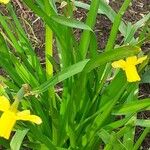
Narcissus jonquilla
نرگس · Daffodil · Jonquil · Narcissus · Apodanthus daffodil
Description
Source: leafsnapNarcissus jonquilla, commonly known as Jonquil, is a perennial, bulbous plant belonging to the Amaryllidaceae family. Native to the Mediterranean region, it has been cultivated for centuries for its fragrant flowers. The plant reaches up to 30 cm in height and features narrow, dark green leaves that also measure about 30 cm in length. The small, trumpet-shaped flowers possess six petals and come in shades of yellow or white, blooming in clusters atop a single stem from late winter to early spring. Jonquils thrive in well-drained soil with full sun exposure or partial shade. They are easy to cultivate and require minimal care once established in the garden or container pots. Propagation is simple and can be achieved by dividing the bulbs after flowering. Beyond their ornamental appeal, Jonquil bulbs have been used for medicinal purposes due to their antibacterial properties and are also utilized as a source of essential oils in perfumes. In summary, Narcissus jonquilla is an attractive plant that adds beauty and fragrance to any setting, while also offering practical uses beyond its aesthetic charm.
🌳 Many people do not realize that jonquil is prized in the perfumery world for its intoxicating scent. The flowers produce 'jonquille' absolute, an essential oil used in a range of luxury and niche fragrances. The oil is obtained by enfleurage or solvent extraction, preserving the floral and slightly green characteristics of the blossom.
Care Guide
💧 Water Every 7 days
Jonquil thrives in humid environments with plenty of water, needing to be watered weekly to stay healthy. Although it's usually grown outdoors, it has a specific growing season that requires consistent moisture. During its dormant phase, the plant's water needs decrease because it is deciduous.
What should I do if I give Jonquil too much or too little water?
If Jonquil is over-watered, it will develop yellow leaves. This is normal when Jonquil is at the end of its blooming period. However, if the leaves turn yellow before the flowers bloom, it means there is too much water. To fix this, ensure there is good drainage and avoid watering for a couple of days. Adding sawdust to the soil can help absorb excess moisture. If the problem continues, check if the seedpods have rotted. Dig them up and see if they have changed color and become soft. If they have, remove them promptly. Under-watered Jonquil also has yellow leaves, but the stems droop and the leaves become smaller and curled. Brown patches may also appear. If you have not given enough water, don't panic. Jonquil is drought tolerant. Once you realize, give it a good drink without saturating the soil. Just keep it moist. Avoid overwatering, as this can lead to root rot and fungus on the bulb. Fungus can cause spots on the leaves and buds, as well as discoloration and wilting at the leaf tips.
How often do I need to water my Jonquil?
The growth of your Jonquil depends on the location and its current state. After planting, water them well once and then wait for shoots to appear. If your Jonquil is in a pot, water it when the top 1-2 inches of soil feels dry, as potted plants dry out faster. For Jonquils planted outside, additional watering is not needed if it has rained during the week. While the Jonquil is somewhat drought resistant, be cautious not to overwater, as excessive watering can lead to rotting of the seed ball and plant death.
Do I need to change how often I water my Jonquil plant based on the time of year or the weather?
To ensure your Jonquil plant thrives, it's important to establish a regular watering schedule. Typically, watering once a week is sufficient. However, as temperatures increase, the soil will dry out more quickly, necessitating more frequent watering. It's crucial to strike a balance though, as a dry soil environment is preferable to an overly wet one. During the summer months, the Jonquil will enter a dormant phase, causing the above-ground parts to dry up and die. If the plant is planted outdoors and there is sufficient rainfall, additional watering may not be necessary. However, if your region receives excessive rain, it is advisable to remove the buds to prevent rot caused by water saturation. If the Jonquil is planted in pots, watering should be ceased entirely once the above-ground part has dried out completely during dormancy. The buds can then be dug up and stored in a cool location, or the plant can be left in the soil in a cool area until the next growing season. Once the next sowing season arrives, watering can be resumed.
What should I search for when planting my Jonquil inside or outside?
To take care of your containers, monitor them for moisture. If they become wet or waterlogged, move them to a protected area until they dry out. Return them to their original position when the weather improves. When planting outdoors, it is important to choose well-drained soil to prevent waterlogging and decay. Whether growing plants indoors or outdoors, it is best to let the soil dry completely before watering the bulbs. This helps prevent bulb rot. Once the buds start growing, they require minimal watering. Wait until they develop new shoots before watering them regularly. When caring for your Jonquil indoors, be aware that it is more prone to rot in low light and limited ventilation conditions. Therefore, be cautious when watering indoors and ensure the soil is mostly dry before watering. If the soil remains excessively moist for extended periods, consider finding a more suitable location for your Jonquil. Outdoors, good ventilation and ample sunlight will generally be safer.
☀️ Light Full sun
Jonquil does best with ample sunlight each day, though it can tolerate less intense light. Native to sunny habitats, it needs considerable light during its growth period. A shortage of sunlight can hinder its development, while excessive exposure can negatively affect its health.
What are the sunlight requirements for Jonquil plants?
Jonquil plants require generous amounts of sunlight to thrive, typically flourishing in full sun conditions, which means they need more than 6 hours of direct sunlight a day. However, these plants can also tolerate partial sun conditions, receiving about 3-6 hours of sunlight. It's essential to observe the movement of sunlight through your garden to pick spots that offer the right balance of light and shade, ensuring the plants' optimal growth and happiness.
How should indoor Jonquil plants be lighted?
For Jonquil plants grown indoors, adequate lighting is crucial, especially when natural sunlight is scarce, like in winter or less sunny spaces. Artificial lighting can be a vital solution, promoting healthier and faster growth. LED lights are recommended because they can be customized to provide specific wavelengths needed by the plants. Full sun plants need 30-50W/sq ft, partial sun plants require 20-30W/sq ft, and full shade plants need 10-20W/sq ft of artificial light. The light source should be placed 12-36 inches above the plant, mimicking natural sunlight as closely as possible, and most plants will benefit from 8-12 hours of light per day.
What are the signs of inadequate lighting for Jonquil plants?
When Jonquil plants are exposed to inadequate lighting, several symptoms may manifest, indicating the plant's struggle. These symptoms include the development of smaller new leaves, leggy or sparse growth, premature leaf drop, halted or slow new growth, paler new leaves indicating a lack of chlorophyll, chlorosis leading to yellowing of leaves, sunscald causing damage to leaves or stems, leaf curling as a defense mechanism, wilting due to excessive water loss, and leaf scorching characterized by brown, dry edges on leaves.
What are the solutions for Jonquil plants receiving insufficient sunlight?
To address insufficient sunlight for Jonquil plants, gradually move them each week to a sunnier location until they receive at least 6 hours of direct sunlight daily. For indoor plants that are large or not easily movable, consider using artificial light, keeping a lamp on for at least 8 hours daily or investing in professional plant grow lights. Outdoors, avoid sudden changes in light intensity to prevent sunburn. You can also reduce obstructions to sunlight by pruning trees or transplanting smaller plants to sunnier spots, ensuring they have ample sunlight and good drainage. Remember, parts of the plant affected by inadequate light may not recover, but new growth should be healthy with improved light exposure.
🌡️ Temperature 5–32.2°C
Jonquil is native to areas with mild climates and prefers temperatures between 41 and 89.6 °F (5 to 32 ℃). Extreme temperatures can impede its growth, so it is recommended to adjust its environment as the seasons change.
What is the native climate for Jonquil?
Jonquil, botanically known as Narcissus jonquilla, thrives in regions with mild climates. It prefers temperatures ranging from 41 to 89.6 °F (5 to 32 °C). Extreme temperatures can hinder its growth, so it's recommended to adjust its environment to accommodate seasonal changes. Despite its strong resistance to cold, during winters where temperatures are expected to drop below the plant's cold tolerance limit, precautionary measures such as covering the plant with soil or straw should be taken to provide additional protection. To prepare for winter, watering the plant abundantly before the first freeze of autumn is advisable to ensure the soil remains moist and enters a frozen state, which helps prevent drought and water scarcity during the colder months.
How does Jonquil react to low temperatures?
Jonquil exhibits a high tolerance to cold and generally thrives better in conditions above its minimum suitable growth temperature. During winter, efforts should be made to keep it above its minimum tolerable growing temperature. If temperatures fall below its growth limit temperature, you might not notice immediate changes during the winter; however, there could be a decrease in sprouting or even no sprouting at all come springtime. To manage this, any parts of the plant that have failed to sprout by spring should be removed.
How should Jonquil be cared for in high temperatures?
During hotter months, it's crucial to ensure Jonquil is kept below its maximum suitable growth temperature. Exceeding its tolerable maximum growing temperature can lead to the plant’s leaves becoming lighter in color, curling, becoming prone to sunburn, and, in severe cases, wilting and drying out completely. To mitigate this, remove any parts of the plant that are sunburned or dried-up. Moreover, relocating the plant to a shaded area or utilizing shade cloth to diminish exposure to midday and afternoon sun can be beneficial. Adequate watering in the morning and evening is important to keep the soil moist, further protecting the plant from the high temperatures.
💨 Humidity
🪴 Soil 6-7
🌱 Fertilizer
The best time to fertilize a jonquil is in early spring, as it comes out of dormancy and begins active growth. Fertilizing supplies essential nutrients for healthy development. Although jonquils have relatively low fertilizer needs, applying fertilizer once a year can improve their survival and encourage better, longer-lasting blooms.
Why should I put fertilizer on my Jonquil plant?
Fertilizing a Jonquil is crucial for several reasons. Firstly, it is essential for the Jonquil to produce beautiful blooms. Thus, applying fertilizer in early spring is highly recommended to guarantee excellent flowers during that season. Moreover, fertilizer provides the Jonquil with sufficient energy that it can store in the ground during periods of dormant growth. By supplementing extra nutrients to the Jonquil during fall planting or late spring, it will have more energy reserves to utilize when active growth resumes.
When should I fertilize my Jonquil?
To ensure your Jonquil has vibrant blooms, there are a few key times to consider fertilizing. The first is in early spring when the flowers are starting to form. By using the appropriate fertilizer during this time, you can promote better blossoms. Additionally, you can fertilize your Jonquil later in the spring after the flowers have faded. This will provide the plant with ample energy to store and utilize in the following year. If you are planting a Jonquil for the first time in the fall, it is also beneficial to apply fertilizer during the planting process. Doing so gives your Jonquil the best chance of producing a healthy set of flowers during its initial growing season.
When should I not put fertilizer on my Jonquil?
To properly fertilize a Jonquil, there are specific times to keep in mind. These include during the fall planting process, the early spring bloom period, and the late spring after the blooms. Fertilizing at any other time should be avoided as it could harm the plant. When caring for a Jonquil, remember that it has a significant dormant phase when it requires less fertilizer and water. Typically, it will be dormant in winter, as expected. However, it also has a dormant phase in summer. After the flowers fade, the leaves will remain for a short period before dying back to the ground. This signifies the return to the dormant phase, indicating that fertilizer is no longer needed.
What kind of fertilizer does my Jonquil plant need?
Jonquil can benefit from various types of fertilizer. For simplicity, a balanced fertilizer with equal amounts of nitrogen, phosphorus, and potassium, such as 10-10-10 or 5-5-5, is recommended. Using granular fertilizer is typically preferable to liquid fertilizer. If you want to be more specific, consider a fertilizer with higher phosphorus content, as it can result in better and longer-lasting flowers. Organic materials like bonemeal can provide the necessary phosphorus to enhance Jonquil's blooming capabilities.
How do I make my Jonquil plant grow better?
To properly fertilize your Jonquil, follow these steps: 1. During the fall planting process, dig a small hole and place the bulb inside. While planting, add granular slow-release fertilizer to the hole. Remember to water consistently to maintain soil moisture. 2. After planting, fertilize again in early spring when the plant starts growing and flowering. Use a balanced granular fertilizer and sprinkle it on the ground. While applying the fertilizer, gently water the soil.
🪴 Pot & Repot 2-3 years
The jonquil is a small, fragrant perennial that needs repotting every 2-3 years after it blooms, preferably in late spring or early summer. When repotting, use a slightly larger pot, ensure the soil is well-drained, and keep the moisture consistent to promote healthy growth and quick recovery.
✂️ Pruning
Prune jonquils in early spring by removing the faded blooms to help the bulbs store more energy. Allow the foliage to die back naturally before trimming it. Thin out crowded clumps to improve air circulation and reduce the risk of disease. Use clean, sharp tools to ensure the plants remain healthy and bloom optimally in the next season.
🌿 Propagating
🐛 Diseases & pets
☠️ Toxicity
Characteristics
- Plant Type
- Herb
- Life Cycle
- Perennial
- Genus
- Narcissus
- Family
- Amaryllidaceae
- Hardiness Zone
- 4-8
- Mature Height
- 20 cm to 49 cm
- Mature Spread
- 10 cm
- Leaf Color
- Green
- Leaf Type
- Deciduous
- Flower Color
- Yellow
- Flower Size
- 3.05 cm
- Bloom Time
- Spring
- Planting Time
- Autumn, Winter, Spring
- Harvest Time
- Late spring, Early summer