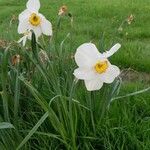
Narcissus poeticus
Poet's narcissus · Pheasant's-eye · Pheasant's-eye daffodil · Narcissus · Pheasant's-eye narcissus
Description
Source: leafsnapNarcissus poeticus, the poet's daffodil, poet's narcissus, nargis, pheasant's eye, findern flower or pinkster lily, was one of the first daffodils to be cultivated, and is frequently identified as the narcissus of ancient times (although Narcissus tazetta and Narcissus jonquilla have also been considered as possibilities). It is also often associated with the Greek legend of Narcissus. It is the type species of the genus Narcissus and is widely naturalized in North America.
🌳 Beyond its decorative appeal, the poet's narcissus shows promise in perfumery. Its strong, pleasant aroma has made it a favored component for perfume bases. The essential oil derived from poet's narcissus is prized in aromatherapy and can be employed to scent indoor spaces, offering a natural alternative to synthetic air fresheners. The potential of poet's narcissus within fragrance-related industries is a compelling area for further investigation and use.
🎭 Self-importance, Formality
Care Guide
💧 Water Every 7 days
Originating from damp meadows, the poet's narcissus prefers moderately moist soil and needs to be watered weekly to stay optimally hydrated. Although it can tolerate drought, it thrives best with regular moisture, particularly benefiting from seasonal rains that promote its growth and aromatic spring blooms.
What should I do if I give too much or too little water to Poet's narcissus?
If the leaves of your Poet's narcissus turn yellow, it could be due to over-watering. This is normal at the end of their blooming period, but if it happens before the flowers have bloomed, it's a sign of over-watering. To remedy this, ensure there is good drainage and avoid watering for a few days. Adding sawdust to the soil can help absorb excess moisture. If the situation doesn't improve, check for rotted seedpods by digging them up and examining their color and texture. If there is severe decay, remove the seedpods promptly. Under-watered Poet's narcissus can also have yellow leaves, but the stems will droop and the leaves will be smaller and curled. Brown patches may also appear. If you have not given your Poet's narcissus enough water, don't panic. It can tolerate some drought. Give it a good drink, but don't saturate the surrounding soil. Just ensure that the soil is moist. Avoid over-watering, as prolonged periods of water can lead to root rot and fungus growth on the bulb. This can cause damage to the bulb, resulting in spots on the leaves and buds, as well as discoloration and wilting of the leaf tips.
How many times should I water my Poet's narcissus?
The growth of your Poet's narcissus depends on the location and its current state. After planting, water them once to kick start their growth and then let them be until you see shoots appear. If they are in a pot, water them when the top 1-2 inches of soil feels dry. Container plants can dry out faster, so ensure the soil remains damp. If planted outside, they won't need additional water if it has rained during the week. While the Poet's narcissus can tolerate some dryness and recover quickly with watering, excessive watering can lead to the plant dying if the seed ball rots. Be cautious when watering the plant to avoid overwatering.
Do I need to change how often I water my Poet's narcissus based on the seasons or weather?
When growing Poet's narcissus, it is important to water it once a week. However, as the temperature increases, the soil will dry out faster, so you will need to water more frequently. It's worth noting that Poet's narcissus prefers a dry soil environment over a wet one. During the summer, the plant becomes dormant, and the above-ground parts will dry up and die. If you have planted it outdoors and there is sufficient rainfall in your region, you may not need to water it at all. In fact, excessive water can cause the buds to rot, so it would be a good idea to dig them out for protection in such cases. If you have planted Poet's narcissus in pots, you should stop watering it completely once the dormant part has dried out. After the above-ground part has completely dried out, you can dig up the buds and store them in a cool location or maintain a dry soil environment by not watering them. You can resume watering when the next sowing season begins, or alternatively, you can keep them in the soil in a cool location until the next growing season.
What do I need to search for when planting my Poet's narcissus inside or outside?
To keep your containers healthy, monitor them for moisture and move them to a protected spot if they become overly wet. Let the containers dry out before returning them in better weather conditions. When planting outdoors, make sure the soil is well-drained to prevent waterlogging. For both indoor and outdoor planting, it is important to limit watering when the bulbs are first planted, allowing the soil to dry completely before giving small amounts of water to prevent bulb rot. Once new shoots appear, regular watering can resume. Indoors, Poet's narcissus plants are more prone to rot due to low lighting and poor ventilation. When watering indoors, ensure the soil is mostly dry beforehand. If your Poet's narcissus struggles to stay moist indoors, consider if it is in an unsuitable location. Outdoors, with adequate ventilation and light, it should be relatively safe.
☀️ Light Full sun
The Poet's narcissus flourishes under significant sunlight, which stimulates its robust growth. Nevertheless, it can adapt to places where the sun's intensity is lower. While it initially prospers in settings with abundant sunlight, lack of light can lead to stunted growth and poor leaf health. On the other hand, excessive light can also put too much pressure on it.
What are the sunlight requirements for Poet's narcissus?
Poet's narcissus thrives under full sun, which means it requires above 6 hours of sunlight to grow optimally, though it can still adapt to partial sun with about 3-6 hours of sunlight. It's essential to watch how sunlight moves through your garden and choose spots that offer a perfect balance of light and shade, ensuring the plants' happiness. Despite its need for substantial sun exposure, poet's narcissus can adapt to less sunny areas but may show inhibited growth and unhealthy foliage if the light is insufficient.
How can artificial lighting be used for indoor plants?
Indoor plants, including Poet's narcissus, require adequate lighting for optimal growth, especially when natural sunlight is insufficient. Artificial lights are crucial in such scenarios, particularly in winter or in less sunny spaces. LED lights are recommended because they provide specific wavelengths needed by the plants. Full sun plants need 30-50W/sq ft, partial sun plants need 20-30W/sq ft, and full shade plants need 10-20W/sq ft of artificial light. The light source should be placed 12-36 inches above the plant to mimic natural sunlight, and most plants need 8-12 hours of light per day.
What are the symptoms of light deficiency in plants?
Symptoms of light deficiency in plants, such as poet's narcissus, include lighter-colored new leaves, indicating a lack of chlorophyll and essential nutrients; impaired flowering and fruiting; and chlorosis, where leaves lose their green color and turn yellow. Excessive sunlight can cause sunscald, leaf curling as a defense mechanism to reduce water loss, wilting due to increased transpiration, and leaf scorching characterized by brown, dry, crispy edges on the leaves.
What solutions can address light deficiency in indoor and outdoor plants?
To mitigate light deficiency, gradually move plants to sunnier locations to receive at least 6 hours of direct sunlight daily. Use south-facing windows and keep curtains open during the day. If necessary, use artificial light for additional illumination, keeping desk or ceiling lamps on for at least 8 hours a day or investing in plant grow lights. Outdoor plants should be moved gradually to avoid sunburn. If obstruction is an issue, prune trees or transplant smaller plants to sunnier locations with good drainage during their dormant period.
🌡️ Temperature 0–35°C
The Poet's narcissus is comfortable in temperatures ranging from 32 ℉ (0 ℃) to 95 ℉ (35 ℃). It originates from cooler climates and can withstand winter frosts. In hotter weathers, it needs to be kept in partial shade with regular watering to avoid heat-induced stress. During hot summers, it might need extra watering or relocation to a chiller spot if the heat becomes too intense.
What are the ideal temperature conditions for growing Poet's narcissus?
Poet's narcissus thrives in temperatures ranging from 32°F (0°C) to 95°F (35°C). Originating from cooler climates, it can withstand winter frosts. In warmer temperatures, the plant benefits from partial shade and consistent moisture to mitigate heat stress. During summer's peak, additional measures such as increased watering or relocation to cooler areas might be necessary to protect the plant from extreme heat.
How does Poet's narcissus handle cold weather, and what winter care is recommended?
Poet's narcissus exhibits strong resistance to cold and doesn't usually require special frost protection measures. Nonetheless, if winter temperatures are anticipated to fall below the growth limit of the plant, safeguarding it against cold is advisable. This can be accomplished by covering the plant with soil or straw. To prepare for winter, watering the plant abundantly before the first freeze is recommended to ensure the soil is moist when it freezes, helping the plant avoid drought and water scarcity during the winter and early spring.
What should be done if Poet's narcissus experiences low temperatures beyond its tolerance?
While Poet's narcissus is cold-tolerant and fares best above a certain minimum suitable growth temperature, it should remain above a specified minimum tolerable growing temperature during winter. Falling below the growth limit temperature may not visibly affect the plant in winter but could lead to reduced or absent sprouting in spring. If this occurs, removing any parts that haven't sprouted by spring is advisable.
How should you care for Poet's narcissus if it experiences high temperatures beyond its tolerance?
During the summer, it’s crucial to keep the Poet's narcissus below a maximum suitable growth temperature. Exceeding a certain maximum tolerable growing temperature can cause the leaves to lighten in color, curl, become susceptible to sunburn, or in severe cases, lead to the wilting and drying of the entire plant. Remedial actions include trimming sunburned and dried parts, moving the plant to a shaded area during midday and afternoon sun, or using a shade cloth for protection. Also, watering the plant in the morning and evening helps keep the soil moist and supports plant health.
💨 Humidity
🪴 Soil 6-7
🌱 Fertilizer
The ideal period to fertilize Poet's narcissus is early in the spring as the flowers start to develop. Applying the appropriate fertilizer not only promotes superior blooms but also assists Poet's narcissus in generating beautiful flowers. Fertilization in the onset of spring guarantees outstanding blossoms throughout the season and provides necessary fuel for periods of latent growth.
Why should I add fertilizer to my Poet's narcissus plant?
Fertilizing a Poet's narcissus is essential for several reasons. Firstly, it will enhance the growth of beautiful blooms. For optimal results, it is recommended to fertilize in early spring, ensuring excellent flowers for that season. Additionally, fertilizer provides the narcissus with the necessary energy to store in the ground during dormant phases. By supplying extra nutrients during fall planting or late spring, your Poet's narcissus will retain more energy to utilize once active growth resumes.
When should I fertilize my Poet's narcissus?
Here are a few times when it is beneficial to fertilize a Poet's narcissus: 1. Early spring, when flowers are forming: Fertilizing during this time will promote better blooms. 2. Later in the spring, after flowers have faded: Feeding at this time will give the plant plenty of energy to store and use for the following year. 3. Fall, when planting for the first time: Applying fertilizer during the planting process gives the narcissus the best chance to produce healthy flowers in its first growing season.
When should I not use fertilizer on my Poet's narcissus?
To properly fertilize a Poet's narcissus, you should do so in three main times: during the fall when you plant it, during the early spring when it blooms, and during the late spring after it blooms. Fertilizing at any other time of the year is unnecessary and can even harm the plant. When taking care of your Poet's narcissus, it's important to note that it has a significant dormant period when it doesn't require fertilizer and needs less water. This dormant phase occurs during the winter, as expected, but it also happens during the summer. Once the flowers wither, the leaves will remain for a short period before dying and returning the plant to a dormant state where it doesn't need additional fertilizer.
What kind of fertilizer is good for my Poet's narcissus plant?
Poet's narcissus can benefit from various types of fertilizer. To keep things simple, a balanced fertilizer with equal amounts of nitrogen, phosphorus, and potassium, such as a ratio of 10-10-10 or 5-5-5, will work well. It is recommended to use granular fertilizer over liquid. If you want to be more specific, choose a fertilizer with overall high nutrient content, especially phosphorus. Many gardeners believe that phosphorus promotes longer-lasting and better flowers. Organic materials like bonemeal can be added to increase phosphorus levels and benefit the blooming abilities of Poet's narcissus.
How should I give nutrients to my Poet's narcissus plant?
To ensure the healthy growth and flowering of your Poet's narcissus, there are two optimal times to fertilize. The first is during the fall planting process. After digging a hole to plant the bulb, add some granular slow-release fertilizer to the hole. Throughout this process, remember to water consistently to maintain soil moisture. The second fertilization should take place in early spring when the plant is emerging from the ground and starting to develop its flowers. Use a balanced granular fertilizer, applying it by sprinkling it on the ground. It is important to lightly water the soil while applying the fertilizer.
🪴 Pot & Repot 2-3 years
Repot the poet's narcissus every two to three years in late spring after it has finished flowering. Use a slightly larger container to prevent overcrowding. After repotting, place the plant in bright, indirect light and maintain moderate moisture levels. Handle the plant carefully to protect its delicate roots, ensuring healthier blooms in future seasons.
✂️ Pruning
Poet's narcissus is known for its fragrant white blooms with a central cup. To maintain its health, prune it in early spring by removing any dead foliage and old stems. This encourages new growth and helps prevent disease. Be sure not to cut the green leaves, as they provide essential nourishment to the bulb for future blooming. Additionally, consult and adhere to local guidelines for best gardening practices.
🌿 Propagating
🐛 Diseases & pets
☠️ Toxicity
Characteristics
- Plant Type
- Herb
- Life Cycle
- Perennial
- Genus
- Narcissus
- Family
- Amaryllidaceae
- Hardiness Zone
- 3-10
- Mature Height
- 20 cm to 40 cm
- Mature Spread
- 10 cm
- Leaf Color
- Green, Blue
- Leaf Type
- Deciduous
- Flower Color
- White, Yellow
- Flower Size
- 5.08 cm to 7.62 cm
- Bloom Time
- Mid spring, Late spring
- Planting Time
- Spring, Autumn, Winter
- Harvest Time
- Late spring, Early summer