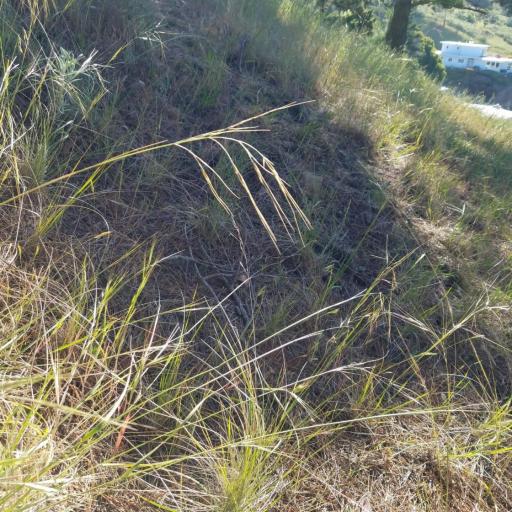
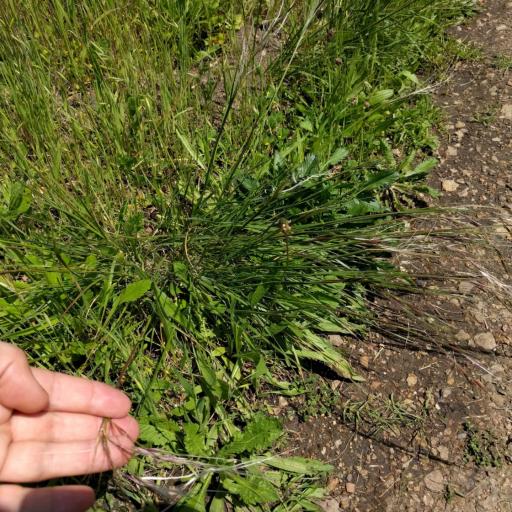
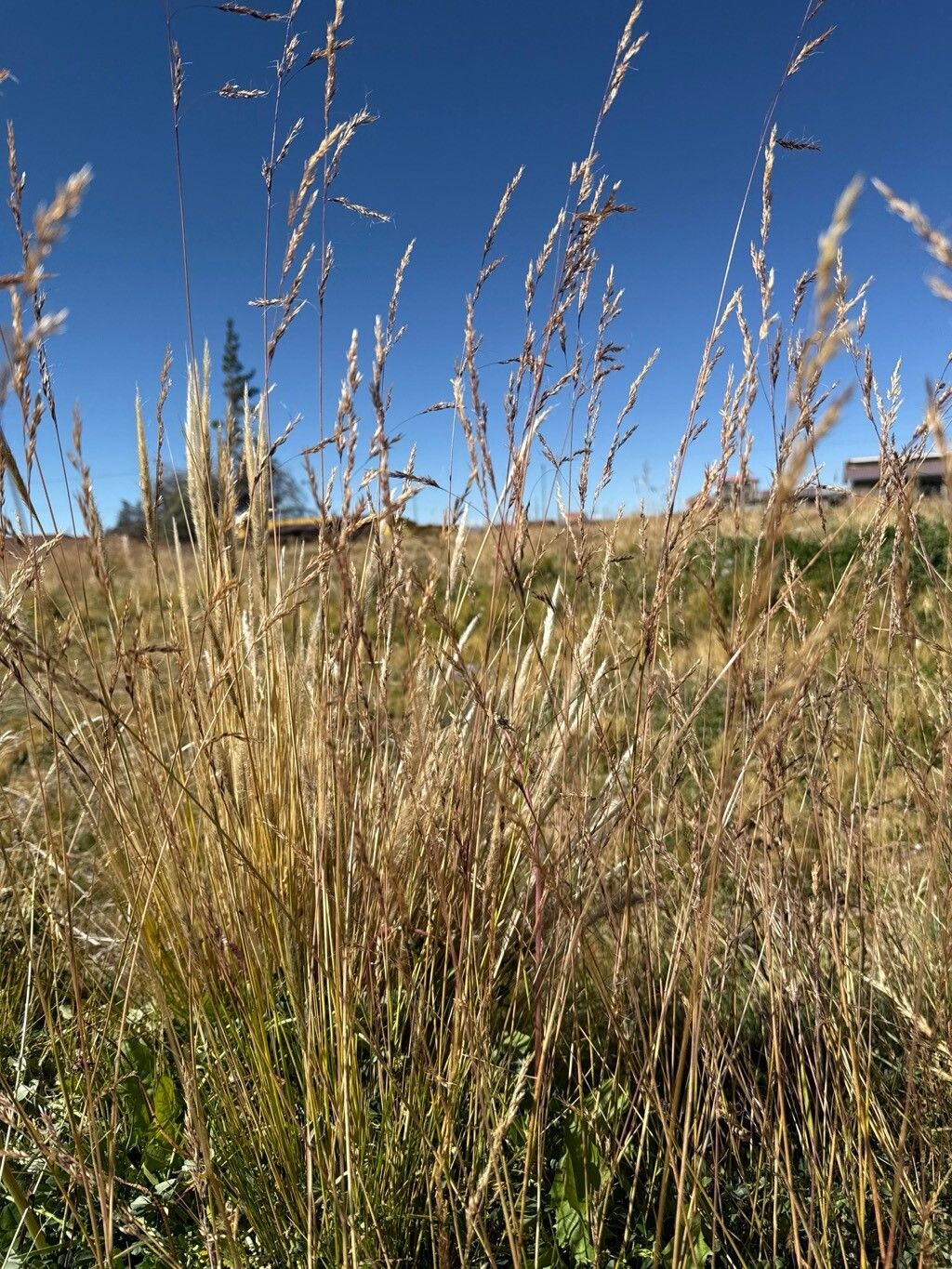
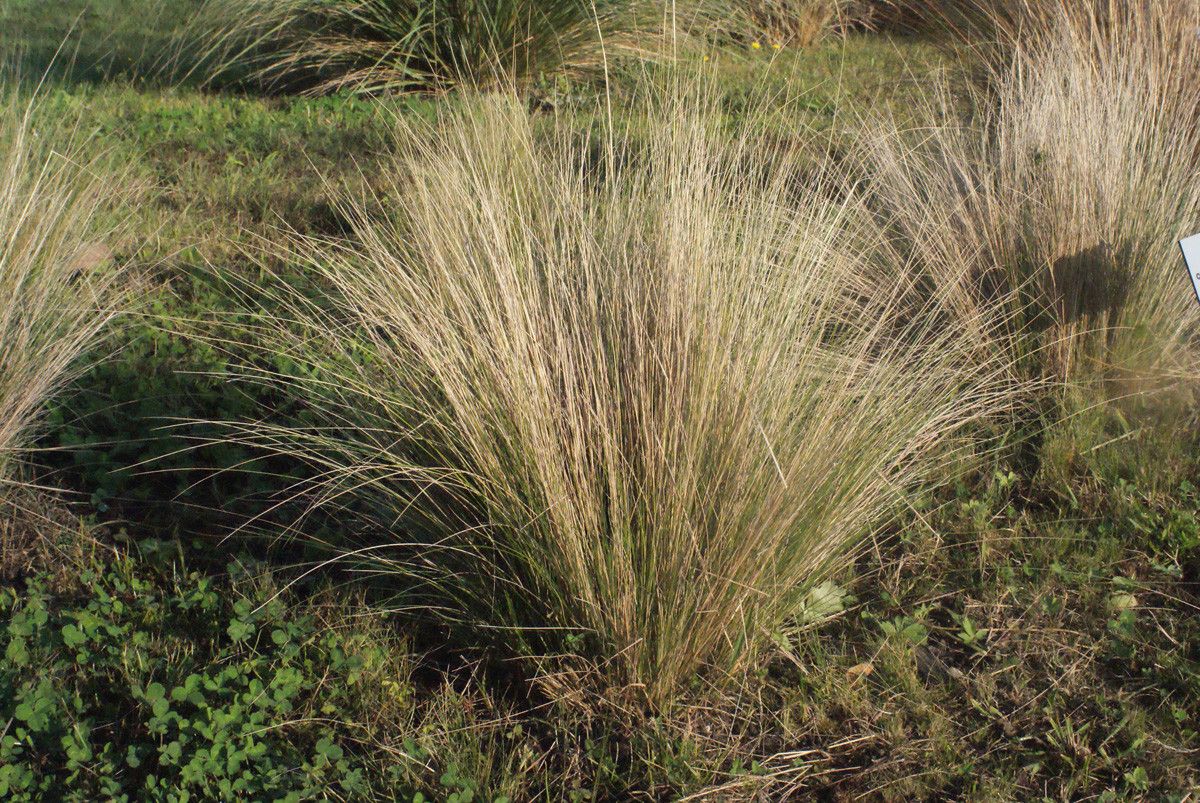
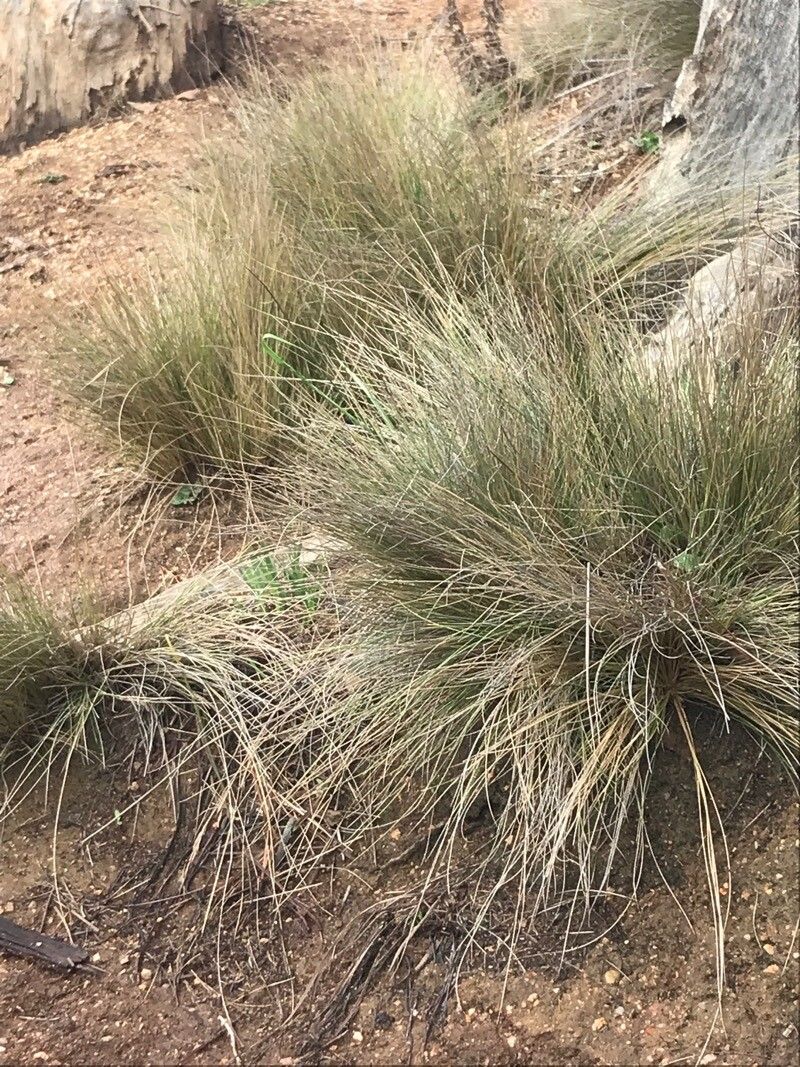
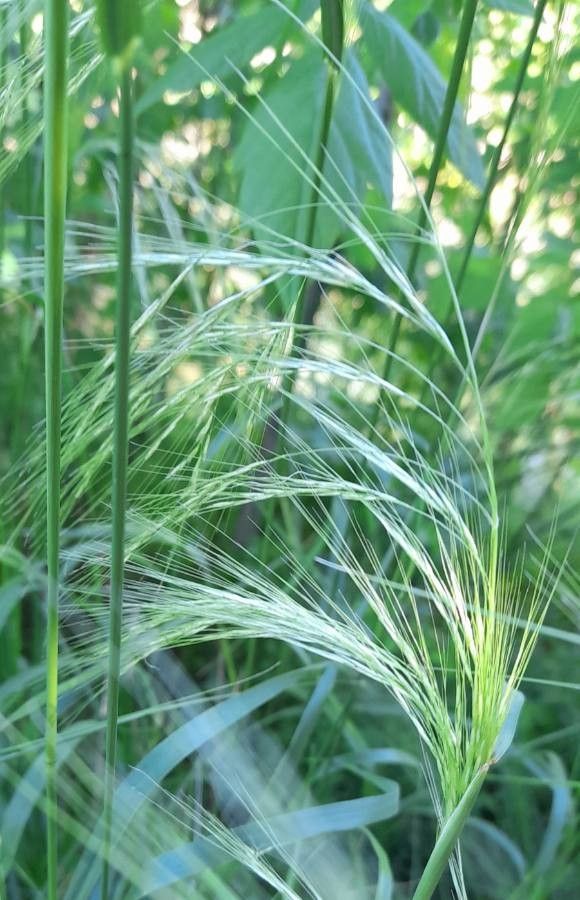
Nassella pulchra, basionym Stipa pulchra, is a species of grass known by the common names purple needlegrass and purple tussockgrass. It is native to the U.S. state of California, where it occurs throughout the coastal hills, valleys, and mountain ranges, as well as the Sacramento Valley and parts of the Sierra Nevada foothills, and Baja California. It grows in many types of local habitat, including grassland, chaparral, and oak woodland. It grows well on clay and serpentine soils.
Purple needlegrass has strong disease resistance and is generally not highly susceptible to illnesses. Still, it can be affected by pests and diseases present in its environment, though such infections are typically mild. Regarding care, this plant needs moderate maintenance. It requires regular pruning to maintain a good appearance and healthy growth, and fertilization can help encourage flowering. Purple needlegrass is appropriate for anyone with outdoor space, like a garden or patio, and does not demand extensive care experience. It may require more attention when grown indoors.
How to keep Nassella Pulchra.
Light
Purple needlegrass does best when exposed to direct sunlight throughout the day. It naturally occurs in open grasslands where it receives plentiful sunlight. At every stage of development it needs steady light; without it, the plant’s health can worsen. Both excessive and insufficient light can influence its growth and overall vigor.
Water
Purple needlegrass is well-suited for dry grasslands and needs only moderate watering, about once a week. It is efficient at conserving moisture during droughts. As an outdoor plant, it's important to adjust its water intake according to the growing season to ensure healthy growth during its active periods.
Temperature
Purple needlegrass is native to areas with temperatures from 59 to 89.6 °F (15 to 32 ℃). It is robust and adaptable, flourishing in cooler seasons while also tolerating peak summer heat. Seasonal adjustments in care may be necessary.
Fertilizer
A single spring application of fertilizer is generally enough for Purple needlegrass, though multiple feedings can maximize growth. Apply fertilizer every month to six weeks. Fertilization improves leaf appearance and function, helping maintain even color and a healthy texture. It also encourages root development and nutrient uptake, supporting long-term plant health.
Pruning
Purple needlegrass, known for its arching blades and purplish seed heads, benefits from early spring pruning to 2-3 inches above the base. This helps maintain its shape and encourages vigorous growth. Removing dead foliage improves air circulation, reduces the risk of disease, and enhances its ornamental appeal, resulting in healthier and more robust purple needlegrass.
Botanical profile.
- Plant Type
- Herb
- Life Cycle
- Perennial
- Genus
- Nassella
- Family
- Poaceae
- Hardiness Zone
- 7
- Mature Height
- 91 cm
- Mature Spread
- 61 cm
- Leaf Color
- Green
- Leaf Type
- Evergreen
- Flower Size
- 0.10 cm to 0.20 cm
- Bloom Time
- Mid spring, Late spring
- Planting Time
- Spring, Summer, Autumn
- Harvest Time
- Early summer, Mid summer
- Native Area
- Mexico
Other names.