Nelumbo lutea
Volée · Water-chinquapin · American Lotus · Yellow Lotus · American Nelumbo
Description
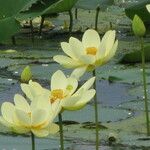
Source: leafsnapNelumbo lutea, commonly known as the American lotus or yellow lotus, is a perennial aquatic plant from the family Nelumbonaceae. Native to North America, it thrives in shallow freshwater habitats like ponds, lakes, and slow-moving streams. This plant features large, circular leaves that can grow up to 2 feet in diameter, held above the water surface on long stalks. The leaves are green on top with a slightly reddish underside. Nelumbo lutea produces large, showy flowers with bright yellow petals surrounding a central cone-shaped receptacle. The American lotus plays a crucial role in wildlife ecosystems by providing habitat for various aquatic animals such as fish, turtles, frogs, insects, and birds. It also holds cultural significance among Native American tribes, who have historically used it for medicinal purposes. Nelumbo lutea requires full sun exposure for optimal growth but can tolerate some shade. It prefers nutrient-rich soil with good drainage, although it can also grow in muddy or sandy substrates. The plant reproduces through seeds, which are dispersed by water currents or animals. Overall, Nelumbo lutea is an attractive aquatic plant with significant ecological importance, offering habitat for various wildlife species. Additionally, it bears cultural value due to its historical medicinal use among Native American tribes.
🎭 Innocence, Chasteness and Eloquence; Renewal
Care Guide
💧 Water Every 7 days
☀️ Light Full sun
American Lotus does best in places that receive abundant sunlight all day. Originating from sunlit habitats, it tolerates intense sun exposure without wilting. On the other hand, inadequate sunlight can cause stunted growth and poor flowering. It has little tolerance for either too much or too little sunlight.
What are the sunlight requirements for American Lotus?
American Lotus thrives best in areas that receive abundant sunlight throughout the day, being native to sun-drenched habitats. It is capable of enduring extreme exposure to sunlight. For optimal growth, it needs a significant amount of daily sunlight; full sun plants require above 6 hours of sunlight, while partial sun plants do well with about 3-6 hours of sunlight. It's important to watch how sunlight moves through your garden to ensure spots provide a balance of light and shade, ensuring the happiness of your plants.
Can artificial lighting be used for American Lotus and what are the guidelines?
Yes, artificial lighting can be a vital solution for indoor American Lotus plants, especially when natural sunlight is insufficient, like in winter or less sunny spaces. For optimal growth indoors, choose the right type of artificial light, such as LED lights, which can provide specific wavelengths needed by plants. Full sun plants need 30-50W/sq ft, partial sun plants require 20-30W/sq ft, and full shade plants need 10-20W/sq ft of artificial light. Place the light 12-36 inches above the plant and mimic natural daylight hours by keeping the lights on for 8-12 hours per day.
What are some common symptoms of insufficient or excessive light for American Lotus?
Common symptoms of insufficient light for American Lotus include smaller new leaves, leggy or sparse growth, faster leaf drop, slower or no new growth, and lighter-colored new leaves. Symptoms of excessive light include chlorosis, where leaves lose their green color and turn yellow; sunscald, with leaves showing pale or necrotic areas; leaf curling, as a defense mechanism to reduce water loss; wilting due to increased transpiration; and leaf scorching, indicated by brown, dry edges on leaves. These symptoms highlight the plant's struggle to adapt to its lighting environment.
What solutions can be applied for light-related issues in American Lotus?
For indoor American Lotus, gradually increase sunlight exposure to at least 6 hours daily, use south-facing windows for maximum sunlight, and consider artificial lighting like desk or grow lights for 8 hours daily if the plant is large or not easily movable. Outdoors, move plants gradually to sunnier spots to avoid sunburn. If sunlight is obstructed, prune obstructions like tree branches, or transplant small plants during their dormant period to a location with ample sunlight and good drainage. It's crucial to implement changes gradually to prevent stress and ensure new growth is healthy.
🌡️ Temperature 0–32.2°C
American Lotus is native to temperate regions where temperatures range from 32 to 90 °F (0 to 32 °C). It prefers stable conditions with minimal temperature variation. Seasonal adjustments may be needed if severe temperature fluctuations occur.
What is the native climate for the American Lotus?
The American Lotus, or Nelumbo lutea, is native to temperate regions with temperatures ranging from 32 to 90 °F (0 to 32 °C). It thrives in climates where the temperature remains steady with minimal fluctuations. To maintain the health of the plant, especially in regions with significant temperature changes, seasonal adjustments may be necessary to accommodate any severe variations in temperature.
Does American Lotus require any special frost protection measures during winter?
Due to its strong cold resistance, American Lotus generally does not require special frost protection in winter. However, if temperatures are forecasted to drop below -35°C, taking steps to protect the plant from the cold is crucial. Providing cold protection can include covering the plant with soil, straw, or similar materials. Additionally, it is advisable to water the plant abundantly before the first freeze of autumn to keep the soil moist, which helps prevent drought and ensures the plant has access to water during winter and early spring.
How should you care for an American Lotus in low temperature conditions?
American Lotus can tolerate cold conditions well, thriving in temperatures above 0°C and ideally not exposed to conditions below -30°C. In the event that temperatures fall below -35°C, the plant may not show immediate damage during winter, but it could lead to decreased sprouting or a complete lack of sprouting in the spring. To manage this, it's recommended to remove any parts of the plant that fail to sprout once spring arrives.
What are the care recommendations for American Lotus in high temperature conditions?
During the summer months, it's important to ensure that the American Lotus is not subjected to temperatures above 32°C. Exposure to temperatures exceeding 35°C can cause the leaves to lighten in color, curl, become sunburned, and, in severe cases, lead to the wilting and drying out of the entire plant. Care measures include trimming away sunburned and dried parts, relocating the plant to a shaded area, especially during the midday and afternoon sun, or using a shade cloth to protect it. Additionally, watering the plant in the morning and evening can help keep the soil consistently moist.
💨 Humidity
🪴 Soil
🌱 Fertilizer
🪴 Pot & Repot
✂️ Pruning
The American Lotus is known for its large, fragrant flowers and broad leaves. To maintain its health and appearance, prune the plant from early to late spring. This helps remove damaged foliage and control its spread. Trimming old stems and thinning out some of the plant promotes better air circulation, improves the quality of blooms, and prevents overcrowding. These practices support healthier growth and enhance the plant’s aesthetics.
🌿 Propagating
🐛 Diseases & pets
☠️ Toxicity
Characteristics
- Plant Type
- Herb
- Life Cycle
- Perennial
- Genus
- Nelumbo
- Family
- Nelumbonaceae
- Hardiness Zone
- 3-8
- Mature Height
- 0.76 m to 1.52 m
- Mature Spread
- 0.91 m to 1.22 m
- Leaf Color
- Green, Dark Green
- Leaf Type
- Deciduous
- Flower Color
- Yellow, Cream
- Flower Size
- 17.78 cm to 27.94 cm
- Bloom Time
- Early summer, Mid summer
- Planting Time
- Spring, Autumn
- Harvest Time
- Mid summer
- Native Area
- Honduras, Mexico, Cuba, Jamaica