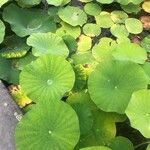
Nelumbo nucifera
نیلوفر آبی · East Indian lotus · Oriental lotus · Lotus · Lotusroot
Description
Source: leafsnapNelumbo nucifera, also known as sacred lotus, Laxmi lotus, Indian lotus, or simply lotus, is one of two extant species of aquatic plant in the family Nelumbonaceae. It is sometimes colloquially called a water lily, though this more often refers to members of the family Nymphaeaceae.Lotus plants are adapted to grow in the flood plains of slow-moving rivers and delta areas. Stands of lotus drop hundreds of thousands of seeds every year to the bottom of the pond. While some sprout immediately, and most are eaten by wildlife, the remaining seeds can remain dormant for an extensive period of time as the pond silts in and dries out. During flood conditions, sediments containing these seeds are broken open, and the dormant seeds rehydrate and begin a new lotus colony. Under favorable circumstances, the seeds of this aquatic perennial may remain viable for many years, with the oldest recorded lotus germination being from seeds 1,300 years old recovered from a dry lakebed in northeastern China. Therefore, the Chinese regard the plant as a symbol of longevity. It has a very wide native distribution, ranging from India & Sri Lanka (at altitudes up to 1,400 m or 4,600 ft in the southern Himalayas), through northern Indochina and East Asia (north to the Amur region; the Russian populations have sometimes been referred to as "Nelumbo komarovii"), with isolated locations at the Caspian Sea, as well as virtually all of Island Southeast Asia, New Guinea and northern and eastern Australia. Part of this range (namely South India, Sri Lanka, Island Southeast Asia, and Australasia) may be the result of historic human introductions, but taxonomic authorities consider the species native to these areas. It has a very long history (c. 3,000 years) of being cultivated for its edible seeds, and it is commonly cultivated in water gardens. It is the national flower of India and Vietnam.
💡 The Indian Lotus is a remarkable plant that can live for up to one thousand years. It has the ability to enter a state of dormancy and later revive. Remarkably, seeds from the Indian Lotus can remain viable for over a thousand years. This plant plays an important role in religious ceremonies, water treatment, crop rotation, and has historically been used for human consumption.
🎭 Innocence, Chasteness and Eloquence; Renewal
Care Guide
💧 Water
The soil in the container should have at least 2” to 4” of water over the top of it so that the soil is always underwater. Lotuses are adaptable to different water chemistries but it is important to flush out or over-fill the pot with fresh water.
☀️ Light Full sun
Indian Lotus does best in locations where the sun's rays are strong and unblocked, though it can also grow in places where that light is only occasionally filtered. Ample sunlight encourages healthy development and vigorous growth. Conversely, long periods of insufficient sun can cause stunted growth or wilting. Excessive sun exposure can scorch the plant.
What are the sunlight requirements for Indian Lotus?
Indian Lotus requires full sun, defined as above 6 hours of sunlight, to thrive. However, it can also grow in partial sun, which amounts to about 3-6 hours of sunlight. The intensity of the sun's rays should be unobstructed for optimal growth, yet the plant can tolerate intermittent filtered sunlight. Adequate exposure to sunlight is crucial for the plant's healthy development, vigorous growth, and the avoidance of issues such as stunted growth or wilting. It's important to watch how sunlight moves through your garden to choose spots that provide a perfect balance of light and shade, ensuring the plants' happiness.
How does artificial lighting affect the growth of Indian Lotus indoors?
Indoor Indian Lotus plants require adequate lighting for optimal growth. When natural sunlight is insufficient, especially during winter or in less sunny spaces, artificial lights become a vital solution. LED lights are popular as they can be customized to provide specific wavelengths needed by the plants. Full sun plants need 30-50W/sq ft, partial sun plants 20-30W/sq ft, and full shade plants 10-20W/sq ft of artificial light. The light source should be placed 12-36 inches above the plant, mimicking natural sunlight. Most plants need 8-12 hours of light per day, depending on the species.
What are the signs of light deficiency in Indian Lotus?
When Indian Lotus is grown indoors with limited light, it may show signs of light deficiency that include smaller new leaves compared to mature ones, leggy or sparse growth, faster leaf drop, slower or no new growth, lighter-colored new leaves, chlorosis (leaves turning yellow), sunscald (damaged areas on leaves or stems from intense sunlight), leaf curling (as a defense to reduce surface area exposed to sunlight), wilting (due to excessive water loss), and leaf scorching (brown, dry edges or patches on leaves). These symptoms indicate the plant's struggle with insufficient light.
What are the solutions for addressing light deficiencies in Indian Lotus?
To address light deficiencies in Indian Lotus, gradually move plants to sunnier locations to receive at least 6 hours of direct sunlight daily. For indoor plants, use a south-facing window or artificial lights like desk, ceiling lamps, or professional grow lights for at least 8 hours daily. Outdoors, ensure a gradual transition to sunnier spots to avoid sunburn. Prune obstructions like branches to allow more sunlight. For small plants, consider transplanting during their dormant period to a location with ample sunlight and good drainage. Note that parts of the plant affected by insufficient sunlight might not recover, but new growth should be healthy with improved light exposure.
🌡️ Temperature 0–32.2°C
Indian Lotus is native to regions with moderate climates. It does best at temperatures of 68 to 95 °F (20 to 35 ℃). During seasons when temperatures fall outside this range, maintain these conditions artificially for optimal growth.
What is the optimal temperature range for Indian Lotus growth?
The Indian Lotus, also known by its botanical name Nelumbo nucifera, thrives best in moderate climates, with an optimal temperature range between 68 to 95 °F (20 to 35 °C). For optimal growth, it is crucial to maintain these conditions, especially during seasons when temperatures fall outside this range. In winter, it's beneficial for the plant's growth to keep the temperature above 20°C, ensuring that it never drops below the freezing point to avoid freezing damage.
How should I protect my Indian Lotus during extremely cold temperatures?
When facing extremely cold temperatures, especially when the outdoor temperature approaches -5°C (25°F) during winter, it is advisable to take measures to protect the Indian Lotus. Bringing the plant indoors or setting up a temporary greenhouse can offer the necessary protection. Additionally, using materials such as plastic film or fabric to wrap the plant can also help shield it from freezing damage.
What are the symptoms of low temperature exposure in Indian Lotus?
Indian Lotus shows moderate tolerance to low temperatures but exhibits specific symptoms when exposed to temperature extremes outside its preferable range of 20°C to 35°C. Symptoms of low temperature exposure include darkening of leaves, water-soaked necrosis, wilting, drooping, and gradual browning of leaves, especially when temperatures fall below -40°C. Immediate action should be taken to mitigate these effects and safeguard the plant's health.
How can I address low temperature damage in Indian Lotus?
To address low temperature damage in Indian Lotus, start by trimming away frost-damaged parts. Then, move the plant indoors to a warm environment or set up a makeshift greenhouse to offer cold protection. If kept indoors, position the plant near a south-facing window to ensure it receives ample sunlight. In cases of insufficient natural light, consider using supplemental lighting to foster growth and recovery.
What are the symptoms of high temperature exposure in Indian Lotus?
Exposure to high temperatures, particularly above 95°F (35°C), can significantly affect the Indian Lotus's well-being. Symptoms of heat stress include slowed growth, lightening of leaf color, and increased susceptibility to sunburn. These symptoms indicate the need for immediate intervention to prevent further damage and assure the plant's survival.
💨 Humidity
🪴 Soil
🌱 Fertilizer
A good aquatic fertilizer. Because lotus grows fast, double the amount of fertilizer per gallon of soil. Begin fertilizing as soon as the lotus starts to make standing leaves. In the fall, stop fertilizing so that it can exhaust the fertilizer in its pot in preparation for dormancy.
🪴 Pot & Repot
✂️ Pruning
The Indian Lotus is an aquatic perennial known for its large leaves and beautiful flowers. To ensure optimal growth, it is important to prune the plant early in the spring. Remove any dead leaves and spent flowers to improve air circulation. Make sure to sterilize your tools before pruning to prevent infections. This will promote healthy growth, abundant blooms, and help maintain the plant's shape.
🌿 Propagating
🐛 Diseases & pets
☠️ Toxicity
Plants in the Proteaceae family, even though invasive, are safe for humans and animals.
Characteristics
- Plant Type
- Herb
- Life Cycle
- Perennial, Annual
- Genus
- Nelumbo
- Family
- Nelumbonaceae
- Hardiness Zone
- 2-8
- Mature Height
- 2.44 m
- Mature Spread
- 0.91 m to 1.22 m
- Leaf Color
- Green, Blue
- Leaf Type
- Deciduous
- Flower Color
- Pink, White
- Flower Size
- 10.16 cm to 20.32 cm
- Bloom Time
- Early summer, Mid summer
- Planting Time
- Spring, Autumn
- Harvest Time
- Mid summer
- Native Area
- Nepal, Sri Lanka, India, Malaysia, Philippines, Bangladesh, Pakistan, Laos, China, Russia, Indonesia, Cambodia, Vietnam, Myanmar, Iran, Azerbaijan, Thailand