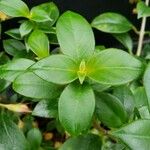
Nematanthus wettsteinii
Care Guide
💧 Water
The goldfish plant flourishes in humid, moisture-rich environments and prefers consistently moist soil. Ideally, it should be watered weekly. To prevent overwatering, use well-draining containers, which help maintain proper hydration during its active growth periods. This plant is an attractive choice for indoor decoration.
☀️ Light Partial sun
The goldfish plant ideally does best in an environment that receives ample sun but not continuously. Nevertheless, it is notably tolerant of shaded conditions. Its native habitat reflects this, as it thrives in areas with varying levels of light intensity. Excessive sun can scorch the leaves, while insufficient light can cause weak growth.
What are the sunlight requirements for a Goldfish plant?
The Goldfish plant, or Nematanthus wettsteinii, flourishes in environments that offer a significant amount of sunlight but can also tolerate shaded conditions impressively. It ideally needs partial sun, about 3-6 hours of sunlight per day, but can also survive in full shade with less than 3 hours of sunlight. The plant demonstrates a remarkable adaptability to various light conditions inherent to its native habitat. However, excessive sunlight exposure can lead to leaf scorching, whereas insufficient light may result in weaker growth. It is crucial to observe the way sunlight moves through your garden to select spots offering a balanced mix of light and shade, ensuring the plant's well-being.
How can artificial lighting be used for Goldfish plants indoors?
When natural sunlight is not adequate, especially during winter or in less sunny indoor areas, artificial lighting serves as an essential solution for Goldfish plants. For optimal growth, the right type of artificial light must be chosen, with LED lights being highly recommended due to their customization capabilities to match specific wavelengths needed by plants. The intensity required varies with the type of plants; full sun plants need 30-50W/sq ft, partial sun plants need 20-30W/sq ft, and full shade plants require 10-20W/sq ft. The placement of artificial lights should be 12-36 inches above the plants to imitate natural sunlight, and the duration should mimic natural daylight hours, generally between 8-12 hours per day.
What are the symptoms of insufficient sunlight in Goldfish plants?
Goldfish plants may exhibit several signs indicating insufficient sunlight, including lighter-colored new leaves, which signal a lack of chlorophyll and essential nutrients; leggy or sparse growth, where spaces between stems or leaves increase, giving the plant a stretched appearance; issues with flowering and fruiting; and faster leaf drop as the plant conserves resources. Other symptoms caused by excessive sunlight include chlorosis, where leaves lose their green color, sunscald resulting in pale or necrotic areas on the plant, leaf curling as a defense mechanism against water loss, wilting due to increased transpiration, and leaf scorching, characterized by brown, crispy edges on leaves.
What solutions are available for adapting Goldfish plants to changing light conditions?
To adapt Goldfish plants to changing light conditions, gradually transition them to sunnier spots each week until they receive the ideal 3-6 hours of direct sunlight daily. For indoor plants that are large or difficult to move, consider supplementing with artificial light, keeping a lamp on for at least 8 hours a day, or use professional plant grow lights. When moving plants outdoors, it's crucial to avoid sudden changes in light intensity to prevent sunburn. Additionally, minimizing obstructions like trees by pruning can improve sunlight access. For smaller plants, transplanting during the dormant period in late winter or early spring to a location with ample sunlight and good drainage can be beneficial. Note that parts of the plant affected by insufficient light may not recover, but new growth should be healthy with increased light exposure.
🌡️ Temperature 20–37.8°C
The Goldfish plant does best in warm conditions, preferring temperatures of 68 to 100 ℉ (20 to 38 ℃). In its native tropical South American habitat it grows in humid, warm surroundings where temperatures rarely fall below 60 ℉ (15 ℃). During winter it’s advisable to keep the Goldfish plant in a warmer spot, ideally about 70 to 75 ℉ (21 to 24 ℃), to prevent leaves from yellowing or dropping.
What are the ideal growing conditions for a Goldfish plant?
The Goldfish plant, or Nematanthus wettsteinii, flourishes in warm temperatures, ideally within a range of 68 to 100°F (20 to 38°C), reflecting its tropical South American origin where it enjoys a humid and warm climate. Temperatures rarely should fall below 60°F (15°C) for optimal growth. During winter, it's beneficial to maintain the environment warmer, preferring temperatures between 70 to 75°F (21 to 24°C) to prevent the leaves from yellowing or dropping. The plant is extremely heat-loving, and exposure to cold can be harmful. It's advised to bring outdoor plants indoors during autumn and place them near a bright window, albeit not too close to heaters, ensuring temperatures stay above 20°C to support its growth.
How should you care for a Goldfish plant during low temperatures?
The Goldfish plant thrives in warm conditions and is not tolerant of cold temperatures. It performs best when the temperature is consistently above 20°C and should be kept above 5°C during winter. Exposure to temperatures below 1°C can result in leaf discoloration, where leaves may lighten before turning brown or black after frost damage, coupled with wilting and drooping. To address frost damage, trim off the affected parts and immediately move the plant to a warmer indoor area. Position it near a south-facing window for ample sunlight, but avoid placing it close to heaters or air conditioning vents to sidestep excessively dry air.
What are the effects of high temperatures on a Goldfish plant and how can they be mitigated?
In the summer, it's critical to ensure that the Goldfish plant's temperature remains below 100°F (38°C). Exposing the plant to temperatures above 109°F (43°C) can lead to leaf discoloration and increased susceptibility to sunburn. To counteract damage from high temperatures, remove sunburned and dried parts of the plant. Relocate the plant to an area with shade during the midday and afternoon sun. Additionally, watering the plant in the morning and evening helps keep the soil adequately moist, safeguarding the plant against the stress of high temperatures.
💨 Humidity
🪴 Soil 5-6
🌱 Fertilizer
The Goldfish plant needs the most fertilizer during its active growth period, which is mainly in spring, summer, and early fall. Fertilizing supplies essential nutrients that the soil might lack, encouraging healthy root and stem growth and enhancing the attractive foliage, a key characteristic of this plant.
🪴 Pot & Repot 2-3 years
When repotting a Goldfish plant, select a pot 1-2 inches (2.5–5.1 cm) larger with good drainage. Use a well-draining potting mix. Repot in spring or fall, making sure the root ball sits slightly below the rim of the flower pot. Water thoroughly after repotting and place in a warm spot with indirect sunlight.
✂️ Pruning
The goldfish plant is known for its distinctive goldfish-shaped flowers and trailing growth pattern. To encourage bushier growth and more blooms, prune the plant in early to late spring by trimming back one-third of the leggy stems. Make sure to use clean, sharp tools during pruning to prevent disease and enhance air circulation.
🌿 Propagating
🐛 Diseases & pets
☠️ Toxicity
Characteristics
- Plant Type
- Herb
- Life Cycle
- Perennial
- Genus
- Nematanthus
- Family
- Gesneriaceae
- Hardiness Zone
- 10-11
- Mature Height
- 20 cm to 30 cm
- Mature Spread
- 20 cm to 30 cm
- Leaf Color
- Dark Green
- Leaf Type
- Evergreen
- Flower Color
- Red, Orange
- Flower Size
- 2.54 cm
- Bloom Time
- All year round
- Planting Time
- Spring, Autumn
- Harvest Time
- All year round