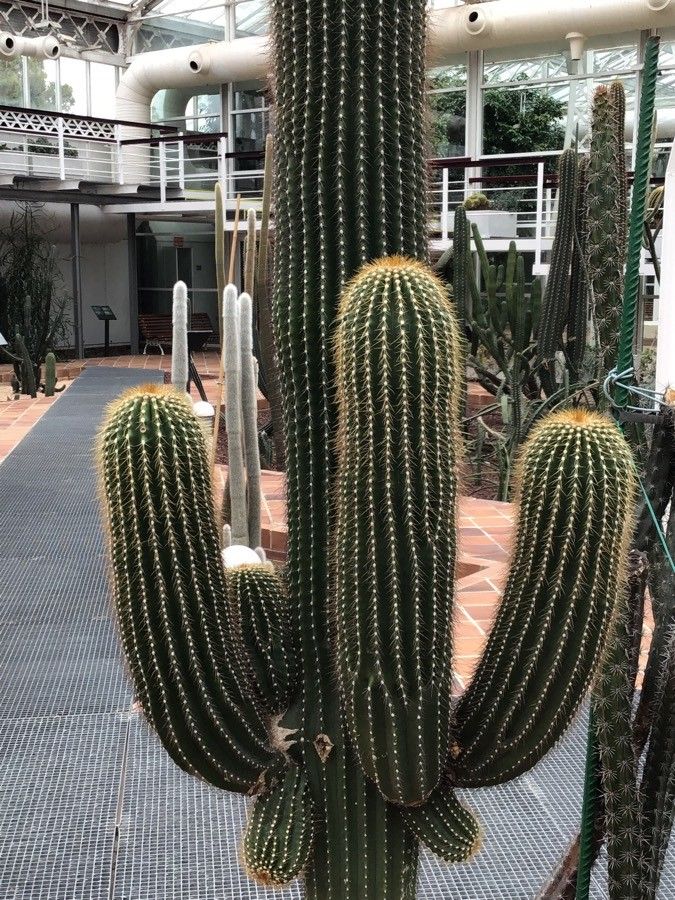
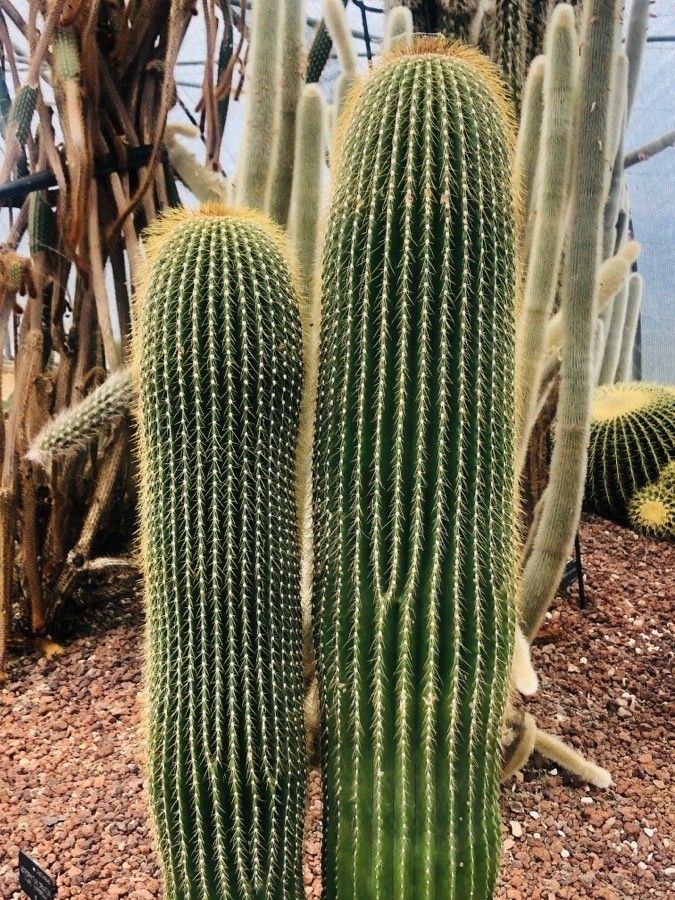
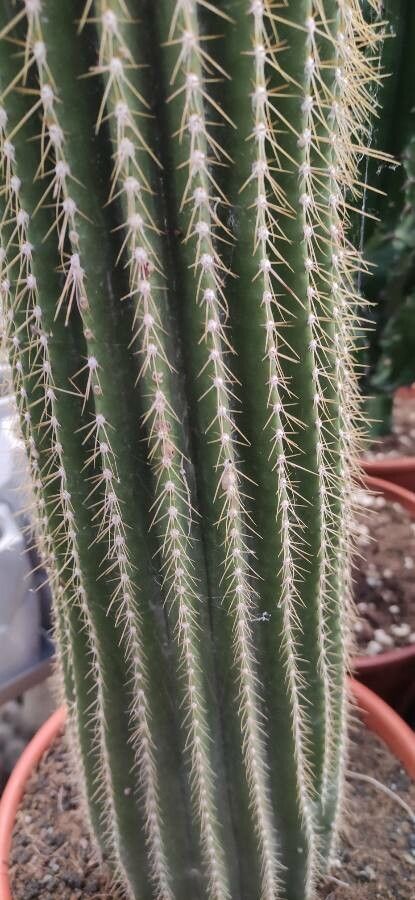
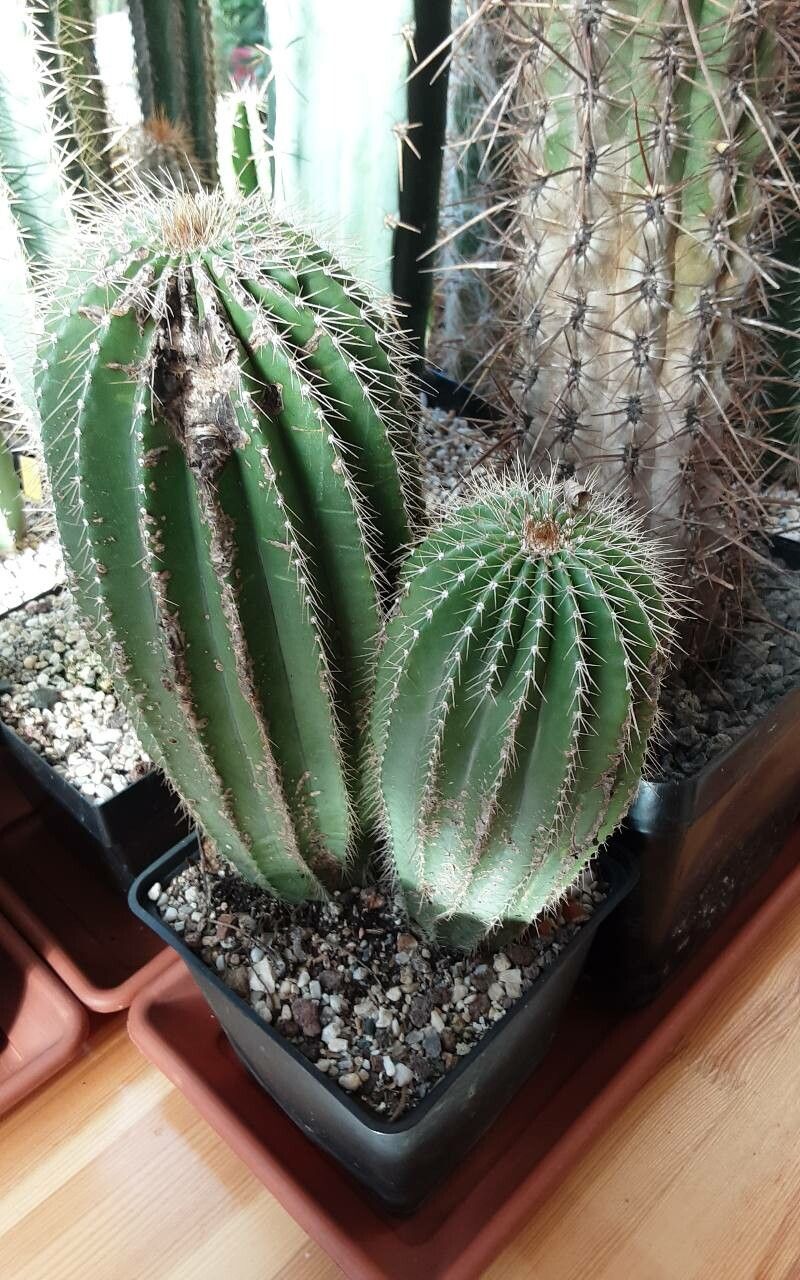
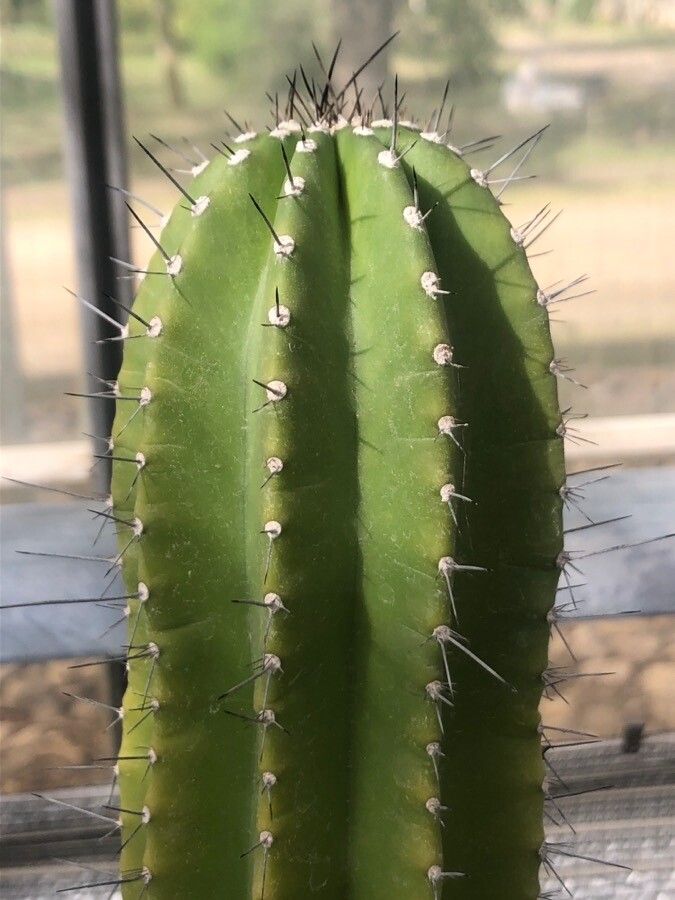
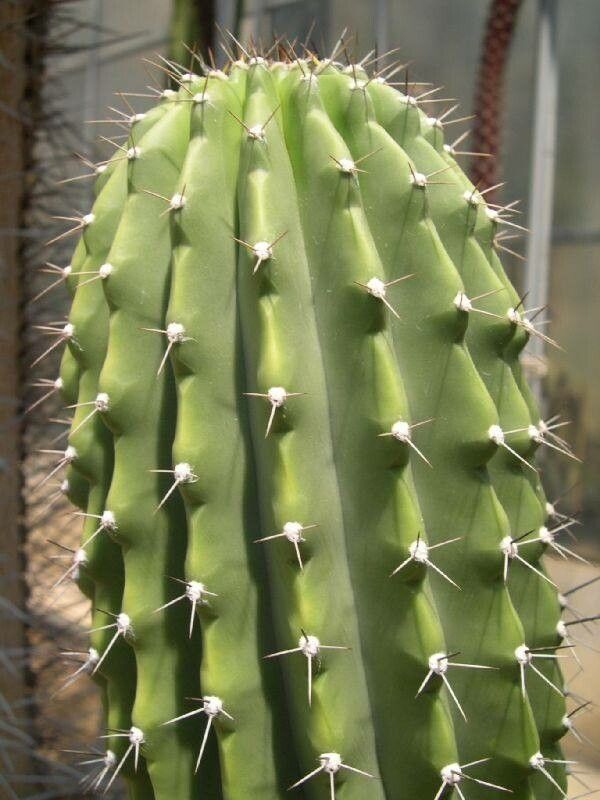
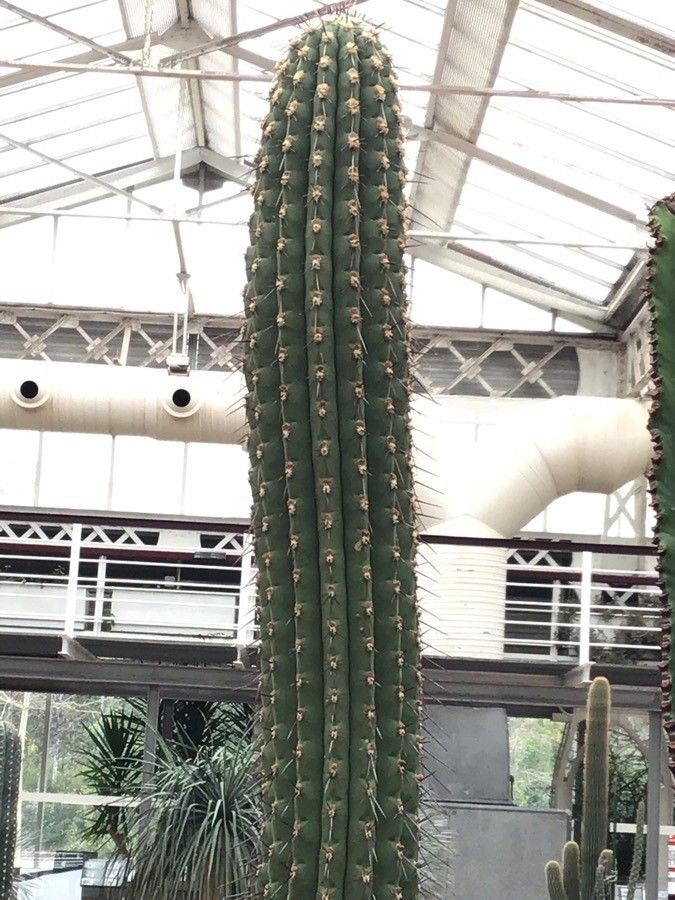
Neobuxbaumia polylopha is a species of cactus native to Mexico. Belonging to the family Cactaceae, it is commonly known as the "many-headed cactus" due to its distinctive appearance. This plant can grow up to 10 meters tall and has a cylindrical stem that can reach a diameter of up to 50 centimeters. The stem features numerous ribs with areoles that produce spines, which serve as protection against predators.
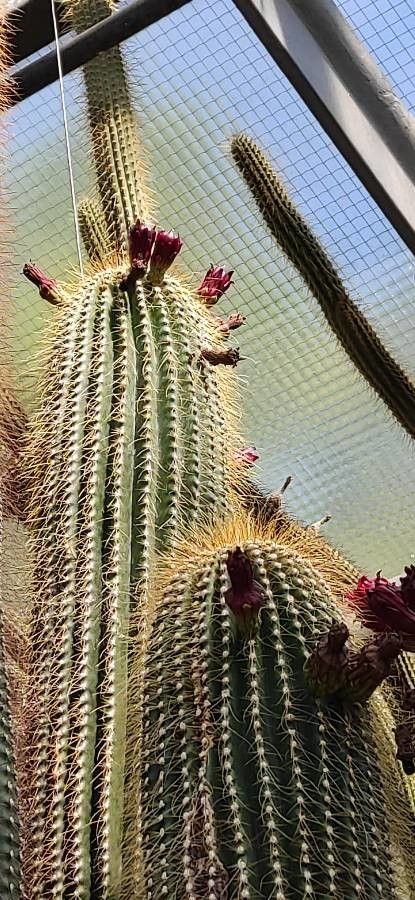
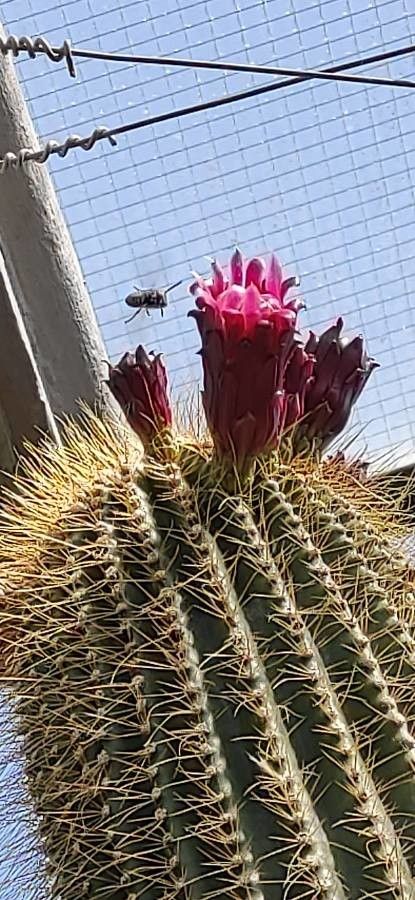
During the summer months, Neobuxbaumia polylopha produces large, white, funnel-shaped flowers that can grow up to 10 centimeters in diameter, adding to the plant's appeal.
This cactus thrives in well-draining soil and full sun exposure for optimal growth. While it is drought-tolerant, it does require occasional watering during dry periods.
In its natural habitat, Neobuxbaumia polylopha is an important food source for various animals, including birds, rodents, and insects.
Overall, Neobuxbaumia polylopha is an impressive cactus species, known for its height and many heads, making it a popular choice among succulent plant collectors.
The Cone cactus has strong resistance to disease and can tolerate normal care without becoming ill easily. It can, however, be vulnerable to mealybugs; these pests may cause some damage but are generally not a serious threat. In terms of care, the Cone cactus is drought-tolerant and does not need frequent watering. It can endure long periods without water and requires little fertilizer. That said, it is highly prone to root rot if kept in poor light and overwatered. Overall, the Cone cactus is suitable for people who prefer to spend less time on plant care, but it remains important to know and meet its basic needs. It is particularly well suited to those who are often away for long periods and might forget to water regularly.
How to keep Neobuxbaumia Polylopha.
Light
Coming from habitats that receive prolonged sunlight, the cone cactus does best when exposed to ample light throughout the day. Direct, unfiltered sun encourages its healthy growth. Neither excessive nor insufficient sunlight has significant effects on it. Its lighting needs remain unchanged through all stages of growth.
Water
The cone cactus thrives in dry conditions due to its excellent ability to retain moisture and tolerate drought. Water it every three weeks, making sure the soil completely dries out between waterings. This cactus prefers to grow outdoors and shows resilience to extreme temperatures, which aligns with its native habitat.
Temperature
The cone cactus does best in warm conditions and needs relatively high temperatures during the growing season to support growth and metabolic activity. It prefers abundant sunlight, suitable moisture levels, and good air circulation. However, it can be damaged by temperatures that are too low and by overwatering. It’s important to maintain a balance and also avoid excessively high temperatures and overly dry conditions.
Fertilizer
Cone cactus need light applications of fertilizer one to two times a year during the growing season. Do not fertilize in winter or in summer when the plant is dormant. Cut back on fertilizer for repotted plants and wait a couple of months after repotting before applying fertilizer. Fertilizing helps maintain healthy growth and encourages blooms.
Pruning
Cone cacti require minimal pruning. To encourage healthy growth, remove any withered flowers and dead branches so the plant can concentrate its nutrients on its thriving parts.
Pot & Repot
Repot cone cacti every 2-3 years in the spring, using a deep pot with well-draining soil to prevent root rot. After repotting, gently firm the soil, water sparingly, and place the cone cactus in bright, indirect light to ensure optimal recovery.
Botanical profile.
- Plant Type
- Succulent
- Life Cycle
- Perennial
- Genus
- Neobuxbaumia
- Family
- Cactaceae
- Hardiness Zone
- 9-12
- Mature Height
- 14.94 m
- Mature Spread
- 49 cm
- Leaf Color
- Green
- Leaf Type
- Evergreen
- Flower Color
- White
- Flower Size
- 3.05 cm to 3.56 cm
- Bloom Time
- Summer
- Planting Time
- Spring, Summer
- Harvest Time
- Late summer, Early fall, Mid fall
- Native Area
- Mexico
Other names.
Reader questions.
How often do I need to water my Cone cactus?
Determining the watering schedule for Cone cactus is not a strict rule. To figure out when to water it, simply check the soil and only water it when it is completely dry. You can use your finger or a moisture meter to check the moisture level below the surface. When planting it in a deep pot, you can use a stick or chopstick to do this. If the soil feels slightly damp, wait a few days and check again. In general, most people will need to water Cone cactus every two weeks in summer and once a month in winter. However, there are factors that can affect the frequency. To help you determine the right watering schedule, take into account the considerations listed below.
Why does my Cone cactus need fertilizer?
When fertilizing Cone cactus, it's important to add nutrients to the growing medium. While the cactus does store water and nutrients, applying plant food during the growing season helps promote healthy growth and may even stimulate blooming in mature specimens.
What are the sunlight requirements for a Cone Cactus?
The Cone Cactus, known botanically as Neobuxbaumia polylopha, thrives in full sun, requiring more than 6 hours of sunlight daily to maintain healthy growth. Its origins in environments with continuous sun exposures make it well-suited for abundant light throughout the day. It's important to observe your garden's sun patterns to find the perfect balance of light and shade, ensuring your cactus's happiness. Whether the Cone Cactus is at its early growth stages or maturity, its need for unfiltered sun exposure remains constant, making it indifferent to variations in sunlight intensity.
What are the essential care requirements for a Cone cactus?
The Cone cactus, or Neobuxbaumia polylopha, thrives in warm environments and favors higher temperatures during its growing season for optimal growth and metabolism. It benefits from ample sunlight, the right moisture levels, and good ventilation. However, it is at risk of damage from both excessively low temperatures and overwatering. During winter, as it enters a dormant state, it's crucial to move it indoors if the temperature drops below 5°C, preferably near a south-facing window to ensure it receives as much sunlight as possible. Insufficient natural light can be compensated for with supplemental lighting. Moreover, when the temperature falls below 20°C, the plant's growth will slow, necessitating a reduction or halt in watering to avert root rot. For outdoor plants, watering should cease entirely in low temperatures. Temporary greenhouses or wraps with materials like plastic film or fabric can offer insulation against the cold.
What things do I need to think about when giving water to my Cone cactus?
To properly water your Cone cactus, there are a few environmental factors to consider. These include the size of the container, type of soil, temperature, and humidity. First, the container and soil you choose will determine the frequency and amount of water needed. Ensure your container has ample drainage holes to allow excess water to escape. Smaller containers have less soil and hold less moisture, so they will require more frequent watering. On the other hand, larger pots retain more water and need less frequent watering. Avoid using an oversized pot that can lead to overwatering. When repotting, opt for a container only one size larger than the current one, as Cone cacti have shallow root systems and prefer shallow containers. In terms of seasons, Cone cacti require less water in winter when growth slows down, and more water during the active growing seasons of spring and autumn. The cooler winter air reduces evaporation, so the soil stays wet for longer. The local climate also plays a role in watering frequency, with humid locations requiring less watering compared to dry and arid climates. Keep in mind that conditions can vary within the same geographic area due to seasonal changes and indoor heating or air conditioning. For outdoor planting, once the Cone cactus establishes a root system in the ground, it generally doesn't need additional watering beyond natural precipitation and dew. However, during extended drought periods, occasional watering may be needed. In areas where Cone cacti can only be grown in containers, they can be moved outside in spring and summer when temperatures are suitable, and brought back indoors as temperatures drop. Potted Cone cacti typically require more water when kept outside due to increased sun exposure, even in shaded areas.
When should I fertilize my Cone cactus?
Cone cactus primarily requires a small amount of fertilizer during its growing season. It is recommended to fertilize it 1-2 times a year in the spring and autumn, avoiding fertilization in the dormant winter and summer months. If you have repotted the cactus, be cautious and reduce the amount of fertilizer. Additionally, it is advisable to wait a couple of months after repotting before starting to apply fertilizer.
How can artificial lighting be used for indoor Cone Cacti?
Indoor Cone Cacti require adequate lighting to thrive, especially in situations where natural sunlight is insufficient, such as in winter or less sunny spaces. Artificial lights, particularly LED lights, are a vital solution, capable of being customized to provide specific wavelengths that the cactus needs for optimal growth. The recommended artificial light intensity for full sun plants, like Cone Cactus, is 30-50W per square foot. The artificial light source should be placed 12-36 inches above the plant, and the lights should be kept on for 8-12 hours per day to mimic natural daylight hours, helping in promoting faster and healthier growth.
How should I care for my Cone cactus in low temperatures?
Cone cactus best thrives at temperatures above 20°C and is ill-suited to low temperatures. As such, during winter or when temperatures fall below 5°C, it is advisable to bring the plant indoors to protect it from the cold, ensuring it is positioned near a south-facing window to maximize sunlight exposure. In the event of temperatures dropping below 1°C, leading to potential weakness, wilting, or root rot in the plant, it's recommended to trim off any frostbitten parts. Check for root rot, and if present, remove the affected roots. The plant could then be propagated through cuttings. Providing sufficient sunlight, either naturally or via supplemental lighting, in a warm indoor environment is key to recovery.
How do you water a cone cactus?
The best way to water a Cone cactus is to thoroughly soak it and allow it to dry out before watering again. This plant can tolerate drought, so it's okay to let it get quite dry before watering. It's always better to give this plant too little water than too much. When you water it, make sure the soil is soaked throughout the whole pot. Don't just pour water in one spot, but go around the whole rim of the planter to ensure all sides of the plant get wet. The right amount of water depends on your container size and how much water the soil absorbs. Make sure the water drains out from the drainage holes, and leave it in the saucer for about 20-30 minutes to soak into dry pockets of soil. Then, discard any excess water in the saucer to prevent waterlogging of the soil. Bottom-watering is also a good method for Cone cactus. This involves placing the pot in a saucer of water and allowing the soil to absorb moisture through the drainage holes. You'll know the soil has absorbed enough water when the top layer is moist. This method takes longer than top-watering, but it ensures even distribution of water throughout the pot. Cone cacti naturally thrive in dry environments with infrequent heavy rain, so you can mimic this situation by bottom-watering your plant when the soil is completely dry. It's better to give it a deep soil bathing than frequent light watering.
When is it best to not put fertilizer on my Cone cactus?
Cone cactus, like other plants, has a dormancy period. During this time, it's important to avoid applying fertilizer. Specifically, in the summer and winter when the plant stops growing, fertilizer should be discontinued. Additionally, it's recommended to avoid fertilizing for the first couple of months after repotting in the spring.
What are the common symptoms of inappropriate light exposure in Cone Cacti, and how can they be managed?
Cone Cacti can exhibit several symptoms when exposed to suboptimal lighting conditions, including smaller new leaves, leggy or sparse growth, faster leaf drop, slower or halted new growth, paler new leaves, chlorosis, sunscald, leaf curling, wilting, and leaf scorching. To prevent or address these issues, it's crucial to ensure the plant receives at least 6 hours of direct sunlight daily. Gradually moving your cactus to a sunnier location can help, as well as considering the use of artificial light sources for indoor plants that aren't easily movable. For outdoor plants, a gradual transition to sunnier spots can prevent sunburn. In cases where plants aren't receiving enough sunlight due to physical obstructions, pruning or transplanting during the dormant period can significantly improve sunlight access.
What should I do if my Cone cactus experiences high temperatures?
During the summer, Cone cactus should be kept at temperatures below 41°C to avoid ceasing growth, water loss, wilting, and susceptibility to sunburn. In cases where the temperature exceeds 45°C, your response should involve removing any sunburned or rotten sections of the plant and shielding it from the harsh afternoon sunlight until it begins to show signs of recovery and regrowth. If the plant has suffered root rot, watering should be ceased until new roots form. This step ensures the health of the plant despite extreme temperature conditions.