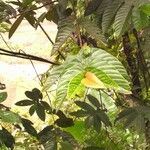
Neolamarckia cadamba
Kadam · Leichhardt-pine · Burflower-tree · Laran · Common bur-flower-tree
Description
Source: leafsnapNeolamarckia cadamba, also known as the Burflower tree, is a fast-growing tropical tree in the Rubiaceae family. Native to Southeast Asia, it is commonly found in countries such as India, Indonesia, and Malaysia. This tree can reach heights of up to 40 meters and has a trunk diameter of up to 1.5 meters. The leaves of Neolamarckia cadamba are large, glossy green, and can grow up to 30 cm long. During the rainy season, the tree produces yellow-orange flowers that grow in clusters at the ends of its branches. The fruit of Neolamarckia cadamba is small, about 2 cm in diameter, and round. It contains many seeds surrounded by pulp and ripens during the dry season. Neolamarckia cadamba has numerous uses. Its fast growth rate makes it valuable for timber production. Additionally, it is used for medicinal purposes, such as treating fever and diarrhea. The tree is also popular for ornamental planting due to its attractive flowers and leaves, and it is utilized in paper pulp production. Overall, Neolamarckia cadamba is an important plant species with significant economic and medicinal value. Its beautiful flowers and foliage make it an appealing choice for ornamental planting, enhancing its ecological and economic importance.
Care Guide
💧 Water Every 7 days
The Burflower tree thrives in consistently moist soil, similar to the conditions found in its humid native regions. For optimal growth, it should be watered regularly, about every two weeks. While it can tolerate moderate drought, mulching is beneficial to help retain moisture, especially during its active growth period. This is particularly important for evergreen Burflower trees grown outdoors.
How should I water my Burflower tree?
Watering your Burflower tree is easy as it is not too picky about the method you choose. You can use common tools like watering cans, hoses, or cups to moisten the soil. Just make sure to water directly onto the soil, ensuring equal moisture for all parts of the root system. Filtered water is recommended to avoid harmful particles in tap water. It's also a good idea to use water at room temperature or slightly above, as extreme temperatures may shock the tree. However, the Burflower tree generally responds well to any type of water.
What should I do if I give my Burflower tree too much or too little water?
Outdoor plants, especially newly planted ones or seedlings, may suffer from lack of watering. It is important to ensure sufficient watering for a few months, especially when the tree is small or newly planted. Once the tree's roots are established, it will often rely on rainwater. When a Burflower tree is planted in pots, overwatering is a common issue. In the event of accidental overwatering, it is important to act promptly to remedy the situation. First, stop watering the plant immediately to minimize the effects of overwatering. Then, carefully remove the Burflower tree from its pot to inspect its roots. If there are no signs of root rot, you can return the plant to its container. However, if root rot is present, trim any affected roots and consider applying a fungicide to prevent further damage. Finally, repot the Burflower tree in well-draining soil. In the case of underwatering, simply water the Burflower tree more frequently. Underwatering can be easily addressed. When a plant is underwatered, its leaves may droop, dry out, and fall off. However, with sufficient watering, the leaves will quickly regain their fullness. It is important to adjust your watering frequency as soon as signs of underwatering occur.
How often do I need to water my Burflower tree?
Most outdoor plants can grow normally with rainfall, but if your area doesn't get much rain, you should water them every 2 weeks in spring and fall, and more often in summer. In winter, water less because plants grow slower and need less water. You might not need to water at all during the winter. If your Burflower tree is young or newly planted, water it more often to help it grow and become more drought tolerant. For potted plants, there are two main ways to determine how often to water your Burflower tree. The first way is to have a set schedule, like watering once a week or every other week. However, this may not always work because it doesn't consider the specific conditions where your tree is growing. The other way is to check the soil moisture. Wait until the top two to four inches of soil have dried out completely before watering again. This method is especially important during summer when the tree's water needs are highest.
How much water does my Burflower tree require?
When watering your Burflower tree, it's important to note that it doesn't always require a lot of water. If only a few inches of soil have dried since your last watering, give the tree about five to ten ounces of water each time. You can also determine the amount of water based on the moisture of the soil. Take note of how many inches of soil have dried out between waterings. To ensure the tree gets enough moisture, water it enough to moisten all the dry soil layers since the last watering. If over half of the soil is dry, consider giving more water than usual. Keep adding water until you see excess water draining from the pot. If the tree is planted outdoors where it receives plenty of rain, additional watering may not be necessary. For young or newly established trees, make sure they receive 1-2 inches of rain per week. As the tree grows and establishes, it can rely solely on rainwater unless there is a prolonged hot and rainless period for 2-3 weeks, then give it a full watering to prevent stress.
How do I know if I am giving my Burflower tree enough water?
The Burflower tree is often overwatered, which leads to a set of specific signs to watch out for. Typically, an overwatered tree will have yellowing leaves and possibly leaf loss. Additionally, the plant's structure may become shriveled and root rot could develop. Conversely, an underwatered tree will begin to droop and its leaves may turn brown or become brittle. Regardless of whether you observe signs of overwatering or underwatering, it is important to take action to restore the health of your Burflower tree.
☀️ Light Full sun
The burflower tree does best with ample sunlight and can tolerate partial shading. Native to bright environments, this tree's health flourishes under those conditions. Too little light can slow its growth, while too much exposure can scorch its leaves.
What are the sunlight requirements for a Burflower tree?
The Burflower tree needs full sun, meaning it requires more than 6 hours of sunlight daily to thrive best. However, it can also grow under partial sun conditions, which is about 3-6 hours of sunlight. It's crucial to observe how sunlight moves through your garden to ensure you're planting your Burflower tree in a location that meets these sunlight requirements. Picking the right spot helps maintain the balance of light and shade, promoting your plant's health and happiness.
How does artificial lighting benefit indoor Burflower trees?
Indoor plants like the Burflower tree require adequate lighting to grow optimally, especially when natural sunlight is insufficient, like in winter or less sunny spaces. Artificial lights provide a vital solution, boasting benefits like promoting faster, healthier growth. LED lights are recommended because they can be customized to provide specific wavelengths needed by your plants. For full sun plants, 30-50W/sq ft of artificial light is necessary, partial sun plants need 20-30W/sq ft, and full shade plants require 10-20W/sq ft. Ensuring the light source is 12-36 inches above the plant and providing 8-12 hours of light per day mimics natural sunlight conditions effectively.
What are the symptoms of light deficiency in Burflower trees?
Burflower trees show several symptoms when they suffer from light deficiency, including smaller new leaves, leggy or sparse growth, faster leaf drop, slower or no new growth, and lighter-colored new leaves. These symptoms indicate that the plant isn't receiving enough light, vital for its growth and health. Conversely, symptoms like chlorosis, sunscald, leaf curling, wilting, and leaf scorching indicate damage from excessive sunlight. Each symptom reflects how light impacts the plant's ability to thrive, either through a deficiency or an excess of sunlight exposure.
What are the solutions for correcting light exposure issues in Burflower trees?
To optimize growth and correct light exposure issues for Burflower trees, gradually relocate your plants to areas receiving at least 6 hours of direct sunlight daily. This is especially important for indoor plants that might require artificial light, such as placing them under a desk or ceiling lamp for at least 8 hours daily, or considering professional plant grow lights. For outdoor plants, it's crucial to transition them to sunnier spots gradually, avoiding abrupt changes to prevent sunburn. Additionally, reducing obstructions like pruning nearby trees or transplanting smaller plants can significantly improve sunlight access. Note that damaged parts of the plant from previous poor light conditions may not recover, but new growth should be healthy with improved light exposure.
🌡️ Temperature 20–37.8°C
The Burflower tree is native to habitats where temperatures range from 68 to 100.4 °F (20 to 38 ℃). It does best in warmer conditions and may require supplemental heat during colder seasons.
What is the ideal temperature range for a Burflower tree?
The Burflower tree is native to environments with temperature ranges from 68 to 100.4 °F (20 to 38 °C). It thrives in warmer conditions and is extremely heat-loving, indicating that it may require additional heat supplies during colder seasons. To ensure the plant's health, it is advised to maintain temperatures above 20°C during winter and avoid exposure to temperatures approaching 5°C, as cold temperatures can cause significant harm to the tree.
What should you do with a Burflower tree during the autumn and winter?
During autumn, it is recommended to bring outdoor-grown Burflower trees indoors to protect them from cold temperatures. The ideal location for these trees during the colder months is near a bright window to ensure they receive sufficient light. However, care should be taken to keep the plants at a certain distance from heaters to avoid damage. Maintaining indoor temperatures above 20°C during winter is beneficial for the tree's growth.
How to care for a Burflower tree when it experiences low temperatures?
Burflower trees prefer warm temperatures and are not tolerant of low temperatures, thriving best when the temperature is maintained above 20°C. Should the temperature fall below 1°C, the leaves may lighten in color, and frost damage can cause them to turn brown or black, along with wilting and drooping symptoms. If exposed to such conditions, it is crucial to trim off the frost-damaged parts and move the tree immediately indoors to a warm environment. Placing the plant near a south-facing window can ensure ample sunlight, and it's important to avoid placing it near heaters or air conditioning vents where the air may be too dry.
What steps should be taken if a Burflower tree is exposed to high temperatures?
During summer, it's crucial to keep the Burflower tree below 38°C to prevent heat stress. Exposure to temperatures above 43°C can lighten the color of the leaves and increase the risk of sunburn. In such cases, trimming away the sunburned and dried parts of the plant is necessary. Additionally, moving the plant to a location that provides shade from the midday and afternoon sun can protect it from further damage. Ensuring the soil stays moist by watering the plant in the morning and evening is also beneficial.
💨 Humidity
🪴 Soil 5-6
🌱 Fertilizer
The best time to feed a Burflower tree is in early spring as it breaks dormancy. This encourages overall growth and flower formation. Fertilizing improves the leaves, stems, and branches, and supports larger, more vivid, and longer-lasting blooms. It helps transport nutrients from the roots to the flowers and boosts the plant’s health and resistance to disease.
Why do I have to put fertilizer on my Burflower tree?
The Burflower tree needs regular fertilization primarily because it has showy leaves that require a lot of energy to produce and maintain. This poses a challenge as the tree not only needs enough energy for its leaves, but also for the growth of its stems, branches, roots, and other vital structures. Neglecting fertilization can lead to two likely outcomes. Firstly, the leaves may lose their natural color and texture, becoming unhealthy-looking, which greatly diminishes its aesthetic appeal. Secondly, the tree's overall growth may slow down or produce weak growth that is prone to breakage.
What is the best time to add fertilizer to my Burflower tree?
The Burflower tree does not require a strict feeding schedule, as occasional feedings are sufficient. One easy way to fertilize it is by applying fertilizer when watering the plant. Additionally, during the growing season, the tree needs a good amount of water. It is recommended to feed the plant every two to three weeks, ensuring this continues as long as it is producing new growth.
When is the best time to not fertilize my Burflower tree?
You can fertilize your Burflower tree regularly throughout most of the year, specifically during the active growing season of spring, summer, and early fall. However, during winter, it's important to stop fertilizing altogether. This is because the Burflower tree goes into a dormant growth phase during winter, where it either doesn't grow or only has minimal growth. Since the tree is not actively growing during this time, it requires less energy and thus doesn't need fertilizer.
What kind of plant food should I give my Burflower tree?
The fertilizer for a Burflower tree is made up of specific nutrients in small amounts. An ideal fertilizer should have a ratio of 3 parts nitrogen (N), 1 part phosphorous (P), and 2 parts potassium (K) - known as N-P-K ratio. However, a general-purpose fertilizer with a balanced blend of nutrients can still work well in some cases. Regardless, when using any fertilizer, the ratio number for each nutrient should be at 3 or lower. There are two types of fertilizer you can use - granular or liquid. If you opt for liquid fertilizer, it is often best to dilute it by half to avoid overfeeding. Granular fertilizer, on the other hand, doesn't have many drawbacks, but using liquid fertilizer is usually more practical, especially if you water your Burflower tree while feeding it.
How should I add fertilizer to my Burflower tree?
One of the easiest ways to fertilize a Burflower tree is by feeding it whenever you water it. To do this, gather your fertilizer and a water container, like a watering can. Mix the fertilizer with water to weaken it. Then, simply pour the diluted fertilizer onto the soil and let it soak down to the roots. Another option is to use a granular fertilizer. With granular fertilizers, you just need to sprinkle it on the soil where your Burflower tree is planted. Granular fertilizers are slow-release, so you don't need to fertilize as frequently as with liquid fertilizers. In both cases, it's recommended to water your tree while you fertilize it.
🪴 Pot & Repot
✂️ Pruning
The Burflower tree flourishes with its vibrant blooms and rapid growth, but it requires regular winter pruning while it is dormant. To keep the tree healthy, focus on removing dead branches, thinning crowded areas, and shaping the canopy. These techniques encourage new growth and improve air circulation. Be sure to use clean, sharp tools, and avoid excessive cutting to reduce stress on the tree.
🌿 Propagating
🐛 Diseases & pets
☠️ Toxicity
Characteristics
- Plant Type
- Tree
- Life Cycle
- Perennial
- Genus
- Neolamarckia
- Family
- Rubiaceae
- Hardiness Zone
- 10-12
- Mature Height
- 45.11 m
- Mature Spread
- 11.89 m
- Leaf Color
- Dark Green, Forest Green
- Leaf Type
- Evergreen
- Flower Color
- Orange
- Flower Size
- 4.06 cm to 5.08 cm
- Bloom Time
- Summer
- Planting Time
- Spring, Autumn
- Harvest Time
- Late summer, Fall
- Native Area
- Nepal, Sri Lanka, India, Malaysia, Indonesia, Cambodia, Vietnam, Myanmar, Bhutan, Bangladesh, Laos, Brunei, Thailand, China