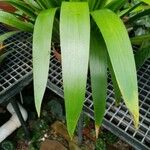
Neomarica northiana
North's false flag · Walking Iris · Brazilian Walking Iris
Description
Source: leafsnapNeomarica northiana, commonly known as the walking iris, is a perennial plant native to South America. It belongs to the Iridaceae family and is celebrated for its unique ability to produce new plantlets on its flower stalks. The walking iris features long, narrow leaves that can grow up to 2 feet in length and are arranged in a fan-like pattern. Its flowers are white with purple-blue markings and bloom from spring through summer. This plant thrives in well-draining soil and partial shade but can also tolerate full sun if provided with adequate moisture. Due to its attractive foliage and distinctive growth habit, the walking iris is popular as an ornamental plant in gardens and as an indoor houseplant.
🌳 North's false flag is popular in butterfly gardens because its attractive flowers draw a variety of pollinators, including butterflies. This increases biodiversity and provides opportunities for conservation education and enjoyment in naturalized areas or garden settings. It also suggests potential for use in restoring degraded sites, creating green spaces that help maintain ecological balance.
Care Guide
💧 Water Every 7 days
North's false flag, an evergreen indoor plant, thrives in environments with high humidity and regular rainfall. It requires consistent moisture but can tolerate short periods of dryness. To mimic its natural habitat, water the plant weekly. Maintaining evenly moist soil is especially important during its active growth periods.
How should I water my North's fake plant?
To properly water the North's false flag plant, follow these steps for optimal care. First, use filtered water at room temperature. Tap water may have harmful particles that could affect the plant's health. Additionally, since this plant originates from a warm environment, avoid using cold water as it may shock the plant. Another important tip is to refrain from overhead watering, as it can lead to issues with the foliage. Instead, focus on applying the filtered room temperature water directly to the soil until it is thoroughly saturated. This method will benefit the plant by ensuring the roots are moisturized and can continue spreading through the soil to gather necessary nutrients.
What should I do if I give too much or too little water to my North's false flag?
Overwatering is a more common issue and can be harmful to the health of your North's false flag. It can cause wilting, yellowing of the stems and leaves, and can lead to root rot, mold, and mildew. Underwatering is less common but still possible, causing brittle and brown leaves. It's important to notice signs of overwatering early as some diseases may not be fixable if left too long. Reduce watering if you see early signs and check the soil drainage. If it's poor, replace it with a well-draining potting mix. If your plant is not getting enough water, simply water it more regularly.
How frequently do I need to water my North's false flag?
If your North's false flag plant is in a pot, the easiest way to check if it needs water is by sticking your finger into the soil. If you find that the top two to three inches of soil are dry, it's time to water it. For North's false flag plants grown outdoors in the ground, you can use the same method to test the soil. Once again, if the top few inches of soil have dried out, it's time to give it some water. Usually, during spring and early fall, you'll need to water this plant about once a week using this method. However, in extremely hot weather, you may need to increase watering to twice or more per week. Keep in mind that mature, well-established North's false flag plants can handle drought quite well.
How much water does my fake flag from the North need?
When it's time to water your North's false flag plant, make sure to give it plenty of water. The first two to three inches of soil should be dry before watering. Water the plant thoroughly, making sure to soak the soil completely. You should add enough water so that it actually flows through the drainage holes at the bottom of the pot. If you don't see any excess water draining, then you haven't watered enough. However, be careful not to let the water accumulate in the soil, as this can be harmful to the plant. On the other hand, if water is not draining well from the pot, it could be a sign of poorly draining soil, which is not good for the plant's health. Finally, if the plant is outside, it should receive about 1 inch of rain per week, which is sufficient.
How do I water my North's false flag plant at different stages of growth?
The water needs of the North's false flag can vary depending on its growth stages. Initially, when the plant is young or has just been transplanted, it requires more water than usual. During these stages, the focus of the plant's energy is on developing new roots to support future growth. To ensure optimal performance, these roots require slightly more moisture. As the plant matures, it will need less water. Additionally, during the bloom period, the development of flowers necessitates a significant amount of moisture, so you may need to provide extra water to your North's false flag at this time.
☀️ Light Partial sun
North's false flag is native to habitats like forest understories and rocky areas, where it grows in natural shade. It prefers partial sun but can adjust to full sun or full shade, showing a versatile, hardy nature.
What are the sunlight requirements for North's false flag?
North's false flag, or Neomarica northiana, is a versatile plant that thrives in environments with partial sun to full shade. Partial sun refers to areas that receive about 3-6 hours of sunlight a day, while full shade areas get less than 3 hours of sunlight. It is important to watch how sunlight moves through your garden to choose the best spots for your plants, ensuring they enjoy the right balance of light and shade for optimal growth.
Can North's false flag be grown indoors and how should artificial lighting be used?
Yes, North's false flag can be grown indoors where it might require artificial lighting, especially in environments that naturally mimic forest understories or rocky areas. Indoor plants benefit from adequate lighting for optimal growth. When natural sunlight is insufficient, artificial lights, such as LED lights that can be customized to provide specific wavelengths, are recommended. For full sun plants, 30-50W/sq ft is advised, partial sun plants require 20-30W/sq ft, and full shade plants need 10-20W/sq ft. The light source should be placed 12-36 inches above the plant to mimic natural sunlight, and most plants need 8-12 hours of light per day.
What are the symptoms of light deficiency in North's false flag?
When North's false flag is grown under insufficient light conditions, several symptoms may arise such as smaller new leaves, leggy or sparse growth, faster leaf drop, slower or no new growth, and lighter-colored new leaves. Additional symptoms can include chlorosis, where leaves turn yellow due to a breakdown of chlorophyll; sunscald, which causes pale, bleached areas on plant tissue; leaf curling as a defense mechanism against excessive sunlight; wilting due to increased water loss; and leaf scorching, characterized by brown, dry edges on leaves.
How can I improve the growth of North's false flag with insufficient sunlight?
To improve growth, gradually adapt your North's false flag to changing light conditions by shifting it to increasingly sunnier spots each week until it receives the desired 3-6 hours of direct sunlight daily. If the plant is large or not easily movable, consider using artificial light by keeping a desk or ceiling lamp on for at least 8 hours daily or investing in professional plant grow lights. For outdoor plants, move them gradually to avoid sunburn. Reducing obstructions like pruning tree branches or transplanting to sunnier locations with good drainage can also help. Note that parts of the plant affected by insufficient sunlight may not recover, but new growth should be healthy.
🌡️ Temperature 20–37.8°C
North's false flag comes from tropical areas, where the climate is usually warm and humid. As a result, it is adapted to high heat and humidity. It is sensitive to sudden temperature shifts and prefers a steady temperature environment, so indoor temperature fluctuations should be avoided. It generally does not tolerate cold and needs higher temperatures to grow. If the surrounding temperature falls too low, growth may stop or the plant could die.
💨 Humidity normal (40-60%)
This plant will thrive in moderate humidity, which is probably the level in your home. However, misting it a few times a week can be very beneficial. Make sure the room has good ventilation.
🪴 Soil 6-7
🌱 Fertilizer
Proper fertilization is essential for North's false flag's health and appearance. Fertilize North's false flag in summer, applying it monthly throughout the season. Nutrients power growth and help maintain the plant's parts. Fertilizing improves North's false flag's flower display, ensuring the best blooms.
🪴 Pot & Repot
✂️ Pruning
The North's false flag plant is characterized by its fan-shaped leaves and vibrant flowers. To promote healthy growth, prune the plant between early and late spring to remove dead leaves and spent flower stalks. Thinning dense areas of the plant will improve air circulation, enhance the quality of blooms, and help prevent disease, resulting in a robust and attractive appearance.
🌿 Propagating
🐛 Diseases & pets
☠️ Toxicity
Because it contains irisin, all portions of the Walking Iris plant are dangerous to humans and animals. Poisoning is most often observed in curious dogs and cats, but poisons may also damage people if they are exposed. Iris toxicity is normally mild in people, but it may cause significant illness and death in pets and animals.
Characteristics
- Plant Type
- Herb
- Life Cycle
- Perennial
- Genus
- Neomarica
- Family
- Iridaceae
- Hardiness Zone
- 9-12
- Mature Height
- 46 cm to 61 cm
- Mature Spread
- 46 cm to 61 cm
- Leaf Color
- Green
- Leaf Type
- Evergreen
- Flower Color
- Yellow
- Flower Size
- 6.35 cm to 7.62 cm
- Bloom Time
- Late spring, Early summer, Mid summer
- Planting Time
- Spring
- Harvest Time
- Mid summer
- Native Area
- Brazil, Venezuela, Peru