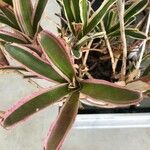
Neoregelia carolinae
Blushing bromeliad · Neoregelia · Hummingbird Bromeliad
Description
Source: leafsnapNeoregelia carolinae, commonly known as the "Blushing Bromeliad," is a popular bromeliad plant native to South America, particularly Brazil. The name "Blushing Bromeliad" comes from the vibrant red coloration that appears on its leaves when exposed to bright light. The plant features a rosette shape with stiff, spiky leaves that can grow up to 30 cm long and 5 cm wide. This plant is epiphytic, meaning it grows on other plants or objects without causing them harm. It thrives in warm, humid environments with bright but indirect light. The soil should be well-draining and kept moist, but not waterlogged. Neoregelia carolinae produces small flowers typically hidden within the center of its rosette of leaves. After flowering, the plant generates offsets, or "pups," which can be separated and replanted once they have grown large enough. Due to its striking appearance and ease of care, Neoregelia carolinae is a popular ornamental houseplant. It can be grown indoors or outdoors in warm climates where temperatures do not drop below 10°C (50°F). With proper care, this beautiful bromeliad can thrive for many years, adding color and life to any space it inhabits!
💡 The central blush of color in the foliage will gradually fade. After the plant flowers, it will begin to die, but not before producing pups, or young plants, that will begin their own life cycles. Once the parent plant dies, the pups are ready to be propagated.
🌳 The Blushing Bromeliad enchants with its bright red leaves and also improves air quality by producing oxygen and removing toxins. Its soothing presence is well suited to therapeutic spaces, encouraging tranquility. In addition, the bromeliad’s rosette shape collects water, forming a tiny habitat for small animals — a characteristic valued by terrarium and vivarium enthusiasts.
Care Guide
💧 Water Every 7 days
Originating from humid tropical rainforests, the blushing Bromeliad thrives in moist conditions and prefers consistent humidity. Although it can tolerate some drought, it does best with weekly watering to keep the soil slightly moist. As an epiphyte, the blushing Bromeliad benefits from being placed in humid areas such as well-lit bathrooms or kitchens.
What should I do if I give my Blushing Bromeliad too much water or not enough water?
Overwatering is a common issue for Blushing Bromeliad plants, although both overwatering and underwatering can happen. While Blushing Bromeliads prefer consistently moist soil, they can survive short periods of drought. However, if you underwater your plant, you may notice brown and brittle leaves with curled tips. This is more likely to happen with in-ground plants if there is insufficient rainfall, and with container-grown plants due to quicker soil drying and lack of natural rainfall. To resolve underwatering, simply water your plant more. On the other hand, if you overwater your Blushing Bromeliad, you may notice wilting, yellow leaves, and rot. Overwatering can also lead to mold and fungus. For in-ground plants, this can happen even with sufficient rainfall, while container-grown plants are often overwatered due to heavy soil and lack of drainage holes. To address overwatering, remove the plant from its container, clean and trim the roots, and replant it in a container with looser soil and better drainage. Reduce your watering schedule for overwatered plants, whether in the ground or in a pot.
How often should I give water to my Blushing Bromeliad plant?
To maintain consistent soil moisture without causing waterlogging, it's important to water your Blushing Bromeliad regularly during the growing season. If it's in a container, you'll typically need to give it about one inch of water once a week. However, if it's planted in the ground and there has been an inch of rain during the week, you may not need to provide additional water. The watering frequency will vary depending on the season, with less water needed during winter compared to spring, summer, and fall. Additionally, keep in mind that the Blushing Bromeliad may require more water during its flowering and fruiting phase.
If I grow my Blushing Bromeliad indoors, how should I water it differently?
If you want to grow a Blushing Bromeliad indoors, you'll need a large container because it cannot survive freezing temperatures. When growing it indoors, keep in mind that it won't have access to rainwater like outdoor plants do. This means you'll need to provide all the water it needs. Indoor locations tend to be drier due to appliances like air conditioners, so you'll likely need to water your Bromeliad more often than if it were outside. Additionally, misting the leaves can create the humid environment that this plant prefers.
What do I need to think about when watering my Blushing Bromeliad during different seasons and stages of growth?
To help your plants thrive throughout the year, it's important to adjust your watering routine based on the different seasons. During spring, start watering your Blushing Bromeliad once a week with about one inch of water. In summer, the heat can dry out the soil faster, so you may need to water multiple times a week to keep the moisture consistent. In fall, you can stick with the same watering rate as in spring. In winter, reduce the amount of water slightly, but don't stop watering completely. Aim to keep the soil slightly moist, making sure the top layer doesn't become dry. Additionally, consider the growth stage of your plant. During flowering or fruiting, it may require more water than usual. Pay attention to the soil and adjust your watering accordingly to maintain the right level of moisture without causing waterlogging.
☀️ Light Partial sun
The Blushing Bromeliad does best when its leaves are touched by gentle sunlight rather than being fully drenched in it. Having originally thrived in places where light filtered through the forest canopy, it can get leaf scorch if exposed too intensely. Extended shade, however, may result in weak, stunted growth.
What are the sunlight requirements for a Blushing Bromeliad?
A Blushing Bromeliad requires about 3-6 hours of sunlight per day. It is essential to watch how sunlight moves through the garden to find spots that offer a perfect balance of light and shade, ensuring the plant's well-being. Blushing Bromeliad thrives under filtered sunlight, similar to the natural light found in forest canopies. Direct, excessive sunlight can cause leaf scorch, while too much shade might lead to weak and sparse growth.
What are the essentials for the growth of a Blushing Bromeliad?
For Blushing Bromeliad, gentle sunlight is crucial rather than direct exposure. The plant prefers environments where light is filtered, mimicking its original habitat under the forest canopies. Excessive sunlight can result in leaf scorch, and prolonged shade could hinder growth. If natural light is inadequate, especially during winter, artificial lighting can be a significant aid. LED lights are preferred because they provide the necessary wavelengths and can be adjusted in intensity and distance to suit the plant's needs, with a general recommendation of 8-12 hours of light per day.
What are the symptoms of light deficiency in Blushing Bromeliad?
Blushing Bromeliad shows several symptoms when exposed to inadequate light, including smaller new leaves, leggy or sparse growth, faster leaf drop, slower or no new growth, and lighter-colored or yellow new leaves due to chlorosis. Excessive sunlight can cause symptoms like sunscald, leaf curling, wilting, and leaf scorching. These signs help indicate when the plant is not receiving the optimal light conditions it needs for healthy growth.
What solutions can help Blushing Bromeliads adapt to light conditions?
To help Blushing Bromeliads adapt to light conditions, gradually modify their exposure. For indoor plants, increase the amount of direct sunlight by placing them in sunnier spots each week and consider using artificial lighting for at least 8 hours daily if moving the plant isn't feasible. Outdoors, adjust the plant's position to sunnier locations progressively each week. If sunlight is blocked, removing or reducing obstructions can help, and smaller plants may benefit from transplantation to sunnier spots during their dormant periods, ensuring they receive ample sunlight and have good drainage.
🌡️ Temperature 20–37.8°C
Blushing Bromeliad originates from habitats where temperatures typically range from 68 to 100 °F (20 to 38 ℃). It flourishes in those climates, so careful maintenance to mimic these conditions is advised. Seasonal adjustments may be necessary.
What is the ideal temperature range for Blushing Bromeliad?
Blushing Bromeliad, botanically known as Neoregelia carolinae, thrives in environments with temperatures ranging from 68 to 100 °F (20 to 38 °C). To ensure the health and growth of this tropical plant, it is important to maintain these conditions as closely as possible. Seasonal adjustments may be necessary to accommodate the changing weather, particularly in regions that experience significant temperature fluctuations.
How should Blushing Bromeliad be cared for during winter?
During winter, if temperatures are expected to drop below 0°C, Blushing Bromeliad should be moved indoors to protect it from the cold. It is best to place the plant near a south-facing window to ensure it receives enough sunlight while avoiding locations near heaters or air conditioners that could cause excessive dryness. Indoor temperatures should be kept above 20°C for optimal growth. If the temperature falls below this threshold, watering should be reduced, and the soil should be allowed to dry out before watering again to prevent root rot. For plants that must stay outdoors, they should be positioned in a sheltered area that receives sunlight and may be wrapped with plastic film or fabric for added insulation, with watering reduced to keep the soil only slightly moist.
What are the symptoms and solutions for Blushing Bromeliad exposed to low temperatures?
Blushing Bromeliad prefers warm climates and may not tolerate low temperatures well. If exposed to temperatures below 20°C, especially under 0°C, the plant initially shows no obvious symptoms but may begin to wither and droop after three to five days, potentially leading to the entire plant drying up in severe cold. In such cases, the frostbitten areas should be trimmed, and the plant must be moved to a warmer, indoor environment promptly. Placing it near a south-facing window can ensure the plant receives enough sunlight, while avoiding locations near heating or cooling vents can prevent air dryness.
How can high temperatures affect Blushing Bromeliad, and what are the countermeasures?
Blushing Bromeliad should ideally be kept in temperatures below 100 °F (38 °C) during summer. Exposure to temperatures above 109 °F (43 °C) can lead to dry and withered leaf tips, halted growth, and make the plant susceptible to root rot. Excess sunlight can also cause sunburn. To mitigate these issues, any withered parts should be removed, and the plant should be relocated to a spot that offers shade from the intense midday and afternoon sun. Ensuring the plant and its surroundings are kept moist through watering in the morning and evening can also help counteract the stress caused by high temperatures.
💨 Humidity high (>60%)
This plant needs special care because it loves high humidity levels of 60-80% or more. The best way to achieve this is by placing a humidifier near the plant. Daily misting is also essential! Make sure the room has good ventilation.
🪴 Soil 5-6
🌱 Fertilizer
Correct fertilization is essential for the Blushing Bromeliad's health and appearance. Fertilize the Blushing Bromeliad during summer, repeating the treatment monthly throughout the season. Nutrients supply growth and help maintain the plant's components. Fertilization improves the Blushing Bromeliad's flower display, ensuring the best blooms.
Why is it necessary to fertilize my Blushing Bromeliad?
Plants, including the Blushing Bromeliad, need soil nutrients for growth. However, it's not always guaranteed that the soil will have all the necessary nutrients. Fertilization and soil amendments help provide the basic and specific nutrients required for the plants in your garden. Specifically, the Blushing Bromeliad needs fertilizer for healthy root and stem development during the growing season. Fertilization also enhances the appearance of this plant's foliage, which is its main ornamental feature.
When should I fertilize my Blushing Bromeliad?
The Blushing Bromeliad requires the most fertilizer when it is actively growing, which is usually during spring, summer, and early fall. During winter, you should feed it every two to four weeks until fall comes. Once fall arrives, slowly decrease the amount of fertilizer given until you stop feeding it completely in preparation for the less active winter season.
When is it best to not add fertilizer to my Blushing Bromeliad?
For most of the year, which includes spring, summer, and most of the fall, it is important to regularly feed your Blushing Bromeliad. However, there are a few exceptions to this. If you notice that your Blushing Bromeliad has received too much fertilizer or if you have fertilized it incorrectly, causing fertilizer burn or other issues, you will need to address these problems before resuming the regular feeding schedule. The only time when you should not fertilize a Blushing Bromeliad is during the winter. If you are growing this plant indoors in a cold area, it will go into a dormant phase during that time. Feeding the plant during its dormant phase is not only unnecessary and unhelpful for its growth, but it is also very likely to cause fertilizer burn.
Which fertilizer should I use for my Blushing Bromeliad?
The Blushing Bromeliad requires a specific fertilizer blend with relatively low amounts of various nutrients. Ideally, the fertilizer should have a ratio of 3 parts nitrogen (N), 1 part phosphorus (P), and 2 parts potassium (K). However, a general-purpose fertilizer with a balanced blend can still work in some cases. Regardless of the type of fertilizer used, it's important to ensure that the volume of each nutrient is at 10 or lower. There are two types of fertilizer options: granular and liquid-based. If you opt for a liquid-based fertilizer, it's recommended to dilute its strength by half. While there aren't many downsides to using granular fertilizer, it's generally more sensible to use liquid fertilizer, especially if you feed your Blushing Bromeliad during watering.
How should I give nourishment to my Blushing Bromeliad?
When buying fertilizer for your Blushing Bromeliad, it will usually come with instructions that you should follow. For this specific plant, it's important to fertilize while you are watering the soil to prevent the roots from getting burned. If you are using slow-release granular fertilizer, sprinkle it on the soil and water immediately after. If you are using liquid-based fertilizer, dilute it with water, apply it to the soil, and then water a bit more. It is especially important to dilute the fertilizer by at least half in spring and fall when the plant's growth is increasing or slowing down.
🪴 Pot & Repot 2-3 years
When repotting a Blushing Bromeliad, select a pot 1-2 inches (2.5–5.1 cm) larger that offers ample drainage. Use a well-draining potting mix. Repot in spring or fall, making sure the root ball sits slightly below the rim of the flower pot. Water thoroughly after repotting and place it in a warm spot with indirect sunlight.
✂️ Pruning
The Blushing Bromeliad is known for its vibrant red center and requires very little pruning. To encourage healthy growth and prevent disease, remove any dead leaves and spent flowers in early spring. Make sure to use clean, sharp tools for pruning to improve the plant's structure, enhance air circulation, and boost its overall vitality.
🌿 Propagating
🐛 Diseases & pets
☠️ Toxicity
Characteristics
- Plant Type
- Herb
- Life Cycle
- Perennial, Annual
- Genus
- Neoregelia
- Family
- Bromeliaceae
- Hardiness Zone
- 9-11
- Mature Height
- 30 cm to 46 cm
- Mature Spread
- 30 cm to 46 cm
- Leaf Color
- Green, Yellow, Red, Pink, Cream, Variegated
- Leaf Type
- Evergreen
- Flower Color
- Lavender, Pink
- Flower Size
- 2.54 cm
- Bloom Time
- Late spring, Early summer, Mid summer
- Planting Time
- Spring, Summer, Autumn, Winter
- Harvest Time
- Summer
- Native Area
- Brazil